
We read your photo as:
Discuss the impact of South Africa's ban on thin plastic bags and the introduction of thicker bags on people and the environment.
ScanSolve AI Answer
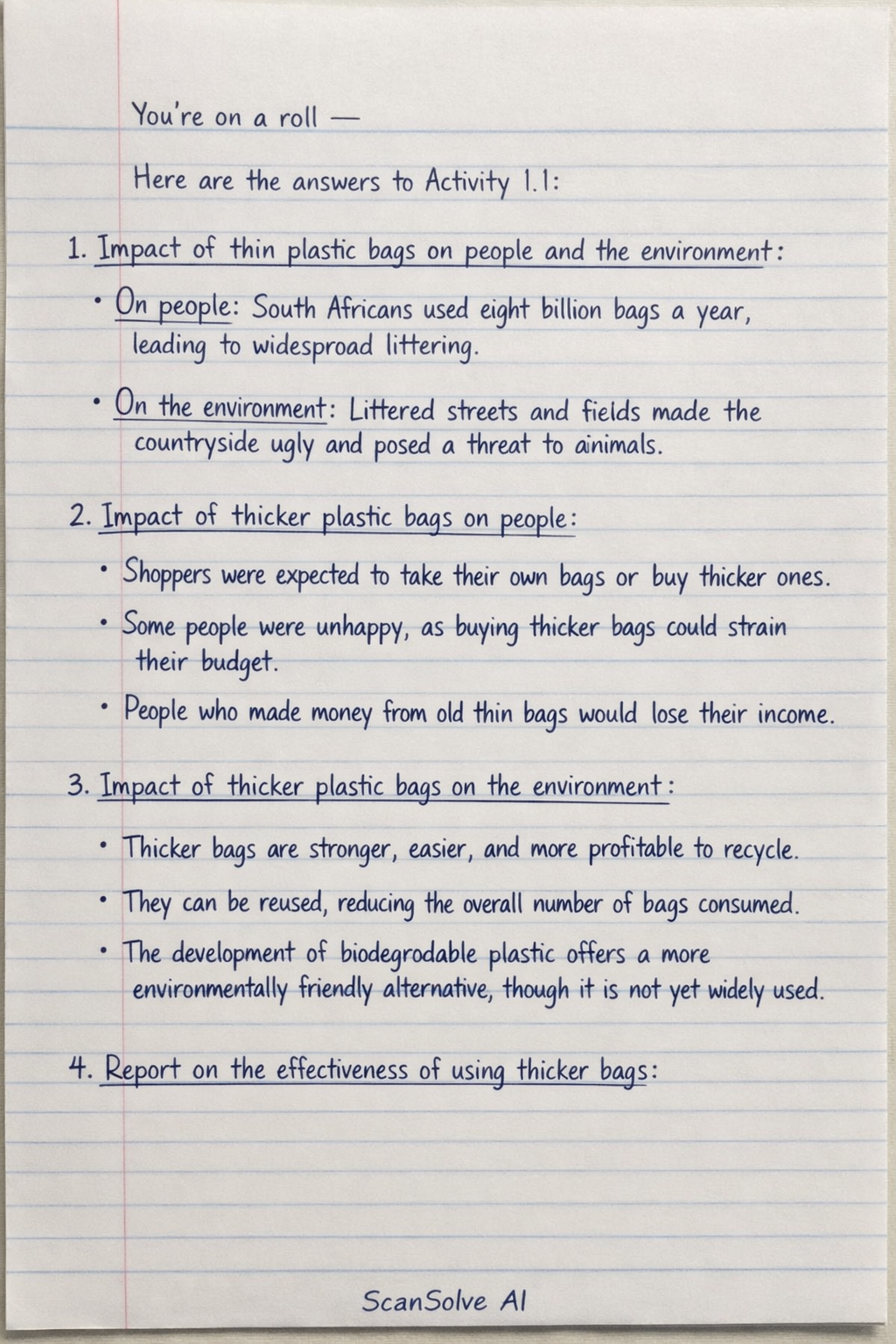
Here are the answers to Activity 1.1:
1. Impact of thin plastic bags on people and the environment:
- On people: South Africans used eight billion bags a year, leading to widespread littering.
- On the environment: Littered streets and fields made the countryside ugly and posed a threat to animals.
2. Impact of thicker plastic bags on people:
- Shoppers were expected to take their own bags or buy thicker ones.
- Some people were unhappy, as buying thicker bags could strain their budget.
- People who made money from old thin bags would lose their income.
3. Impact of thicker plastic bags on the environment:
- Thicker bags are stronger, easier, and more profitable to recycle.
- They can be reused, reducing the overall number of bags consumed.
- The development of biodegradable plastic offers a more environmentally friendly alternative, though it is not yet widely used.
4. Report on the effectiveness of using thicker bags:
-
Introduction: In 2003, South Africa banned thin plastic bags to combat environmental pollution and littering. This led to the introduction of thicker, more durable plastic bags, with the aim of encouraging reuse and recycling.
-
Discussion: The ban on thin plastic bags aimed to reduce the environmental impact of plastic waste. Thin bags contributed significantly to litter, making the countryside unsightly and posing a threat to animals. Thicker bags, being more robust, are easier to recycle and can be reused multiple times, thereby reducing the overall volume of new plastic entering the environment. From an economic perspective, the change had mixed effects. While the thicker bags are more profitable to recycle, their higher cost placed a burden on some consumers' budgets. Additionally, individuals who previously earned money by repurposing old thin bags faced a loss of income. However, the development of biodegradable plastic offers a promising future, potentially making environmentally friendly bags less expensive to produce as technology advances.
-
Conclusion: The shift to thicker plastic bags has been effective in addressing some environmental concerns by promoting recycling and reuse. While there were initial negative economic impacts on consumers and informal recyclers, the long-term environmental benefits, coupled with advancements in biodegradable plastic technology, suggest a positive trajectory for sustainable plastic bag use.
-
Recommendation: To further enhance effectiveness, continued investment in technology for cheaper biodegradable plastics and public education campaigns promoting bag reuse are recommended.
Still stuck on this one?
Ask a follow-up, and the answer starts from this question.
More Geography Questions
Handwritten Step-by-Step Solution
Get this as a handwritten image on WhatsApp — like a tutor wrote it for you.
Try on WhatsApp