
We read your photo as:
Define pollution, discuss its types and causes, and evaluate factors leading to dumping in South Africa.
ScanSolve AI Answer
Here are the answers to your questions based on the provided text and general environmental knowledge.
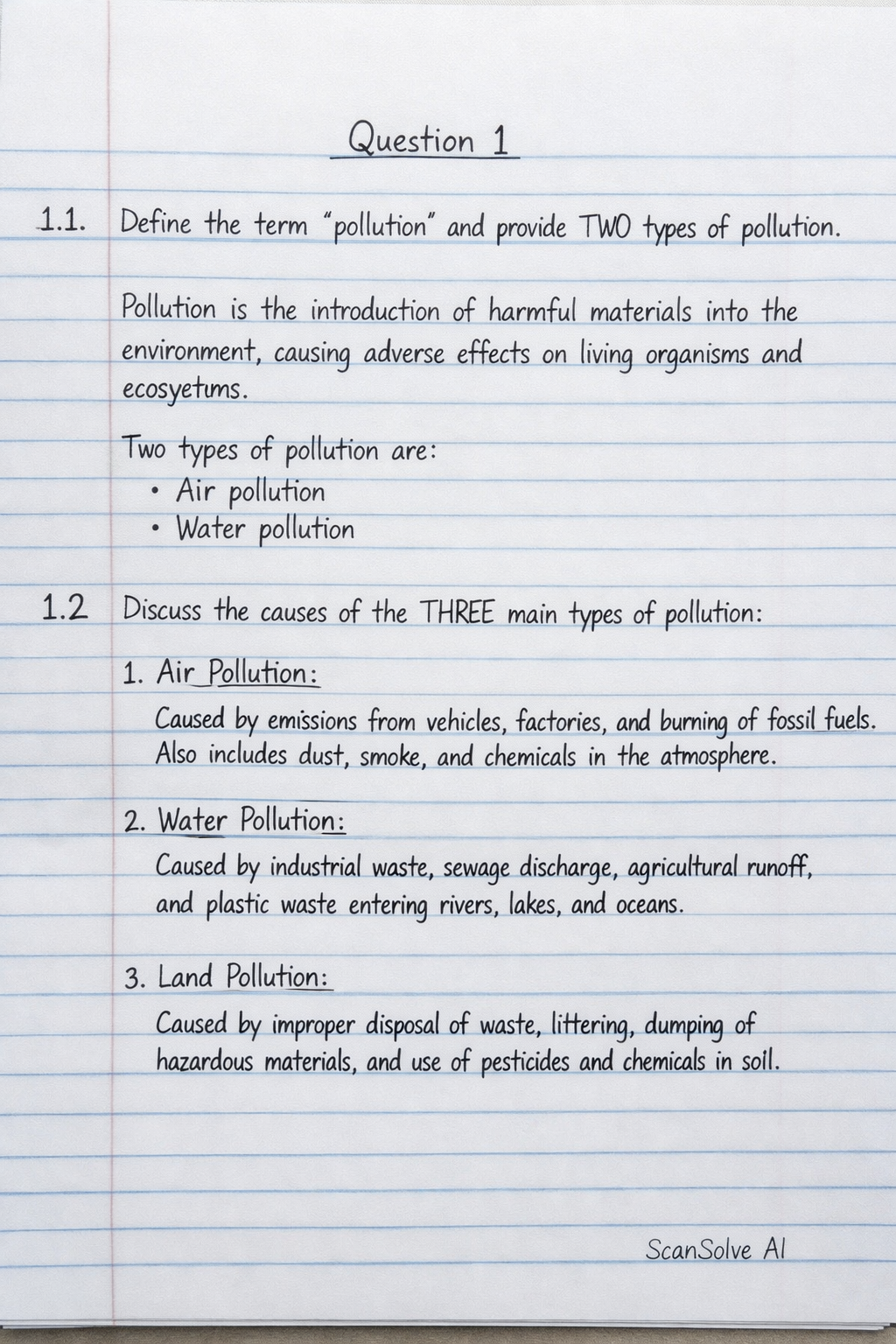
Question 1
1.1 Define the term 'pollution' and provide TWO types of pollution.
Pollution is the introduction of harmful materials into the environment, causing adverse effects on living organisms and ecosystems.
Two types of pollution are:
- Air pollution
- Water pollution
1.2 Discuss the causes of the THREE main types of pollution.
The three main types of pollution and their causes are:
- Air pollution: Primarily caused by the burning of fossil fuels from vehicles and industrial activities, leading to the release of greenhouse gases and particulate matter. Other causes include agricultural emissions and wildfires.
- Water pollution: Often results from the discharge of untreated sewage, industrial waste, and agricultural runoff containing pesticides and fertilizers into water bodies. Oil spills and plastic waste also contribute significantly.
- Land pollution: Caused by improper disposal of solid waste (illegal dumping, overflowing landfills), industrial waste, mining activities, and the use of harmful chemicals in agriculture.
1.3 Dumping is increasingly becoming a serious problem in South Africa; critically evaluate, at least, TWO factors that lead to this problem.
Two factors contributing to the problem of dumping in South Africa are:
- Inadequate waste management infrastructure: Many communities, especially informal settlements, lack sufficient waste bins, regular collection services, and accessible recycling facilities. This forces residents to resort to illegal dumping as the only available option for waste disposal.
- Socio-economic factors: High levels of poverty and unemployment can lead individuals to engage in illegal dumping, either out of necessity due to lack of funds for proper disposal or to scavenge for recyclable materials, often leaving behind non-recyclable waste.
1.4 Suggest FOUR strategies that Local municipalities could consider to control dumping in community areas.
Local municipalities could consider the following four strategies to control dumping:
- Improve waste collection services: Implement more frequent and reliable waste collection schedules, and provide an adequate number of accessible waste bins in all community areas.
- Launch public awareness campaigns: Educate residents on the environmental and health risks of illegal dumping, and promote proper waste disposal methods and the benefits of recycling.
- Enforce anti-dumping laws: Implement stricter penalties for illegal dumping and increase monitoring to identify and fine offenders, acting as a deterrent.
- Establish accessible recycling programs: Provide easily accessible recycling drop-off points or curbside collection services to encourage residents to separate and recycle waste, thereby reducing the volume of waste that needs to be disposed of.
Still stuck on this one?
Ask a follow-up, and the answer starts from this question.
More Geography Questions
Handwritten Step-by-Step Solution
Get this as a handwritten image on WhatsApp — like a tutor wrote it for you.
Try on WhatsApp