What is entrepreneurship Entrepreneur What is Global entrepreneurship? Distinguish between global entrepreneurship and global entrepreneur? Differentiate between global entrepreneur and global entrepreneurs What are their challenges (6) Benefits of an entrepreneur (6) Why did you think LIFO and FIFO is important in the area Agriculture

Geography

ScanSolve AI Answer

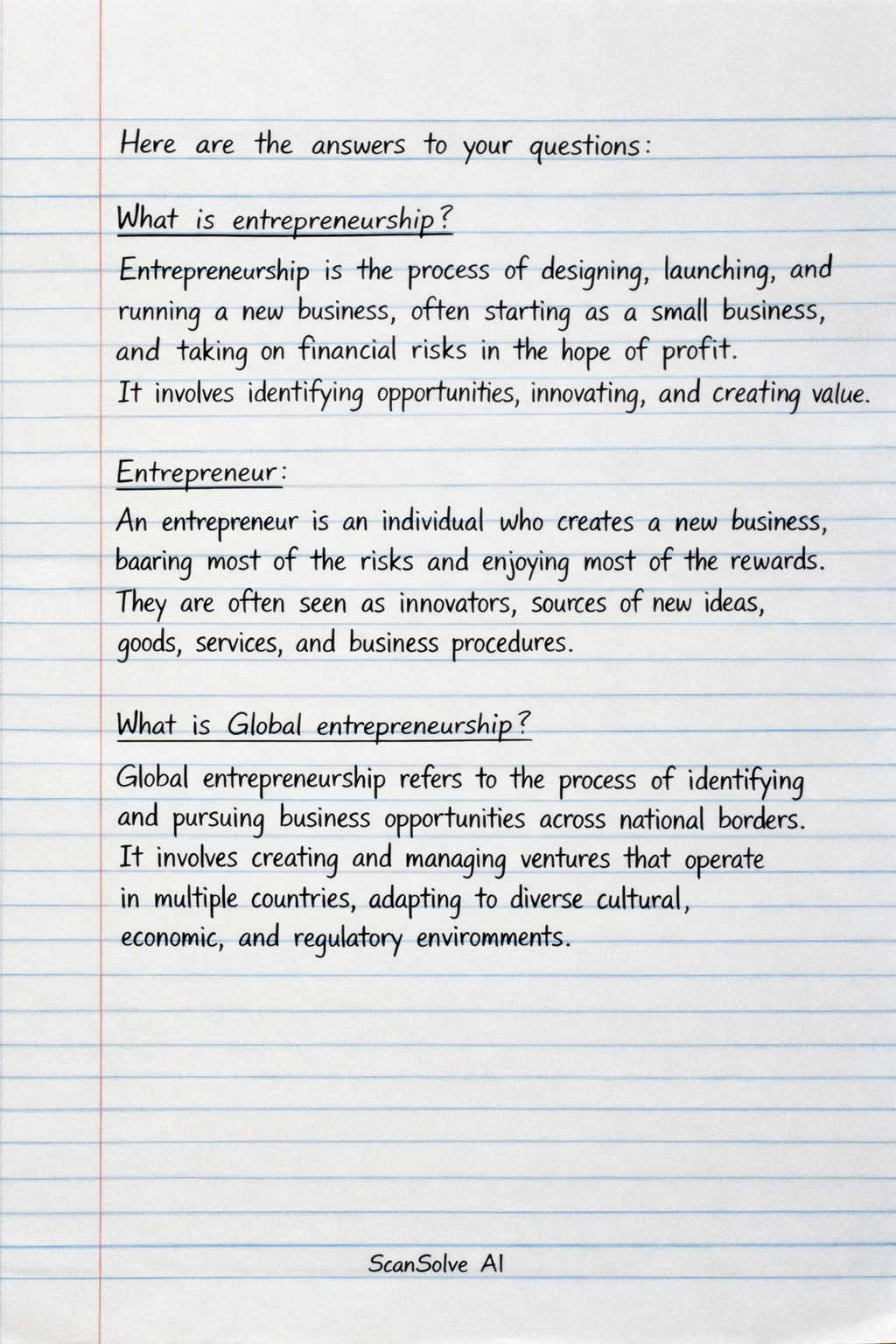
Here are the answers to your questions:

What is entrepreneurship? Entrepreneurship is the process of designing, launching, and running a new business, often starting as a small business, and taking on financial risks in the hope of profit. It involves identifying opportunities, innovating, and creating value.

Entrepreneur An entrepreneur is an individual who creates a new business, bearing most of the risks and enjoying most of the rewards. They are often seen as innovators, sources of new ideas, goods, services, and business procedures.

What is Global entrepreneurship? Global entrepreneurship refers to the process of identifying and pursuing business opportunities across national borders. It involves creating and managing ventures that operate in multiple countries, adapting to diverse cultural, economic, and regulatory environments.

Distinguish between global entrepreneurship and global entrepreneur? Global entrepreneurship is the process or activity of starting and managing businesses with an international scope, involving cross-border operations and market expansion. A global entrepreneur is the individual who undertakes this process, possessing the vision, skills, and willingness to take risks to establish and grow a business internationally.

Differentiate between global entrepreneur and global entrepreneurs A global entrepreneur refers to a single individual who engages in global entrepreneurship. Global entrepreneurs is simply the plural form, referring to multiple individuals who are engaged in global entrepreneurship. The distinction is one of number (singular vs. plural).

What are their challenges (6)? Challenges for global entrepreneurs include:

  • Navigating complex international laws and regulations.
  • Managing cultural differences and communication barriers.
  • Dealing with currency fluctuations and financial risks.
  • Establishing supply chains and distribution networks across borders.
  • Intense competition from local and international businesses.
  • Securing adequate funding for international expansion.

Benefits of an entrepreneur (6)? Benefits of being an entrepreneur include:

  • Autonomy and Control: The ability to be your own boss and make key decisions.
  • Financial Rewards: Potential for significant income and wealth creation.
  • Personal Fulfillment: Pursuing passions and seeing ideas come to life.
  • Innovation and Impact: Creating new products, services, and jobs that benefit society.
  • Flexibility: Often more control over work-life balance and schedule.
  • Learning and Growth: Continuous development of new skills and knowledge.

Why did you think LIFO and FIFO is important in the area Agriculture? LIFO (Last-In, First-Out) and FIFO (First-In, First-Out) are crucial inventory valuation methods in agriculture due to the nature of agricultural products.

  • FIFO is particularly important for perishable goods (e.g., fresh produce, dairy) where older inventory must be sold first to prevent spoilage and minimize waste. It reflects the physical flow of these goods.
  • LIFO might be relevant for non-perishable bulk commodities (e.g., grains stored in silos) where the most recently acquired (and often most expensive) inventory is assumed to be sold first for tax or accounting purposes, especially in periods of rising costs. These methods impact reported profits, inventory values, and tax liabilities, making accurate tracking essential for financial management and operational efficiency in farming businesses.

That's 2 down. 3 left today — send the next one.

Was this helpful?

Need help with your own homework?

Get instant step-by-step solutions to any question. Free to start.

Ask Your Question
Handwritten step-by-step solution preview

Handwritten Step-by-Step Solution

Get this as a handwritten image on WhatsApp — like a tutor wrote it for you.

Try on WhatsApp

Still have questions?

Quick Answer

What is entrepreneurship? Entrepreneurship is the process of designing, launching, and running a new business, often starting as a small business, and taking on financial risks in the hope of profit.

What is entrepreneurship Entrepreneur What is Global entrepreneurship? Distinguish between global entrepreneurship and global entrepreneur? Differentiate between global entrepreneur and global entrepreneurs What are their challenges (6) Benefits of an entrepreneur (6) Why did you think LIFO and FIFO is important in the area Agriculture
Geography

This geography problem is solved step by step below, with detailed explanations to help you understand the method and arrive at the correct answer.

ScanSolve AI Answer
Here are the answers to your questions: What is entrepreneurship? Entrepreneurship is the process of designing, launching, and running a new business, often starting as a small business, and taking on financial risks in the hope of profit. It involves identifying opportunities, innovating, and creating value. Entrepreneur An entrepreneur is an individual who creates a new business, bearing most of the risks and enjoying most of the rewards. They are often seen as innovators, sources of new ideas, goods, services, and business procedures. What is Global entrepreneurship? Global entrepreneurship refers to the process of identifying and pursuing business opportunities across national borders. It involves creating and managing ventures that operate in multiple countries, adapting to diverse cultural, economic, and regulatory environments. Distinguish between global entrepreneurship and global entrepreneur? Global entrepreneurship is the process or activity of starting and managing businesses with an international scope, involving cross-border operations and market expansion. A global entrepreneur is the individual who undertakes this process, possessing the vision, skills, and willingness to take risks to establish and grow a business internationally. Differentiate between global entrepreneur and global entrepreneurs A global entrepreneur refers to a single individual who engages in global entrepreneurship. Global entrepreneurs is simply the plural form, referring to multiple individuals who are engaged in global entrepreneurship. The distinction is one of number (singular vs. plural). What are their challenges (6)? Challenges for global entrepreneurs include: Navigating complex international laws and regulations. Managing cultural differences and communication barriers. Dealing with currency fluctuations and financial risks. Establishing supply chains and distribution networks across borders. Intense competition from local and international businesses. Securing adequate funding for international expansion. Benefits of an entrepreneur (6)? Benefits of being an entrepreneur include: Autonomy and Control: The ability to be your own boss and make key decisions. Financial Rewards: Potential for significant income and wealth creation. Personal Fulfillment: Pursuing passions and seeing ideas come to life. Innovation and Impact: Creating new products, services, and jobs that benefit society. Flexibility: Often more control over work-life balance and schedule. Learning and Growth: Continuous development of new skills and knowledge. Why did you think LIFO and FIFO is important in the area Agriculture? LIFO (Last-In, First-Out) and FIFO (First-In, First-Out) are crucial inventory valuation methods in agriculture due to the nature of agricultural products. FIFO is particularly important for perishable goods (e.g., fresh produce, dairy) where older inventory must be sold first to prevent spoilage and minimize waste. It reflects the physical flow of these goods. LIFO might be relevant for non-perishable bulk commodities (e.g., grains stored in silos) where the most recently acquired (and often most expensive) inventory is assumed to be sold first for tax or accounting purposes, especially in periods of rising costs. These methods impact reported profits, inventory values, and tax liabilities, making accurate tracking essential for financial management and operational efficiency in farming businesses. That's 2 down. 3 left today — send the next one.