
We read your photo as:
How are fossil fuels formed?
ScanSolve AI Answer
Answer
Fossil fuels are formed over millions of years from the remains of ancient organisms.
Step-by-step solution
4 stepsAccumulation of organic matter*.
Dead plants and animals settle in swamps, oceans, or lakes. This organic material accumulates faster than it can decompose.
Burial and anaerobic conditions*.
Over time, layers of sediment (like mud, sand, and rock) cover the organic matter. This burial creates an anaerobic (oxygen-free) environment, preventing complete decomposition.
Heat and pressure*.
As more layers accumulate, the buried organic matter is subjected to immense heat and pressure from the overlying sediments and the Earth's internal heat. This process transforms the organic material.
Transformation into fossil fuels*.
- Coal forms from terrestrial plant matter, typically in swampy environments.
- Oil and natural gas form from marine organisms (plankton and algae) in ocean basins.
This slow transformation, occurring over millions of years, converts the organic matter into hydrocarbons, which are the chemical compounds that make up fossil fuels.
Still stuck on this one?
Ask a follow-up, and the answer starts from this question.
More Geography Questions
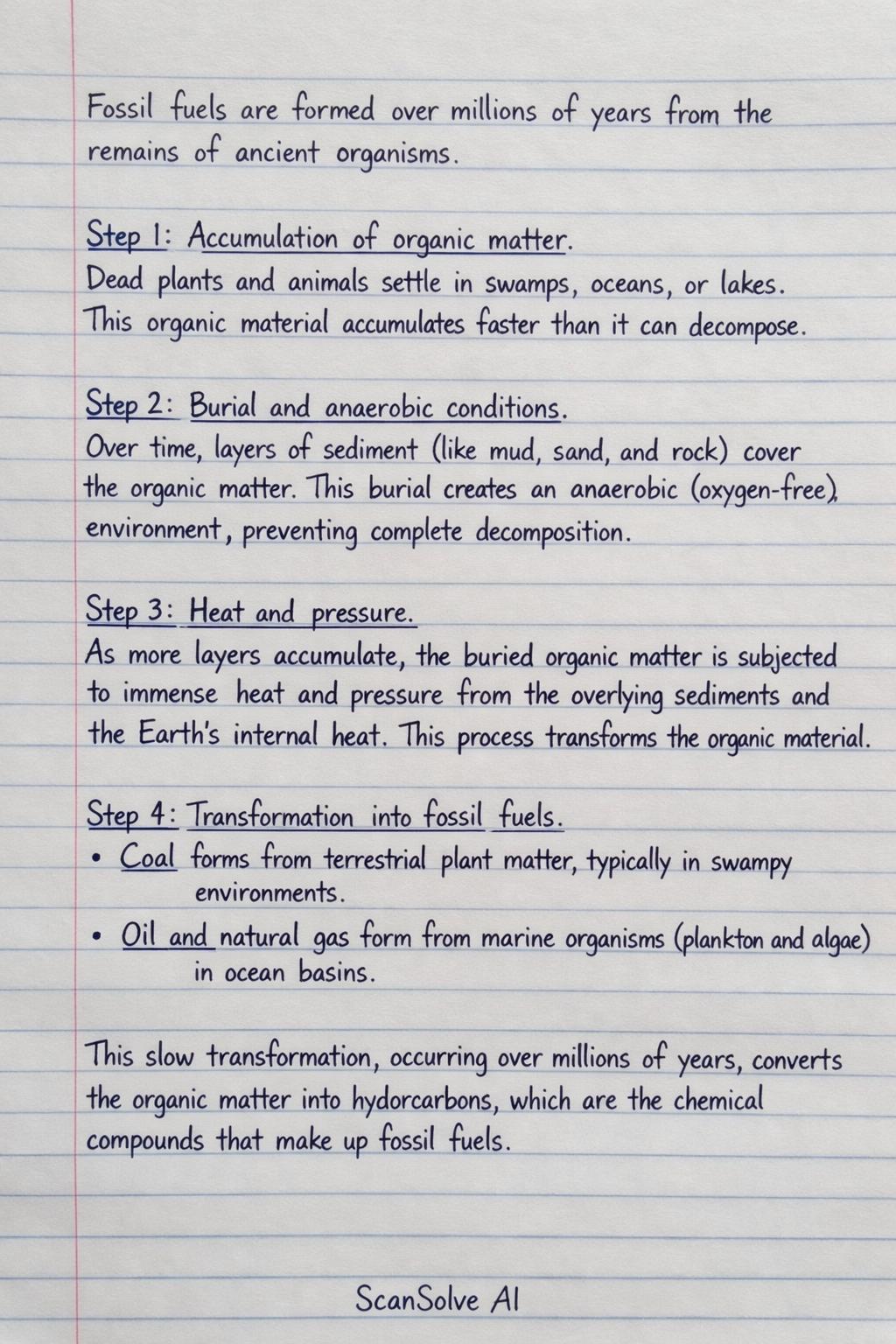
Handwritten Step-by-Step Solution
Get this as a handwritten image on WhatsApp — like a tutor wrote it for you.
Try on WhatsApp