
We read your photo as:
Explain the four characteristics of a disaster and the conceptual relationship between hazard, vulnerability, and exposure.
ScanSolve AI Answer
-
The four characteristics that define a disaster are:
- Sudden onset or rapid escalation: Disasters often occur unexpectedly or develop quickly, leaving little time for preparation.
- Widespread impact: They affect a large geographical area or a significant portion of a population, causing extensive damage and disruption.
- Overwhelms local capacity: The scale of the event exceeds the ability of the affected community or local authorities to respond effectively using their own resources.
- Serious disruption: Disasters cause severe loss of life, injury, damage to infrastructure, and interruption of essential services and normal societal functions.
-
The conceptual relationship in a disaster highlights the interaction between a hazard, vulnerability, and exposure. A hazard is a potential threat (e.g., an earthquake or flood). Vulnerability refers to the susceptibility of a community or system to the impacts of that hazard due to factors like weak infrastructure or poverty. Exposure is the presence of people, assets, or systems in areas where a hazard might occur. A disaster arises when a hazard impacts a population or system that is both vulnerable and exposed, leading to severe consequences that overwhelm their capacity to cope.
Still stuck on this one?
Ask a follow-up, and the answer starts from this question.
More Geography Questions
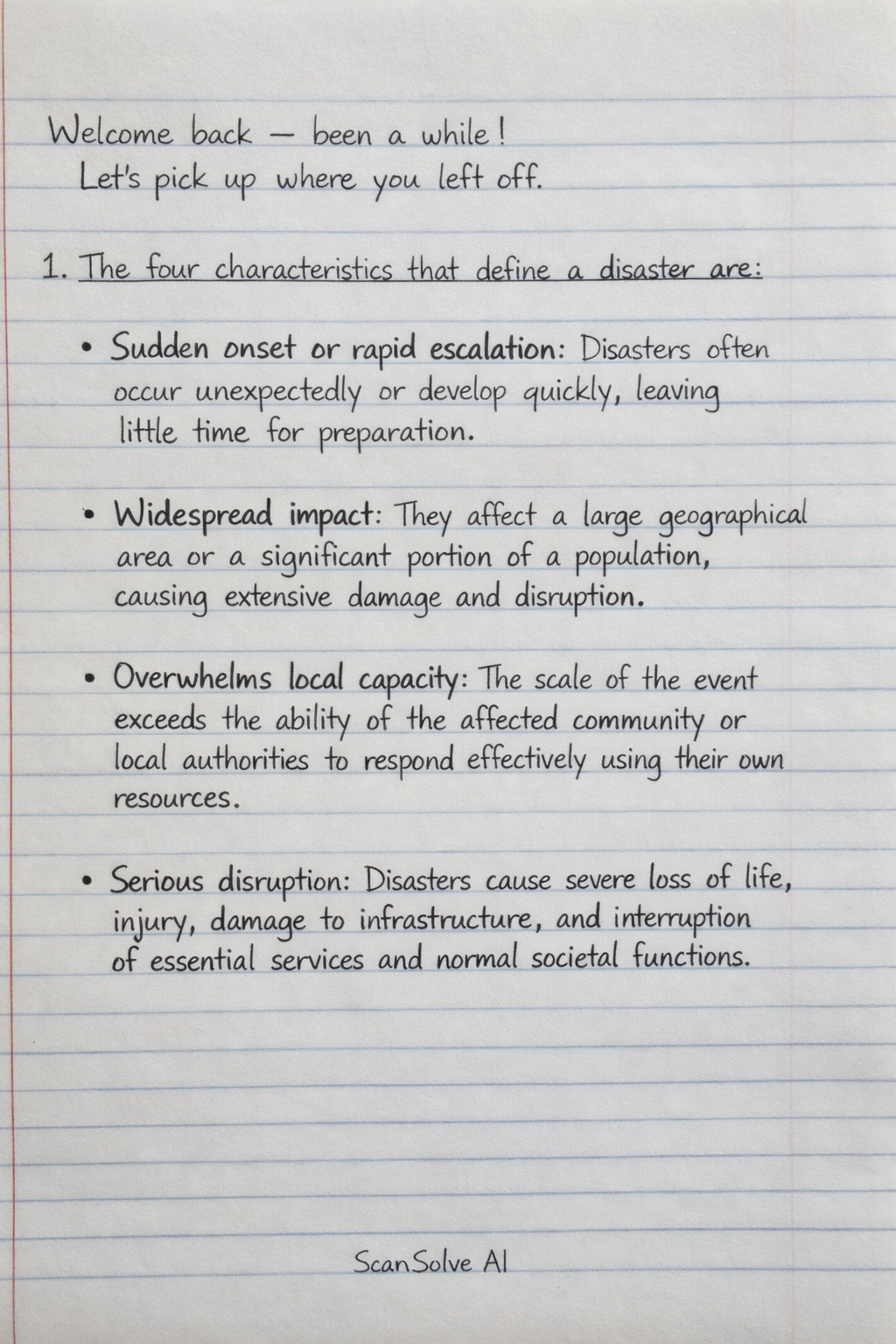
Handwritten Step-by-Step Solution
Get this as a handwritten image on WhatsApp — like a tutor wrote it for you.
Try on WhatsApp