
We read your photo as:
Explain how hazard, vulnerability, and capacity cause a natural hazard to become a disaster, and suggest ways to reduce this potential.
ScanSolve AI Answer
Step-by-step solution
2 stepsExplain how hazard, vulnerability, and capacity cause a natural hazard to become a disaster.
The formula illustrates that a natural hazard transforms into a disaster when a significant hazard (like an earthquake or flood) impacts a vulnerable community. Vulnerability refers to the susceptibility of a community to the effects of a hazard due to factors like weak infrastructure or lack of preparedness. A low capacity to respond, which includes inadequate resources, poor emergency services, or lack of resilient systems, further amplifies the impact, leading to a disaster. Essentially, high hazard and high vulnerability, coupled with low capacity, result in a greater disaster.
Suggest ways to reduce the potential of a natural hazard becoming a disaster.
To reduce the potential for a natural hazard to become a disaster, communities must focus on:
- Reducing Vulnerability: This involves implementing stricter building codes, developing early warning systems, educating the public on preparedness, and improving infrastructure resilience.
- Increasing Capacity: This includes establishing robust emergency response plans, training first responders, stockpiling essential supplies, and investing in resilient infrastructure and recovery funds.
- Mitigating Hazard Impact (where possible): While natural hazards cannot be prevented, their impact can be reduced through land-use planning to avoid high-risk areas, constructing protective barriers (e.g., levees), and implementing reforestation to prevent soil erosion.
Still stuck on this one?
Ask a follow-up, and the answer starts from this question.
More Geography Questions
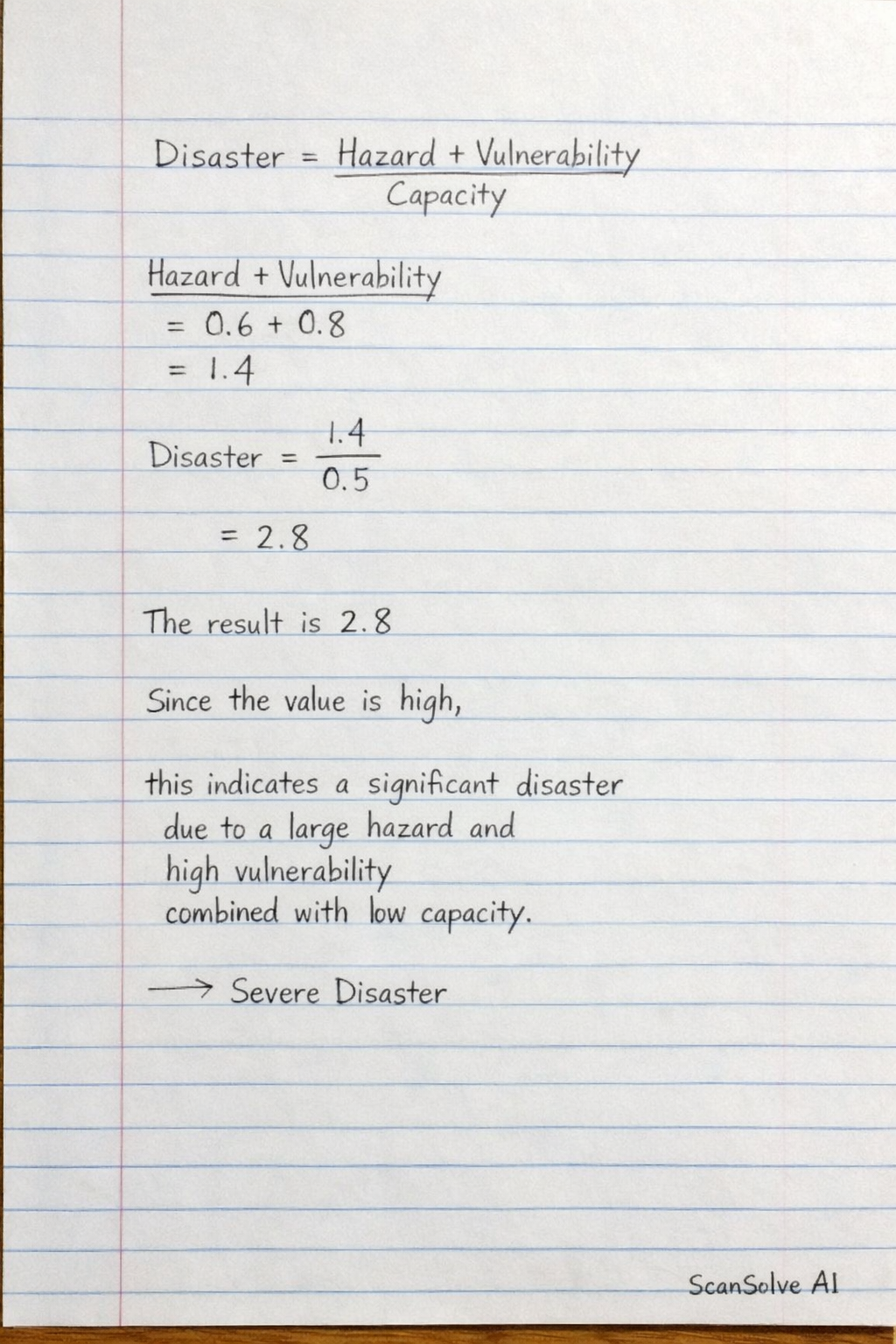
Handwritten Step-by-Step Solution
Get this as a handwritten image on WhatsApp — like a tutor wrote it for you.
Try on WhatsApp