
We read your photo as:
Describe four significant geographical features of Africa and Ghana and explain two ways these features influenced ancient African societies.
Geography
ScanSolve AI Answer
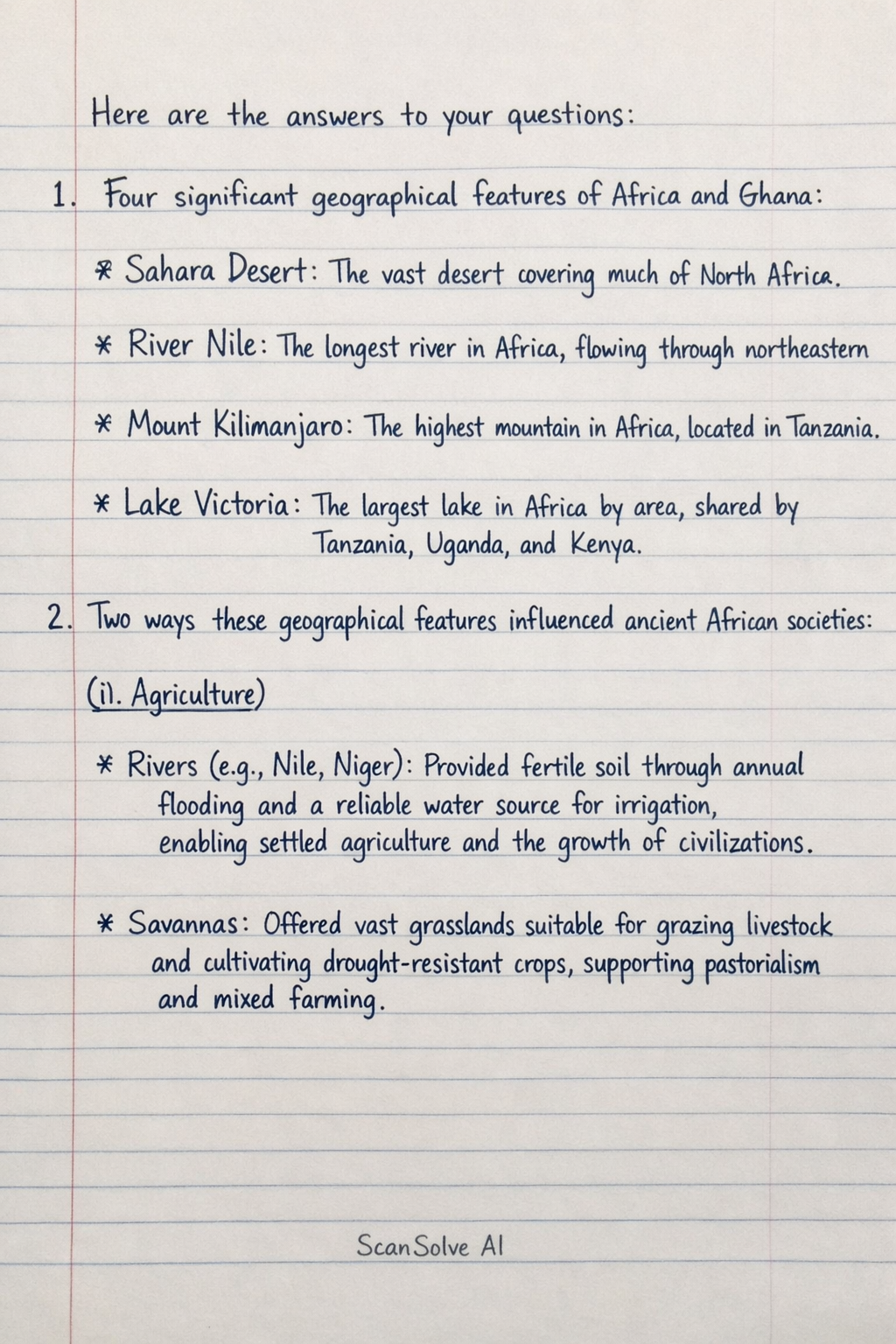
Here are the answers to your questions:
-
Four significant geographical features of Africa and Ghana:
- Sahara Desert: The vast desert covering much of North Africa.
- River Nile: The longest river in Africa, flowing through northeastern Africa.
- Mount Kilimanjaro: The highest mountain in Africa, located in Tanzania.
- Lake Victoria: The largest lake in Africa by area, shared by Tanzania, Uganda, and Kenya.
-
Two ways these geographical features influenced ancient African societies:
-
i. Agriculture
- Rivers (e.g., Nile, Niger): Provided fertile soil through annual flooding and a reliable water source for irrigation, enabling settled agriculture and the growth of civilizations.
- Savannas: Offered vast grasslands suitable for grazing livestock and cultivating drought-resistant crops, supporting pastoralism and mixed farming.
-
ii. Transport
- Rivers: Served as natural highways for canoes and boats, facilitating the movement of people and goods over long distances, especially where land travel was difficult.
- Deserts (e.g., Sahara): While a barrier, the development of camels as a mode of transport allowed for the establishment of trans-Saharan trade routes, connecting different regions.
-
iii. Trade route
- Coastlines and Rivers: Provided accessible routes for trade, connecting inland regions to coastal ports and facilitating maritime trade with other continents.
- Oases in Deserts: Acted as crucial stopping points and trading hubs along trans-Saharan routes, enabling long-distance trade across otherwise inhospitable terrain.
-
iv. Settlement
- Rivers and Lakes: Attracted settlements due to the availability of water for drinking, agriculture, and fishing, leading to the development of major civilizations.
- Highlands/Mountains: Offered defensive advantages and cooler climates, leading to the establishment of settlements in strategic and more comfortable locations.
-
Was this helpful?
Still stuck on this one?
Ask a follow-up, and the answer starts from this question.
Got a different question?Ask your own question
More Geography Questions
QList four geographical features of Africa and Ghana, and explain how two of them influenced ancient…QWhat are the key geographical features and their impact on the development of early African…QDescribe five (5) common features of ancient African civilizations and explain how geographical…QExamine how geographical features and climate change influenced the development and settlement…QState four effect of migration on Ghanaian societies (3)explain four factors that led to the rise of…
Handwritten Step-by-Step Solution
Get this as a handwritten image on WhatsApp — like a tutor wrote it for you.
Try on WhatsApp