
This geography problem is solved step by step below, with detailed explanations to help you understand the method and arrive at the correct answer.
ScanSolve AI Answer
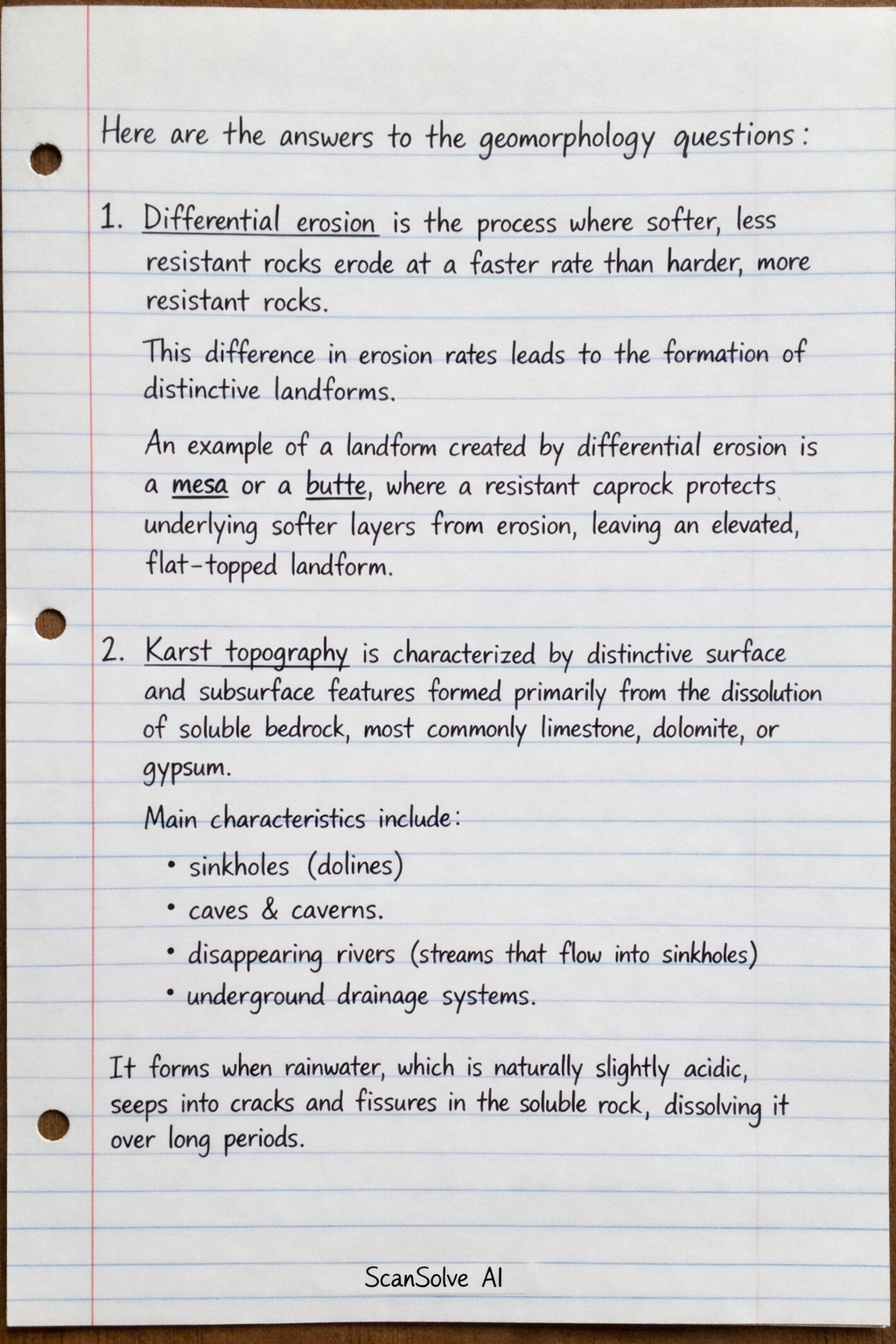
Here are the answers to the geomorphology questions: 1. Differential erosion is the process where softer, less resistant rocks erode at a faster rate than harder, more resistant rocks. This difference in erosion rates leads to the formation of distinctive landforms. An example of a landform created by differential erosion is a mesa or a butte, where a resistant caprock protects underlying softer layers from erosion, leaving an elevated, flat-topped landform. 2. Karst topography is characterized by distinctive surface and subsurface features formed primarily from the dissolution of soluble bedrock, most commonly limestone, dolomite, or gypsum. Main characteristics include sinkholes (dolines), caves and caverns, disappearing rivers (streams that flow into sinkholes), and underground drainage systems. It forms when rainwater, which is naturally slightly acidic, seeps into cracks and fissures in the soluble rock, dissolving it over long periods. 3. The primary factors influencing the rate of weathering in a given area are: Climate*: Temperature and precipitation levels significantly affect both physical and chemical weathering. For example, freeze-thaw cycles are common in cold climates, while high temperatures and abundant moisture accelerate chemical weathering. Rock Type*: The mineral composition, solubility, and structural characteristics (like fractures or bedding planes) of the rock determine its resistance to weathering. Topography*: Slope steepness and aspect (direction a slope faces) influence water runoff, exposure to wind and sun, and soil development, all of which affect weathering. Vegetation*: Plant roots can cause physical weathering, while decaying organic matter produces acids that enhance chemical weathering. Time*: Weathering is a continuous process, so the longer a rock is exposed to weathering agents, the greater the extent of its breakdown. Send me the next one 📸