
We read your photo as:
List four environmental and four social consequences of deforestation in your district.
Geography
ScanSolve AI Answer
Here is the solution to Question 2:
Question 2
A. Four environmental and four social consequences of deforestation in your district:
-
Environmental Consequences:
- Loss of Biodiversity: Deforestation destroys habitats, leading to the extinction of plant and animal species unique to the forest ecosystem.
- Soil Erosion: Without tree cover, soil is exposed to rain and wind, leading to significant erosion, loss of fertile topsoil, and reduced agricultural productivity.
- Climate Change: Trees absorb carbon dioxide. Their removal and burning release large amounts of greenhouse gases into the atmosphere, contributing to global warming.
- Disruption of Water Cycles: Forests play a crucial role in regulating rainfall and water flow. Deforestation can lead to reduced rainfall, increased runoff, and more frequent floods and droughts.
-
Social Consequences:
- Loss of Livelihoods: Many communities depend on forests for resources like timber, non-timber forest products, and agricultural land. Deforestation destroys these resources, leading to economic hardship.
- Food Insecurity: Soil degradation and loss of fertile land due to deforestation reduce agricultural yields, impacting food security for local populations.
- Displacement of Communities: Indigenous and forest-dependent communities may be forced to relocate as their traditional lands and resources are destroyed.
- Health Issues: Deforestation can lead to increased exposure to certain diseases as human settlements expand into new areas, and can also cause respiratory problems from increased dust and smoke.
B. School-based environmental project to address deforestation:
Project Title: "Green Guardians: Our School's Reforestation and Environmental Stewardship Project"
i. The objectives:
- To educate students and the wider school community about the causes, impacts, and solutions to deforestation.
- To actively engage students in tree planting and forest conservation activities within the school and surrounding community.
- To foster a sense of environmental responsibility and promote sustainable practices among students.
ii. Key activities:
- Environmental Education Workshops: Conduct regular workshops and awareness campaigns for students, teachers, and parents on the importance of forests and the dangers of deforestation.
- School Tree Nursery Establishment: Create and maintain a small tree nursery within the school grounds where students learn to grow seedlings of native tree species.
- Tree Planting Drives: Organize scheduled tree planting events within the school compound, along local roads, and in degraded community areas, using seedlings from the school nursery.
- Curriculum Integration: Incorporate lessons on forest ecology, conservation, and sustainable resource management into relevant subjects like science, geography, and social studies.
- Community Outreach: Collaborate with local environmental organizations, community leaders, and parents to extend reforestation efforts beyond the school environment.
iii. Expected outcomes of the project:
- Increased knowledge and understanding of deforestation issues and conservation practices among students and the school community.
- Improved green cover and biodiversity within the school premises and selected community areas.
- Development of practical skills in tree planting, nursery management, and environmental monitoring among students.
- A more environmentally conscious and responsible student body that advocates for sustainable practices.
- Strengthened partnerships between the school and local community for long-term environmental protection.
Was this helpful?
Still stuck on this one?
Ask a follow-up, and the answer starts from this question.
Got a different question?Ask your own question
More Geography Questions
QHighlight four adverse effects of production activities on the environment and community.QOutline TWO causes of each of the following environmental hazards common in MEDCs: i) Floods ii)…QIs clearing of tropical rainforest a good practice in ecological studies? Advance four reasons for…QState four methods used for water conservation. Explain four roles of plants in water purification…QIdentify the environmental issue, list two of its effects, and suggest one solution.
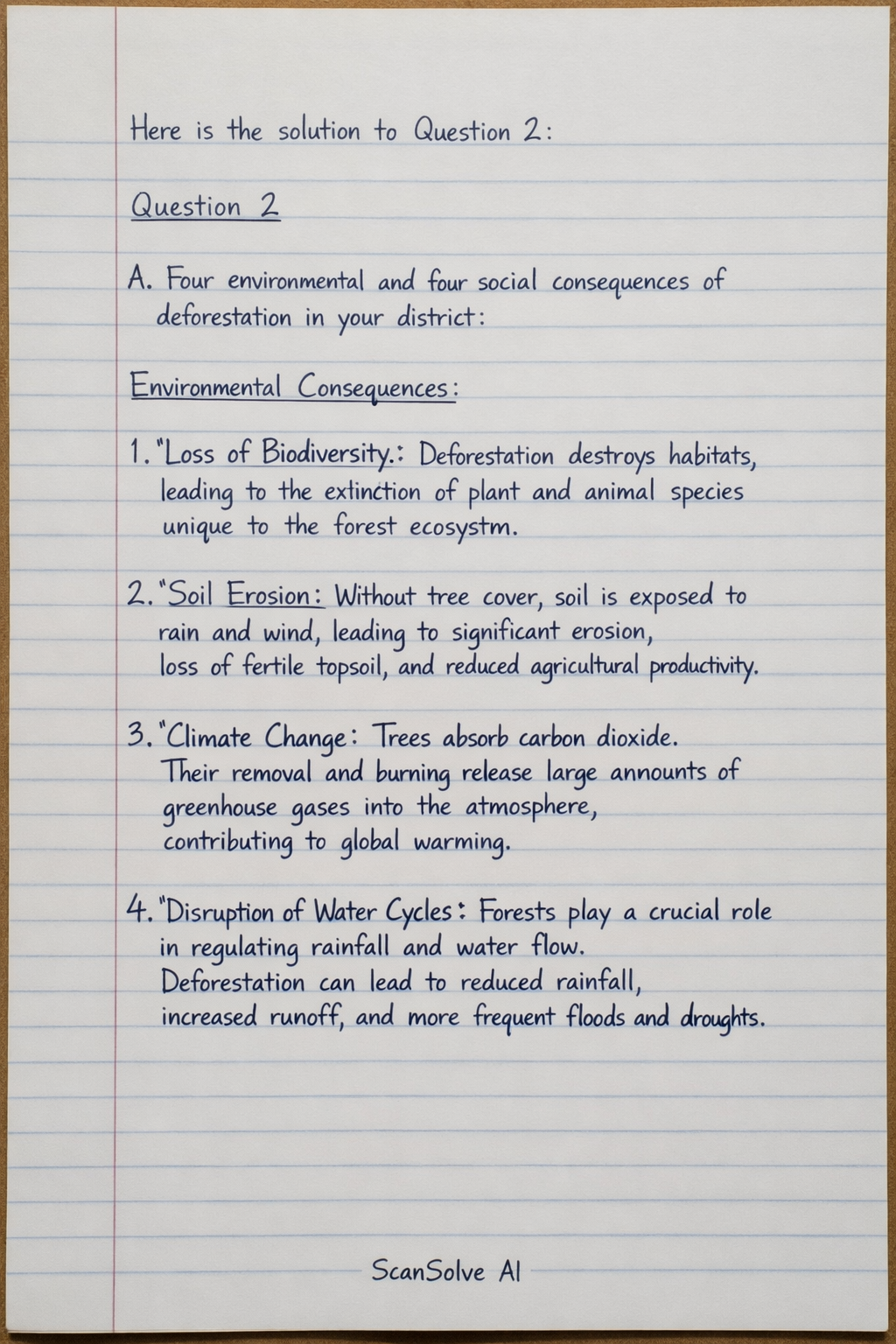
Handwritten Step-by-Step Solution
Get this as a handwritten image on WhatsApp — like a tutor wrote it for you.
Try on WhatsApp