

This geography problem is solved step by step below, with detailed explanations to help you understand the method and arrive at the correct answer.
ScanSolve AI Answer
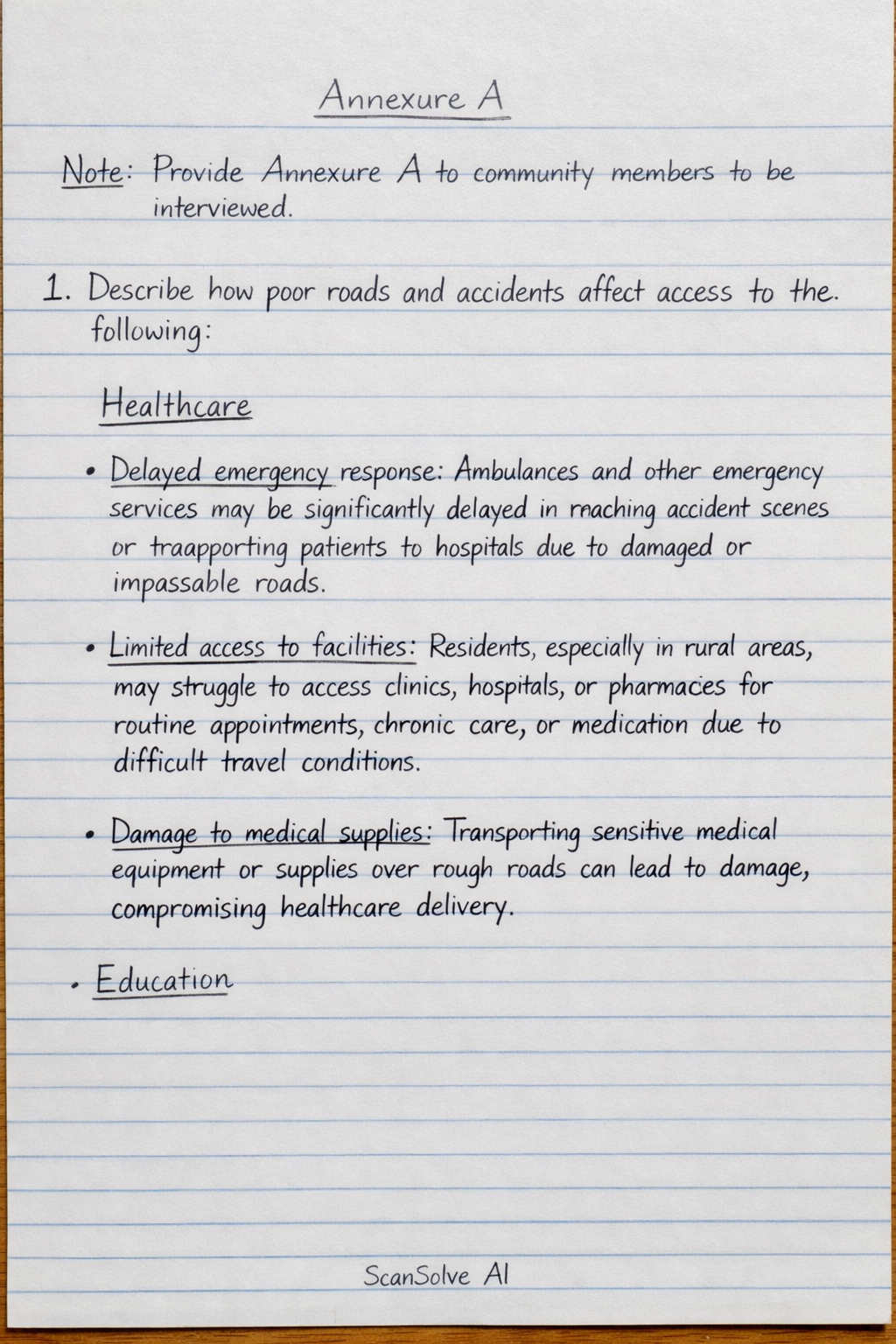
Here are the answers to the questions based on the provided image: Annexure A Note: The instruction "Provide Annexure A to community members to be interviewed" is a task for the student, not a question to be answered by the AI. 1. Describe how poor roads and accidents affect access to the following: Healthcare Delayed emergency response*: Ambulances and other emergency services may be significantly delayed in reaching accident scenes or transporting patients to hospitals due to damaged or impassable roads. Limited access to facilities*: Residents, especially in rural areas, may struggle to access clinics, hospitals, or pharmacies for routine appointments, chronic care, or medication due to difficult travel conditions. Damage to medical supplies*: Transporting sensitive medical equipment or supplies over rough roads can lead to damage, compromising healthcare delivery. Education Increased absenteeism*: Learners and teachers may face longer, more dangerous commutes, leading to increased absenteeism or late arrivals, particularly during adverse weather conditions. Damage to school transport*: School buses and other transport vehicles are more prone to breakdowns and damage on poor roads, disrupting school attendance and increasing transport costs. Reduced access to educational resources*: Delivery of educational materials, textbooks, and other resources to schools in remote areas can be hampered by bad road infrastructure. Employment Increased commuting time and costs*: Employees face longer and more expensive commutes, impacting their punctuality, productivity, and disposable income. Limited economic opportunities*: Businesses may be reluctant to invest or operate in areas with poor road infrastructure, hindering job creation and economic development. Disruption of supply chains*: Industries relying on road transport for raw materials or product distribution experience delays, increased operational costs, and reduced competitiveness. 2. Discuss the negative impact of poor roads on vulnerable groups such as: Women Increased risk of gender-based violence*: Women often travel long distances on foot or use unreliable public transport on poor roads, increasing their vulnerability to crime and gender-based violence, especially in isolated areas or during late hours. Challenges in accessing essential services*: Poor roads disproportionately affect women's access to maternal healthcare, family planning services, and markets to sell goods, impacting their health and economic independence. Burden of care*: Women, often primary caregivers, face greater difficulties in transporting sick children or elderly family members to healthcare facilities. Children Increased risk of accidents*: Children walking or cycling to school on poor roads are at a higher risk of being involved in accidents due to potholes, lack of sidewalks, and unsafe driving conditions. Disrupted education*: Poor roads lead to school absenteeism, late arrivals, and difficulty accessing educational opportunities, hindering their academic progress and future prospects. Health risks*: Delays in reaching healthcare facilities due to bad roads can be critical for children requiring urgent medical attention. The elderly Mobility challenges and increased risk of injury*: Poor road surfaces, uneven pavements, and lack of proper pedestrian infrastructure make it difficult and dangerous for the elderly to walk or use mobility aids, increasing their risk of falls and injuries. Limited access to healthcare and social services*: The elderly often rely on public transport or assistance for travel; poor roads can isolate them, making it harder to access medical appointments, social support, and community activities. Psychological impact*: Isolation and reduced independence due to inaccessible roads can lead to feelings of loneliness, anxiety, and depression among the elderly. People with disabilities Severe mobility barriers*: Poor roads, lack of ramps, uneven surfaces, and inaccessible public transport create significant barriers for people using wheelchairs, crutches, or other mobility aids, severely limiting their independence and movement. Exclusion from public life*: Difficulties in navigating poor road infrastructure can prevent people with disabilities from accessing education, employment, healthcare, and social activities, leading to social exclusion. Increased risk of injury and discomfort*: Traveling on poor roads can be painful and dangerous for individuals with certain disabilities, potentially exacerbating existing conditions or causing new injuries.