
We read your photo as:
Propose strategies for Ghana to mitigate and adapt to changing weather patterns, considering desertification, drought, flooding, agricultural impacts, health risks, and energy insecurity.
ScanSolve AI Answer
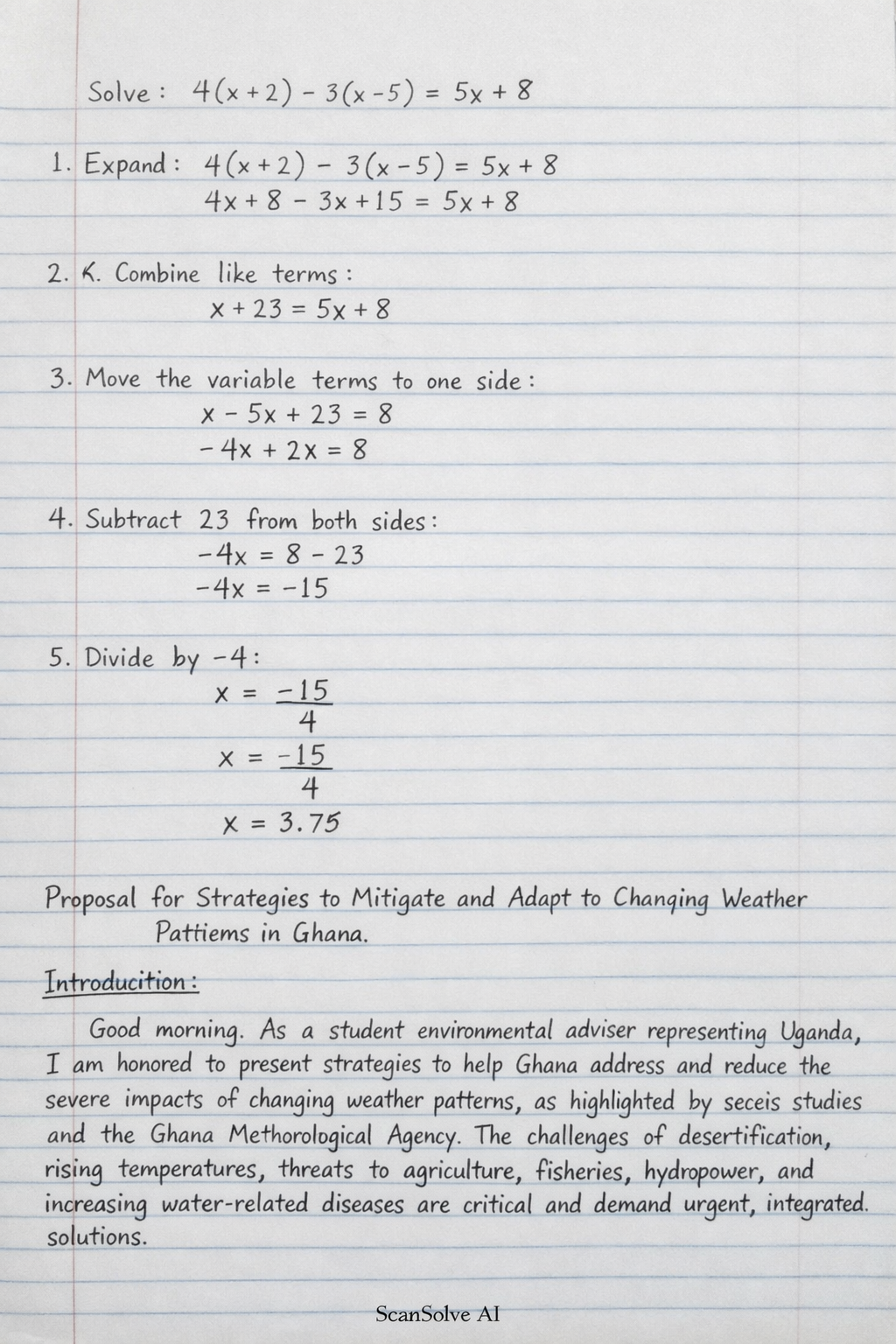
Proposal for Strategies to Mitigate and Adapt to Changing Weather Patterns in Ghana
Introduction:
Good morning. As a student environmental adviser representing Uganda, I am honored to present strategies to help Ghana address and reduce the severe impacts of changing weather patterns, as highlighted by recent studies and the Ghana Meteorological Agency. The challenges of desertification, rising temperatures, threats to agriculture, fisheries, hydropower, and increasing water-related diseases are critical and demand urgent, integrated solutions.
Identified Impacts from Text and Figures:
The provided text and images clearly illustrate several key impacts:
- Desertification and Land Degradation: Evidenced by the advancement of desertification (20,000 hectares/year) and the dry, degraded landscapes shown in the figures (top-left and bottom-left images).
- Drought and Water Scarcity: Depicted by the cracked earth (bottom-left image) and implied by falling crop yields and hydropower risks.
- Flooding: Clearly shown by the submerged areas and people wading through water (top-right image).
- Reduced Agricultural Productivity: Indicated by falling cocoa and rice yields, and the image of damaged crops (bottom-right image).
- Health Risks: Increased incidence of water-related diseases like malaria and cholera.
- Energy Insecurity: Risk to hydropower generation.
Proposed Strategies:
-
Climate-Smart Agriculture and Food Security:
- Promote Drought-Resistant Crops: Encourage the cultivation of crop varieties that are tolerant to drought and heat, such as specific strains of maize, sorghum, and millet.
- Implement Sustainable Irrigation: Introduce and expand efficient irrigation methods like drip irrigation and rainwater harvesting for agricultural use, especially in drought-prone areas.
- Adopt Agroforestry: Integrate trees into farming systems to improve soil fertility, reduce erosion, provide shade, and enhance biodiversity.
- Practice Soil Conservation: Implement techniques such as terracing, contour plowing, and minimum tillage to prevent soil erosion and improve water retention.
- Develop Early Warning Systems: Establish and disseminate timely weather forecasts and climate information to farmers to aid in planting decisions and disaster preparedness.
-
Water Resource Management and Health:
- Enhance Water Harvesting and Storage: Construct more small dams, reservoirs, and community-level water tanks to capture and store rainwater for domestic and agricultural use during dry seasons.
- Improve Water Sanitation and Hygiene (WASH): Invest in safe drinking water infrastructure and sanitation facilities to reduce the incidence of water-borne diseases like cholera. Promote hygiene education.
- Implement Flood Control Measures: Develop and maintain effective drainage systems, construct dykes and levees in flood-prone areas, and enforce strict building codes to prevent construction in floodplains.
- Strengthen Disease Surveillance: Enhance monitoring and control programs for vector-borne diseases like malaria, including mosquito net distribution and larviciding, especially in areas experiencing altered rainfall patterns.
-
Combating Land Degradation and Desertification:
- Afforestation and Reforestation: Launch large-scale tree planting initiatives, particularly in degraded areas and along desert margins, using indigenous and fast-growing species to stabilize soil and restore ecosystems.
- Sustainable Land Management: Educate communities on practices that prevent soil erosion, such as rotational grazing, proper waste management, and avoiding deforestation for charcoal production.
- Community Engagement: Involve local communities in planning and implementing land restoration projects, ensuring their ownership and long-term sustainability.
-
Energy Diversification:
- Invest in Renewable Energy: Reduce reliance on hydropower, which is vulnerable to rainfall variability, by diversifying into other renewable energy sources such as solar power and wind energy.
- Promote Energy Efficiency: Encourage energy-saving practices and technologies in homes and industries to reduce overall energy demand.
-
Policy and Awareness:
- Integrate Climate Change into Planning: Ensure that climate change adaptation and mitigation strategies are mainstreamed into national and local development plans.
- Public Awareness Campaigns: Conduct extensive public education campaigns to inform citizens about climate change impacts and empower them to adopt resilient practices.
Conclusion:
Addressing the multifaceted challenges posed by changing weather patterns in Ghana requires a holistic and integrated approach. By implementing these strategies across agriculture, water, health, land management, and energy sectors, Ghana can build greater resilience, protect its natural resources, and safeguard the well-being and development of its people.
Still stuck on this one?
Ask a follow-up, and the answer starts from this question.
More Geography Questions
Handwritten Step-by-Step Solution
Get this as a handwritten image on WhatsApp — like a tutor wrote it for you.
Try on WhatsApp