
We read your photo as:
What are the causes and effects of droughts in Southern Africa?
ScanSolve AI Answer
Answer
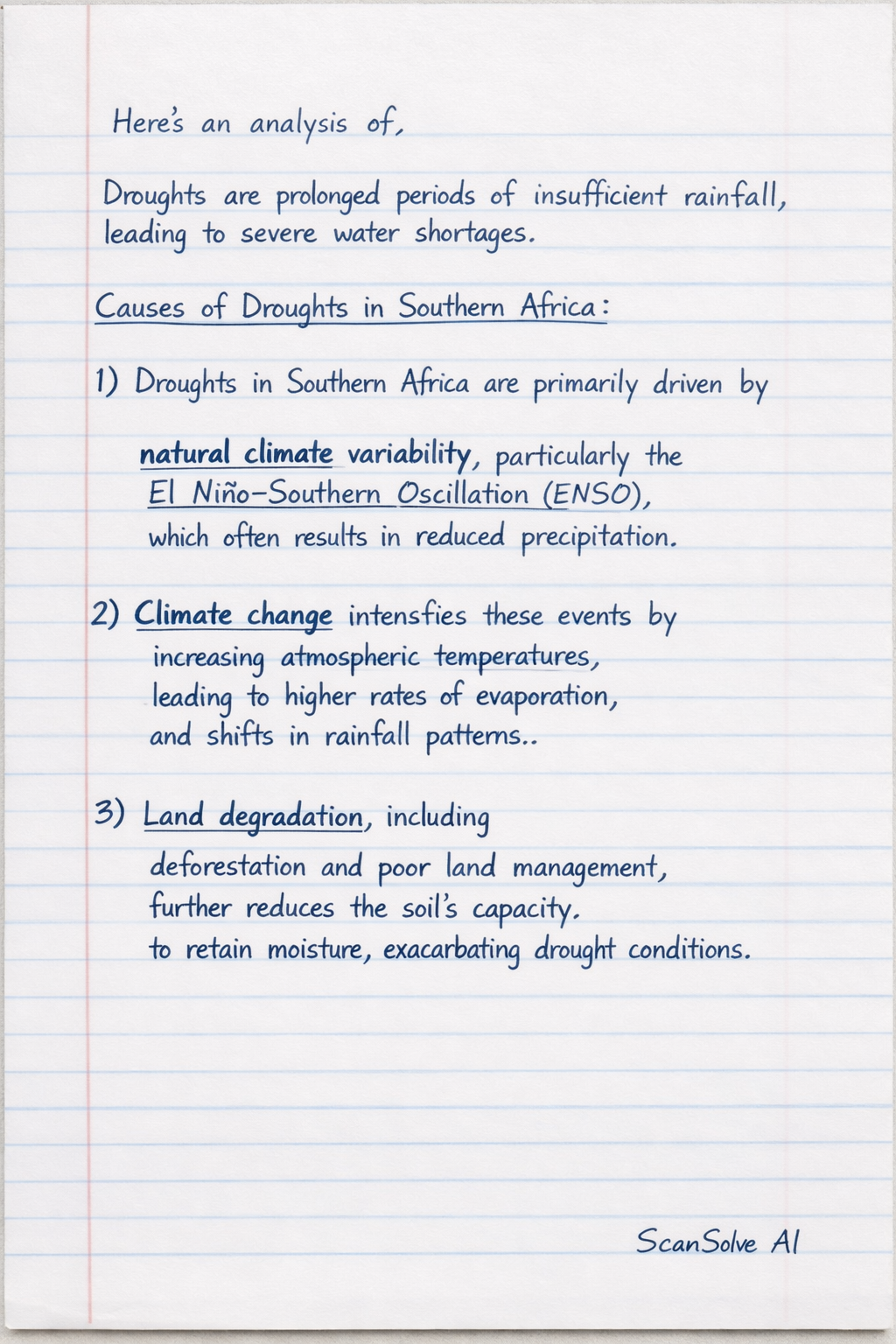
Droughts are prolonged periods of insufficient rainfall, leading to severe water shortages.
Causes of Droughts in Southern Africa:
Droughts in Southern Africa are primarily driven by natural climate variability, particularly the El Niño-Southern Oscillation (ENSO), which often results in reduced precipitation. Climate change intensifies these events by increasing atmospheric temperatures, leading to higher rates of evaporation and shifts in rainfall patterns. Land degradation, including deforestation and poor land management, further reduces the soil's capacity to retain moisture, exacerbating drought conditions.
Effects of Droughts in Southern Africa:
The impacts of droughts are extensive:
- Food Insecurity: Widespread crop failures and livestock deaths lead to severe food shortages, malnutrition, and potential famine.
- Water Scarcity: Limited water availability affects human consumption, sanitation, hygiene, and industrial activities, often leading to water rationing.
- Economic Losses: The agricultural sector suffers significant economic losses, resulting in increased food prices, job losses, and reduced national income.
- Health Impacts: Lack of clean water can lead to outbreaks of waterborne diseases, while malnutrition weakens populations, increasing susceptibility to illness.
- Environmental Degradation: Droughts contribute to desertification, loss of biodiversity, and an increased risk of wildfires, damaging ecosystems.
Management Strategies to Prevent or Minimize Effects:
Effective strategies include:
- Water Conservation: Implementing rainwater harvesting, promoting efficient irrigation techniques, and encouraging responsible water use in households and industries.
- Water Infrastructure Development: Investing in dams, boreholes, desalination plants, and improved water distribution networks to secure water supply.
- Sustainable Agriculture: Promoting drought-resistant crops, conservation agriculture, and sustainable land management practices like afforestation and soil erosion control.
- Early Warning Systems: Establishing robust meteorological monitoring and early warning systems to predict droughts and allow for timely preparedness and response.
- Policy and Governance: Developing strong water governance policies, diversifying livelihoods away from rain-fed agriculture, and providing social safety nets for affected communities.
Still stuck on this one?
Ask a follow-up, and the answer starts from this question.
More Geography Questions
Handwritten Step-by-Step Solution
Get this as a handwritten image on WhatsApp — like a tutor wrote it for you.
Try on WhatsApp