
We read your photo as:
Droughts constitute a life threat to the people of South Africa. Indicate the causes, impacts and the strategies to minimize the impacts in your preferred area of study.
Geography
ScanSolve AI Answer
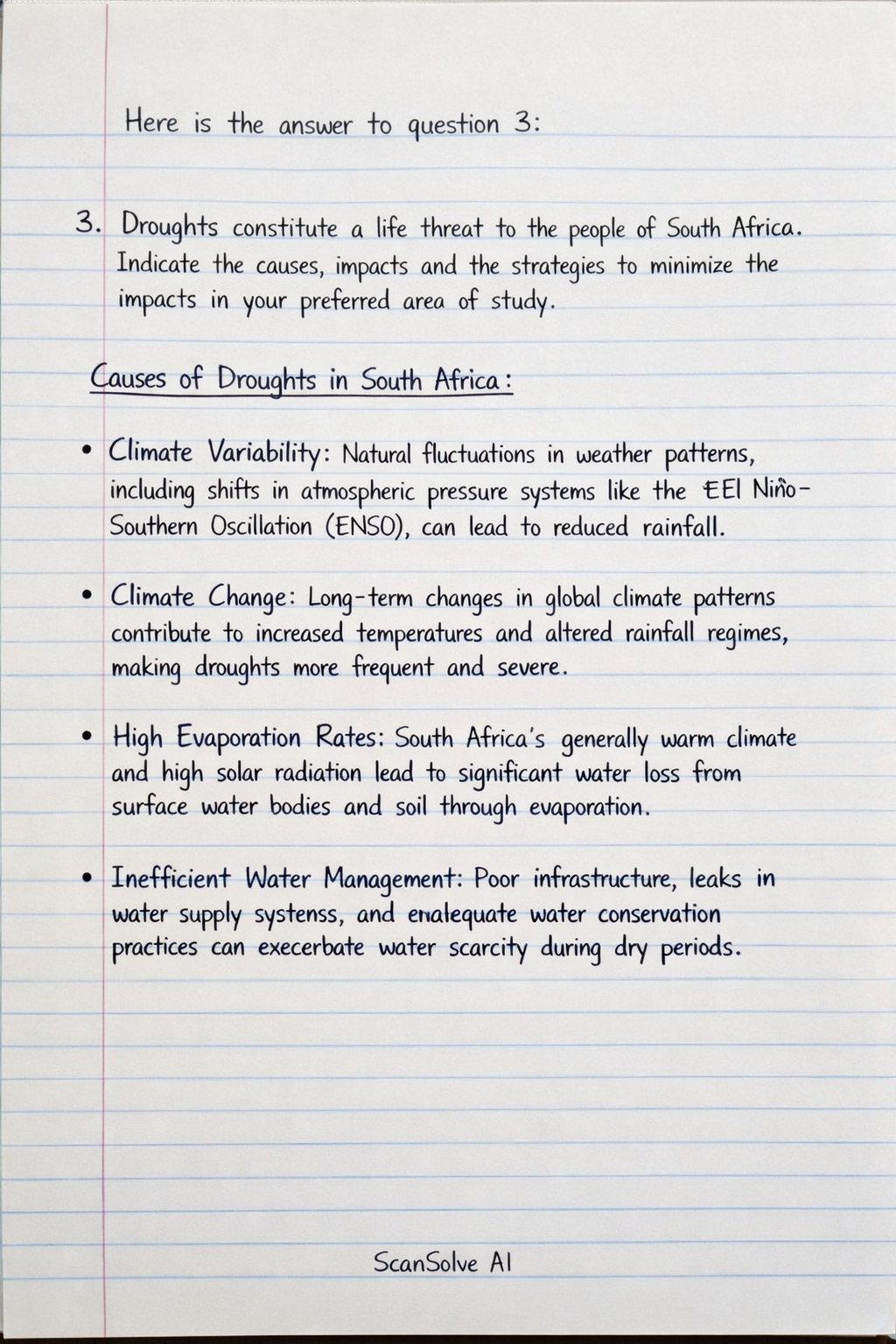
Here is the answer to question 3:
3. Droughts constitute a life threat to the people of South Africa. Indicate the causes, impacts and the strategies to minimize the impacts in your preferred area of study.
-
Causes of Droughts in South Africa:
- Climate Variability: Natural fluctuations in weather patterns, including shifts in atmospheric pressure systems like the El Niño-Southern Oscillation (ENSO), can lead to reduced rainfall.
- Climate Change: Long-term changes in global climate patterns contribute to increased temperatures and altered rainfall regimes, making droughts more frequent and severe.
- High Evaporation Rates: South Africa's generally warm climate and high solar radiation lead to significant water loss from surface water bodies and soil through evaporation.
- Inefficient Water Management: Poor infrastructure, leaks in water supply systems, and inadequate water conservation practices can exacerbate water scarcity during dry periods.
- Deforestation and Land Degradation: Removal of vegetation reduces the soil's ability to retain moisture and can alter local rainfall patterns, contributing to drier conditions.
-
Impacts of Droughts in South Africa:
- Water Scarcity: Reduced availability of water for domestic use, agriculture, and industry, leading to water restrictions and potential health crises.
- Food Insecurity: Crop failures and livestock deaths due to lack of water and pasture, resulting in higher food prices and increased hunger.
- Economic Losses: Significant financial losses for farmers, agricultural industries, and related sectors, impacting national GDP and employment.
- Environmental Degradation: Increased risk of wildfires, loss of biodiversity, soil erosion, and desertification.
- Social Disruption: Forced migration, conflicts over scarce resources, and increased poverty, particularly in rural communities.
-
Strategies to Minimize Impacts (Focusing on Agriculture):
- Water-Efficient Irrigation: Implement drip irrigation and micro-sprinkler systems to deliver water directly to plant roots, minimizing evaporation and runoff.
- Drought-Resistant Crops: Promote the cultivation of crop varieties that are genetically adapted to withstand prolonged dry periods and require less water.
- Soil Moisture Conservation: Utilize practices like mulching, no-till farming, and contour ploughing to improve soil water retention and reduce evaporation.
- Rainwater Harvesting: Encourage farmers to collect and store rainwater from roofs and other surfaces for supplementary irrigation during dry spells.
- Early Warning Systems: Develop and disseminate accurate seasonal forecasts and drought monitoring systems to help farmers make informed decisions about planting and water use.
Was this helpful?
Still stuck on this one?
Ask a follow-up, and the answer starts from this question.
Got a different question?Ask your own question
More Geography Questions
Handwritten Step-by-Step Solution
Get this as a handwritten image on WhatsApp — like a tutor wrote it for you.
Try on WhatsApp