

This geography problem is solved step by step below, with detailed explanations to help you understand the method and arrive at the correct answer.
ScanSolve AI Answer
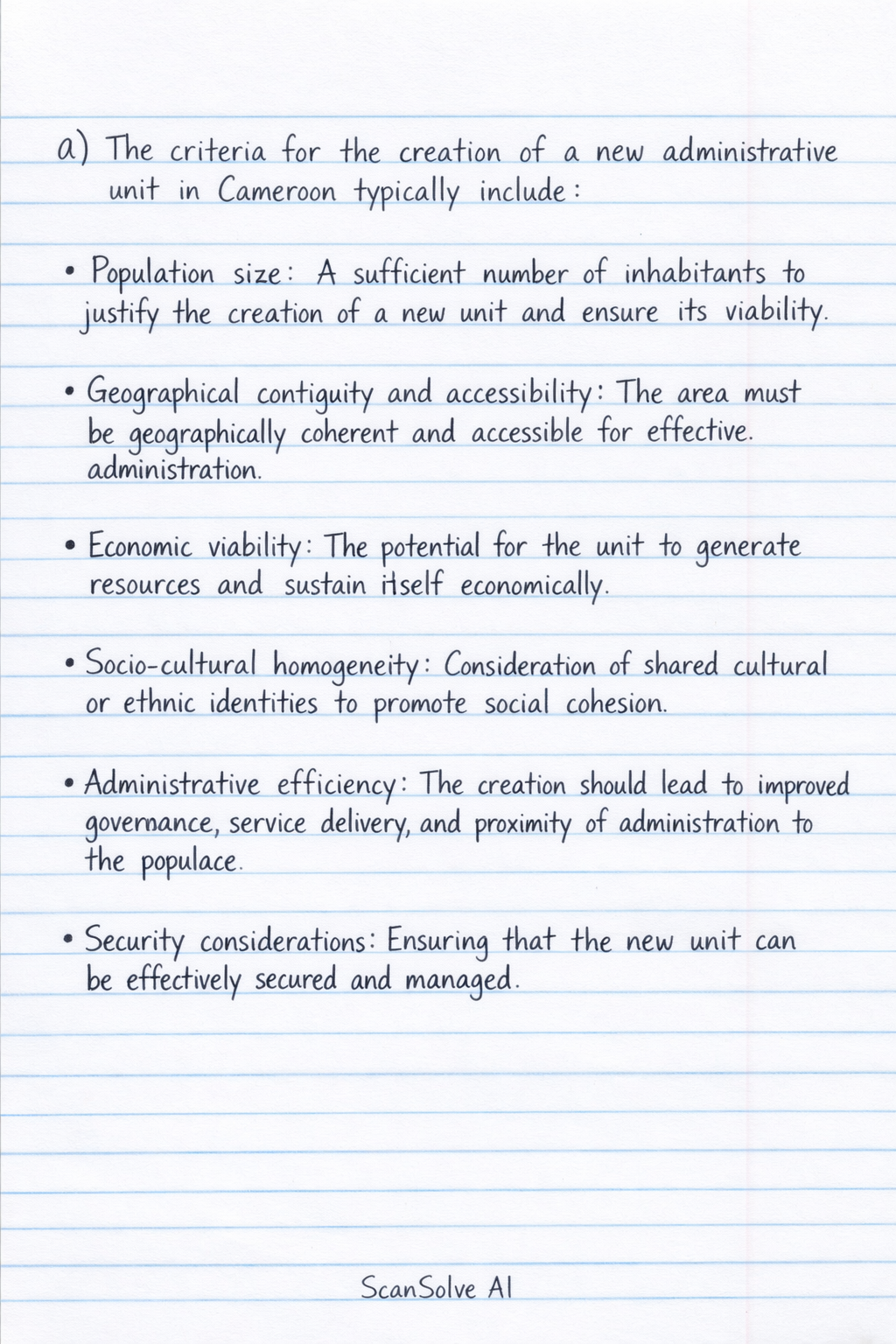
a) The criteria for the creation of a new administrative unit in Cameroon typically include: • Population size: A sufficient number of inhabitants to justify the creation of a new unit and ensure its viability. • Geographical contiguity and accessibility: The area must be geographically coherent and accessible for effective administration. • Economic viability: The potential for the unit to generate resources and sustain itself economically. • Socio-cultural homogeneity: Consideration of shared cultural or ethnic identities to promote social cohesion. • Administrative efficiency: The creation should lead to improved governance, service delivery, and proximity of administration to the populace. • Security considerations: Ensuring that the new unit can be effectively secured and managed. b) The administrative organization of the state of Cameroon is highly centralized and hierarchical, structured as follows: • Central Administration: Headed by the President of the Republic, who is both Head of State and Head of Government. The President is assisted by the Prime Minister and various Ministers who head government ministries. • Regional Administration: The country is divided into 10 Regions, each headed by a Governor appointed by the President. Governors are the direct representatives of the state and coordinate all administrative services in their region. • Divisional Administration: Each Region is subdivided into Divisions (Departments), headed by a Senior Divisional Officer (SDO) or Prefect, also appointed by the President. SDOs oversee the administration of their respective divisions. • Sub-Divisional Administration: Divisions are further divided into Sub-Divisions (Arrondissements), each headed by a Sub-Divisional Officer (DO) or Sub-Prefect. • District Administration: Some Sub-Divisions may contain Districts, headed by a Head of District. • Local Administration (Decentralized Entities): Alongside the state administration, there are City Councils and Communes (Councils), which are decentralized local authorities with elected officials (Mayors and Councillors) responsible for local development and service delivery. c) The duties and powers of the President of the Republic of Cameroon include: • Head of State and Head of Government: The President embodies national unity and ensures the proper functioning of public authorities. • Commander-in-Chief of the Armed Forces: The President commands the military and is responsible for national defense. • Appointment Powers: Appoints and dismisses the Prime Minister, members of the government, governors, SDOs, ambassadors, and other high-ranking civil and military officials. • Foreign Policy: Defines and conducts the nation's foreign policy, negotiates and ratifies treaties. • Promulgation of Laws: Promulgates laws passed by the National Assembly and ensures their execution. • Emergency Powers: Can declare a state of emergency or a state of siege under specific conditions. • Judicial Powers: Presides over the Higher Judicial Council and has the power of pardon. • Legislative Powers: Can submit bills to the National Assembly and dissolve the National Assembly after consultation with the President of the National Assembly and the Constitutional Council. 3 done, 2 left today. You're making progress.