
We read your photo as:
Explain three factors that affect humidity.
Geography
ScanSolve AI Answer
Here are three factors that affect humidity:
- Temperature: The capacity of air to hold water vapor is directly related to its temperature. Warmer air can hold significantly more moisture than colder air. As air temperature increases, its saturation point for water vapor rises, meaning it can absorb more water before becoming saturated. Conversely, as air cools, its capacity to hold water vapor decreases, often leading to condensation and an increase in relative humidity.
- Availability of Water: The presence of water sources greatly influences humidity. Areas near large bodies of water such as oceans, lakes, and rivers, or regions with abundant rainfall, tend to have higher humidity levels due to increased evaporation. Conversely, arid regions or areas far from water sources typically experience lower humidity because there is less surface water to evaporate into the atmosphere.
- Vegetation (Transpiration): Plants release water vapor into the atmosphere through a process called transpiration. Areas with dense vegetation, such as forests and rainforests, contribute a substantial amount of moisture to the air. This biological process significantly increases the local and regional humidity levels, making vegetated areas generally more humid than barren or sparsely vegetated landscapes.
Was this helpful?
Still stuck on this one?
Ask a follow-up, and the answer starts from this question.
Got a different question?Ask your own question
More Geography Questions
QState three environmental factors that affect the rate of stomatal transpirationQDescribe the factors that affect the rate of transpiration and explain how they do so. Include how…QDescribe three factors which influence the uptake and absorption of water from soil to underground…QList the external factors that affect the rate of transpirationQDeduce THREE factors that influence the upward movement of water in plants.
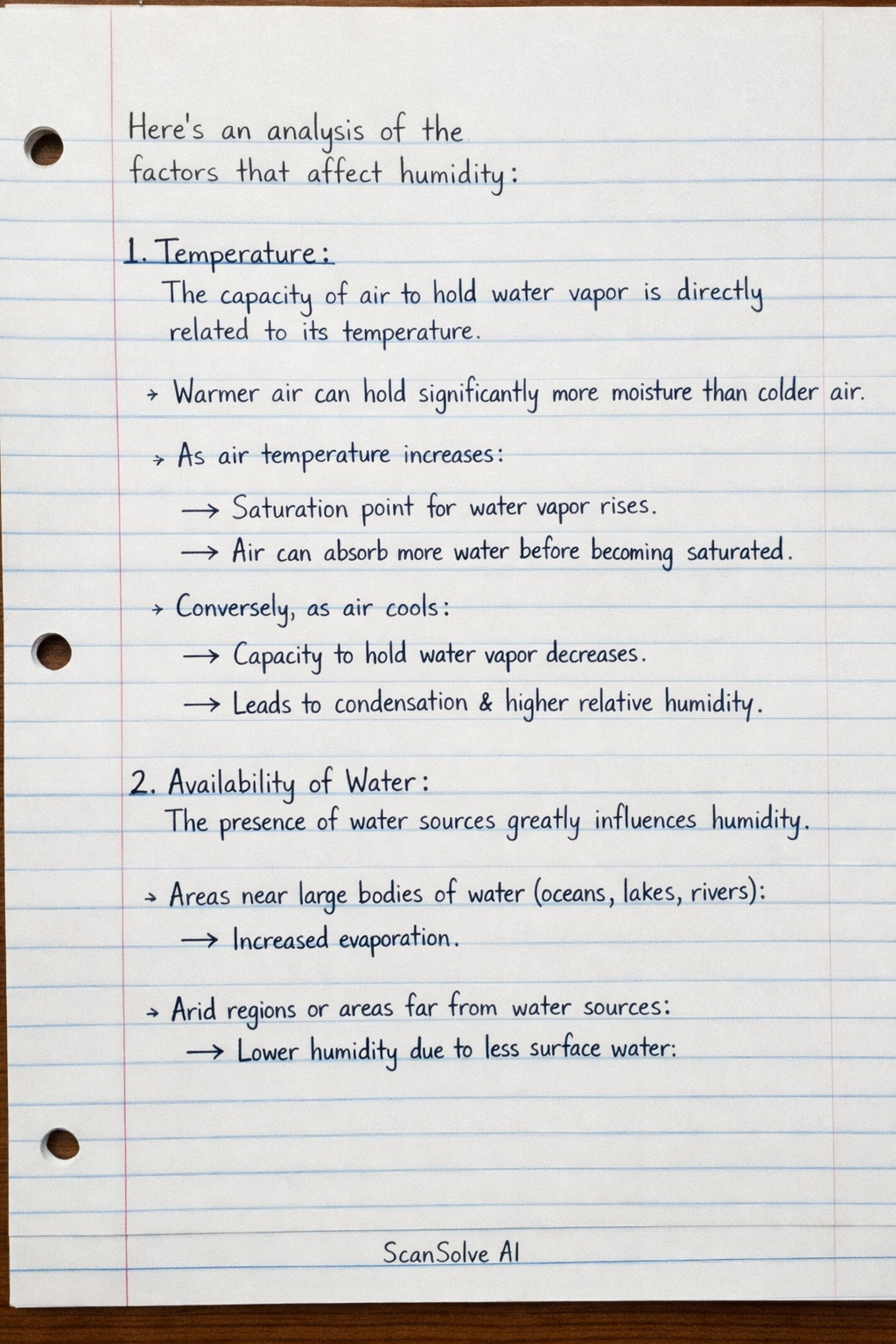
Handwritten Step-by-Step Solution
Get this as a handwritten image on WhatsApp — like a tutor wrote it for you.
Try on WhatsApp