
We read your photo as:
Analyze the Marikana strike: causes, consequences, and lessons learned. Discuss industrialisation's impact on workers and their responses.
ScanSolve AI Answer
Question 3
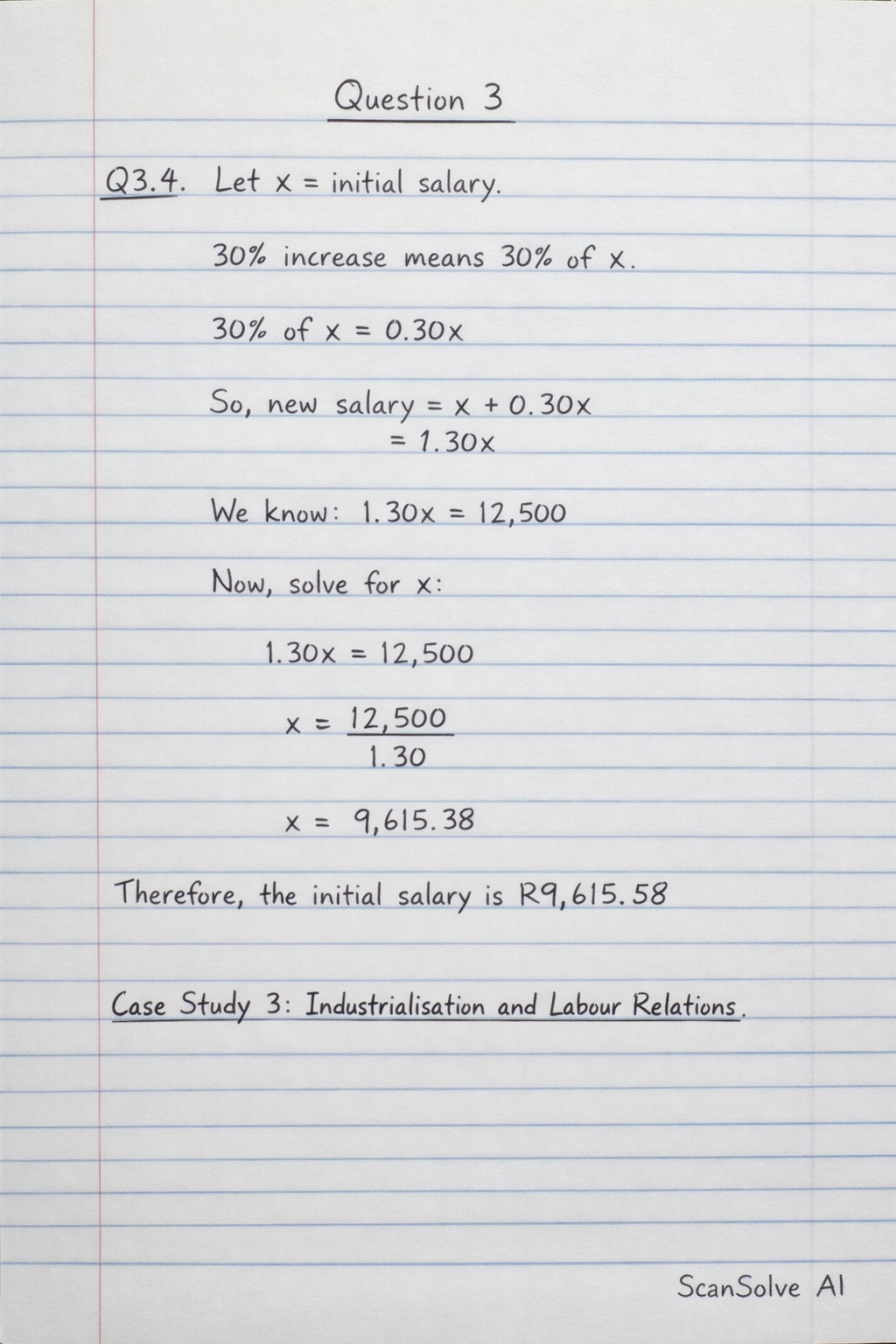
Q3.4. The Marikana strike was primarily triggered by demands from rock drill operators for higher wages, specifically a net monthly salary of R12,500, and better living and working conditions at the Lonmin platinum mine.
Q3.5. The consequences of the strike included significant violence and loss of life, particularly the killing of 34 striking miners by police on 16 August 2012. It also led to numerous injuries, arrests, and a lasting impact on labour relations in South Africa, highlighting deep socio-economic inequalities.
Q3.6. A key lesson learned from this case is the critical importance of effective communication and peaceful dispute resolution mechanisms in labour relations. It underscored the need for all parties – employers, unions, and government – to engage constructively to prevent violence and protect human lives during industrial disputes.
Case Study 3: Industrialisation and Labour Relations
Q3.7. Industrialisation affected workers by subjecting them to long hours, unsafe working conditions, and racial discrimination. This often resulted in exploitation and poor quality of life for the working class.
Q3.8. The response of workers to these conditions was the rise and formation of trade unions, such as COSATU. These unions were established to collectively fight for workers' rights and to improve their terms of employment.
Q3.9. Industrialisation shaped labour laws by creating the need for legal protection for workers against exploitation. The struggles and advocacy of trade unions, spurred by the harsh conditions of industrialisation, influenced the development of labour laws aimed at regulating working conditions, wages, and ensuring fair labour practices.
QUESTION 4
Scenario: Tripartite System in a Private Manufacturing Company
Q4.1. The tripartite system functioned by bringing together the three key stakeholders – the Government (Department of Employment and Labour), the Employer (Company management), and the Employees (represented by a trade union) – to collectively negotiate and resolve the dispute regarding wages and working conditions.
Q4.2. The government played the role of an involved party concerned with economic stability and compliance with labour laws. It likely facilitated the negotiation process, ensuring that discussions adhered to legal frameworks and aimed for an outcome that supported broader economic stability.
Q4.3. The employer contributed by presenting their economic perspective, arguing that rising production costs made wage increases difficult. They participated in the negotiations to find a mutually acceptable solution while managing their business constraints.
Q4.4. The trade union achieved representation for the employees' demands for higher wages and safer working conditions within a formal negotiation framework. Through this system, the union advocated for and negotiated towards securing improved terms of employment for its members.
Still stuck on this one?
Ask a follow-up, and the answer starts from this question.
More History Questions
Handwritten Step-by-Step Solution
Get this as a handwritten image on WhatsApp — like a tutor wrote it for you.
Try on WhatsApp