
We read your photo as:
What do black and red birds, the rabbit, and the chief in charge of money represent in Akan culture and folklore?
ScanSolve AI Answer
Answer
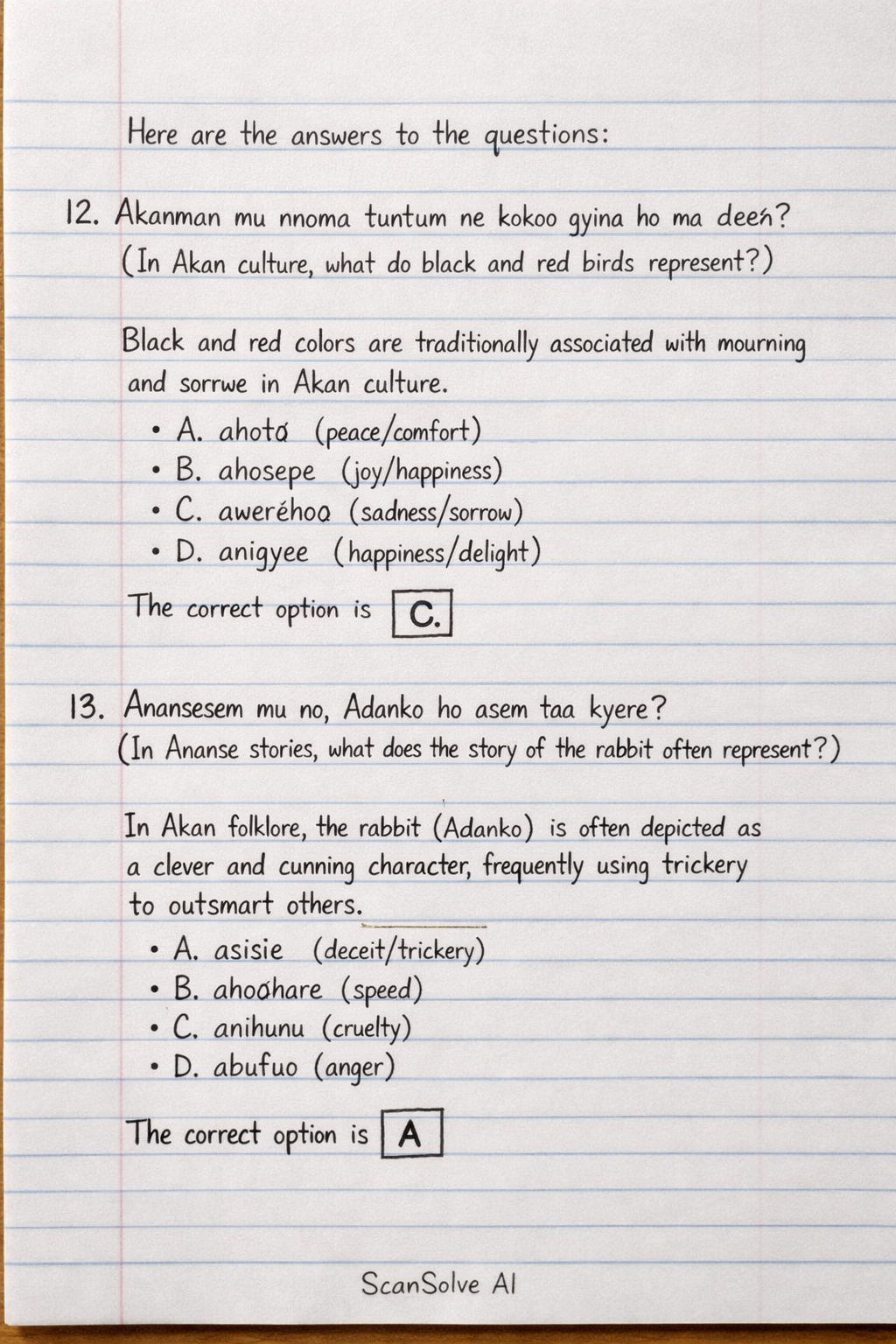
Here are the answers to the questions:
-
Akanman mu nnoma tuntum ne kokoo gyina ho ma deɛn? (In Akan culture, what do black and red birds represent?) Black and red colors are traditionally associated with mourning and sorrow in Akan culture.
- A. ahotɔ. (peace/comfort)
- B. ahosepe. (joy/happiness)
- C. awerɛhoɔ. (sadness/sorrow)
- D. anigyee. (happiness/delight) The correct option is C.
-
Anansesem mu no, Adanko ho asem taa kyere? (In Ananse stories, what does the story of the rabbit often represent?) In Akan folklore, the rabbit (Adanko) is often depicted as a clever and cunning character, frequently using trickery to outsmart others.
- A. asisie. (deceit/trickery)
- B. ahoɔhare. (speed)
- C. anihunu. (cruelty)
- D. abufuo. (anger) The correct option is A.
-
Ɔhene bɛn na ɔhwɛ sika so wɔ aborɔfie? (Which chief is in charge of money in the palace?) The "Saanaahene" is the traditional chief responsible for the treasury and financial matters in an Akan palace.
- A. kurontihene. (chief of the town/head of the town council)
- B. dabenehene. (chief in charge of palace rooms)
- C. ɔbenumsaa. (a type of chief, not specifically treasury)
- D. saanaahene. (chief of the treasury/exchequer) The correct option is D.
-
Obi te owufoo bi ntoa a, asɛe ne sɛn? (If someone inherits the property of a deceased person, what has happened to them?) "Wadi n'adeɛ" is the Akan phrase for inheriting someone's property.
- A. wato funnaka. (they have buried the coffin)
- B. waba da asie no. (they have come to the burial)
- C. wakɔ ayie ase aba. (they have attended the funeral and returned)
- D. wadi n'adeɛ. (they have inherited their property) The correct option is D.
-
Deɛn na atetesɛm kyerɛ sɛ ɔkomfo Anokye de mpaboa foroo? (What does tradition say Okomfo Anokye climbed with his sandals?) A well-known legend about Okomfo Anokye, a powerful priest and co-founder of the Ashanti Kingdom, states that he climbed an oil palm tree with his sandals on.
- A. kokosi. (coconut tree)
- B. borɔferɛ. (pawpaw tree)
- C. mpampamuro. (a type of tree)
- D. abetene. (oil palm tree) The correct option is D.
-
Aman mmienu wo Ghana ha a wɔn mmrane ne Katoko? (Which two states in Ghana have "Katoko" as their appellation/praise name?) "Katoko" is a praise name associated with the Asante and Akyem people, signifying their bravery and strength.
- A. Akuapem ne Kwawu.
- B. Asante ne Nsuta.
- C. Kwahu ne Akyem.
- D. Asante ne Akyem. The correct option is D.
Try one yourself
A new problem that tests the same skill.
Still stuck on this one?
Ask a follow-up, and the answer starts from this question.
More History Questions
Handwritten Step-by-Step Solution
Get this as a handwritten image on WhatsApp — like a tutor wrote it for you.
Try on WhatsApp