

This history question requires analysis of historical events, causes, and consequences. The detailed answer below provides context, evidence, and a well-structured explanation.
ScanSolve AI Answer
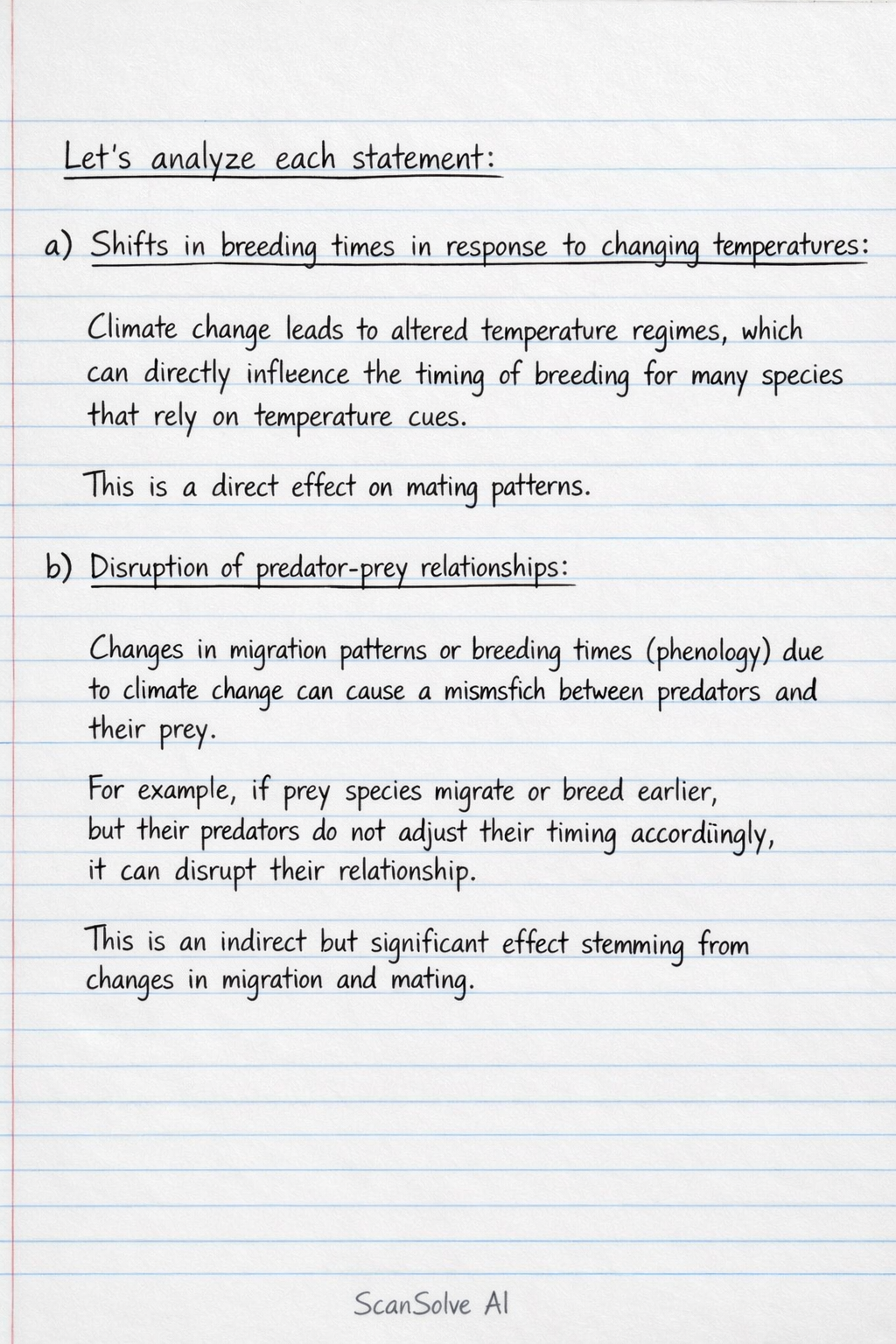
The question asks how climate change affects species mating and migration patterns. Let's analyze each statement: a) Shifts in breeding times in response to changing temperatures: Climate change leads to altered temperature regimes, which can directly influence the timing of breeding for many species that rely on temperature cues. This is a direct effect on mating patterns. b) Disruption of predator-prey relationships: Changes in migration patterns or breeding times (phenology) due to climate change can cause a mismatch between predators and their prey. For example, if prey species migrate or breed earlier, but their predators do not adjust their timing accordingly, it can disrupt their relationship. This is an indirect but significant effect stemming from changes in migration and mating. c) Potential cascading effects throughout the food web: Disruptions in predator-prey relationships (as in 'b') or other changes in species interactions due to altered mating and migration patterns can have ripple effects throughout the entire food web, affecting multiple trophic levels. d) Changes in biodiversity in affected ecosystems: When species' mating and migration patterns are disrupted, it can lead to reduced reproductive success, population declines, and even local extinctions. These changes collectively contribute to alterations in the biodiversity of affected ecosystems. All four statements describe valid ways in which climate change, through its impact on mating and migration patterns, affects species and ecosystems. Statement 'a' is a direct effect on the patterns themselves, while 'b', 'c', and 'd' are subsequent ecological consequences that arise from these initial changes. Therefore, the correct combination includes all four alternatives. The final answer is 2