
We read your photo as:
List six distinct problems addressed by Paul in his first letter to the Corinthian church, citing relevant scripture passages.
History
ScanSolve AI Answer
Step-by-step solution
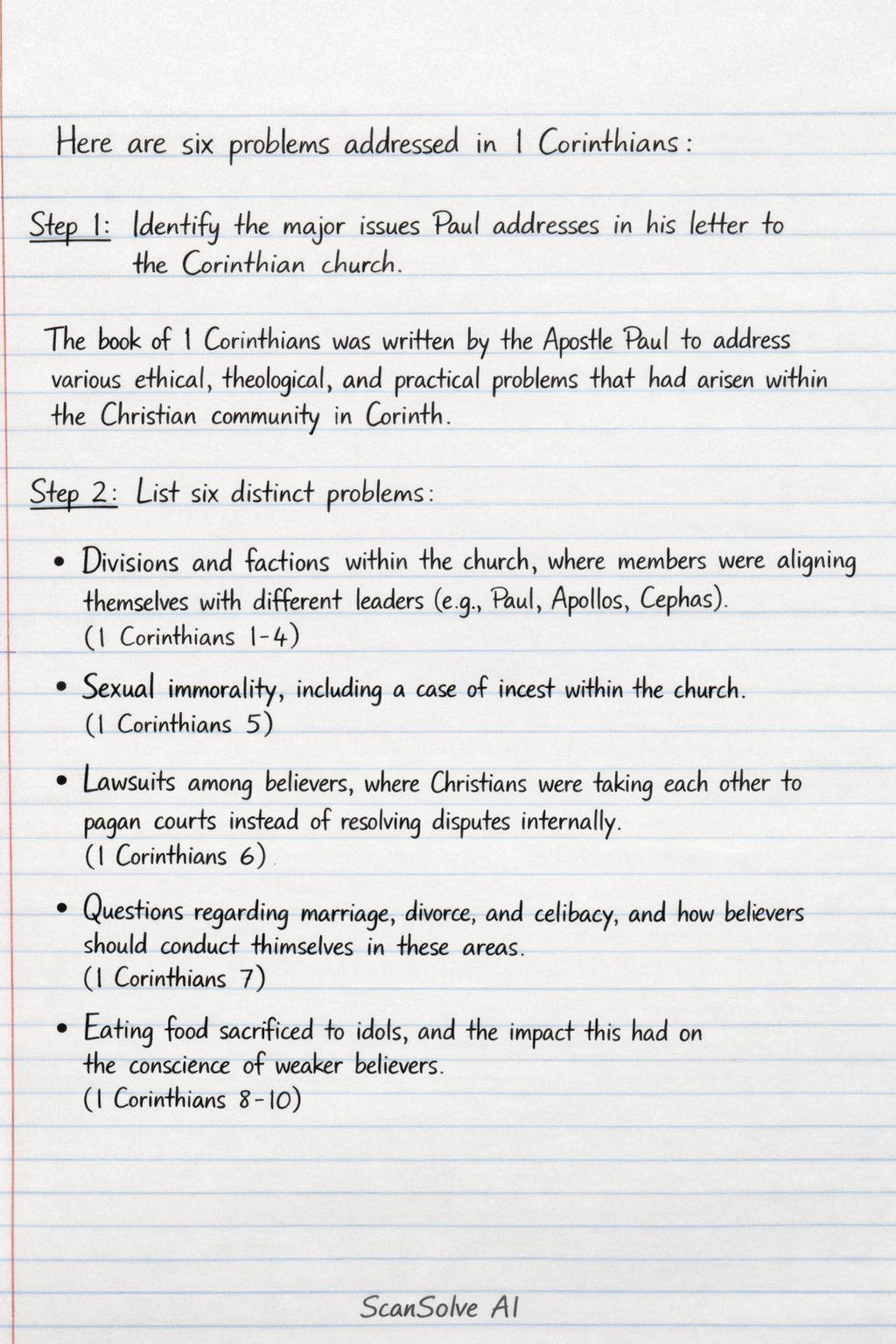
2 stepsHere are six problems addressed in 1 Corinthians:
Identify the major issues Paul addresses in his letter to the Corinthian church.
The book of 1 Corinthians was written by the Apostle Paul to address various ethical, theological, and practical problems that had arisen within the Christian community in Corinth.
List six distinct problems.
- Divisions and factions within the church, where members were aligning themselves with different leaders (e.g., Paul, Apollos, Cephas). (1 Corinthians 1-4)
- Sexual immorality, including a case of incest within the church. (1 Corinthians 5)
- Lawsuits among believers, where Christians were taking each other to pagan courts instead of resolving disputes internally. (1 Corinthians 6)
- Questions regarding marriage, divorce, and celibacy, and how believers should conduct themselves in these areas. (1 Corinthians 7)
- Eating food sacrificed to idols, and the impact this had on the conscience of weaker believers. (1 Corinthians 8-10)
- Disorderly conduct during worship, including abuses of the Lord's Supper and the misuse of spiritual gifts. (1 Corinthians 11-14)
The final answer is
Was this helpful?
Still stuck on this one?
Ask a follow-up, and the answer starts from this question.
Got a different question?Ask your own question
More History Questions
QWhat are the answers to questions 7, 8, and 9 about Paul's life and conversion?QCRS WASSCE 2026 TRIAL QUESTIONS 1 (a) Highlight the contributions of Cyrus to the return of the Jews…QSchool of world mission Zambia New Testament Survey Exams Section A: Multiple Choice (15 Marks)…QGive ways in which God would punish Israel for her evils according to prophet Amos. State 6 ways in…QDescribe six ways Christians help restore fallen members and six Deuteronomic reforms by King…
Handwritten Step-by-Step Solution
Get this as a handwritten image on WhatsApp — like a tutor wrote it for you.
Try on WhatsApp