
We read your photo as:
Explain the significance of various cultural festivals, traditions, and the roles of religious leaders in different societies.
History
ScanSolve AI Answer
- a)
- Asafotufiam: Ga-Adangbe people
- Ohum: Akyem people
- Kundum: Ahanta and Nzema people
-
b)
- Honesty
- Trustworthiness
-
a)
- i. Maulid Nabi: To commemorate the birth of Prophet Muhammad.
- ii. Ahobaa: To commemorate the migration of their ancestors and for purification.
-
b)
- He was a brave king of Kumawu.
- He sacrificed himself to save the Asante Kingdom during the Denkyira war.
-
a) Prophet Mohammed was born in Mecca around 570 CE. He was orphaned at a young age, losing his father before birth and his mother at six. He was raised by his grandfather, Abd al-Muttalib, and later by his uncle, Abu Talib, becoming known for his honesty and trustworthiness as a shepherd and merchant.
-
a)
- It commemorates the sacrifice of Jesus Christ for the forgiveness of sins.
- It symbolizes the new covenant between God and humanity through Christ's blood.
-
b)
- He established the Ahorba festival among the Fante people.
- He was a great traditional priest and healer who provided spiritual guidance.
-
a) A religious leader is an individual who holds a prominent position within a religious community, guiding its members in spiritual matters, rituals, and moral conduct.
-
b)
- Tradition instills moral values and ethics, guiding individuals on right and wrong.
- It promotes social cohesion and unity by providing shared customs and beliefs.
- It preserves cultural identity and heritage, connecting generations to their past.
Was this helpful?
Still stuck on this one?
Ask a follow-up, and the answer starts from this question.
Got a different question?Ask your own question
More History Questions
QWhat are some key facts about religious traditions and celebrations?QDescribe the common traditions and religious significance of Christmas celebrations.QDefine folklore, myths, legends, and fables. Explain their significance and differentiate between…QDescribe the role of culture and gender in family matters, list five ethnic groups in East Africa…QExplain why it is important to respect traditional African religions even though many people today…
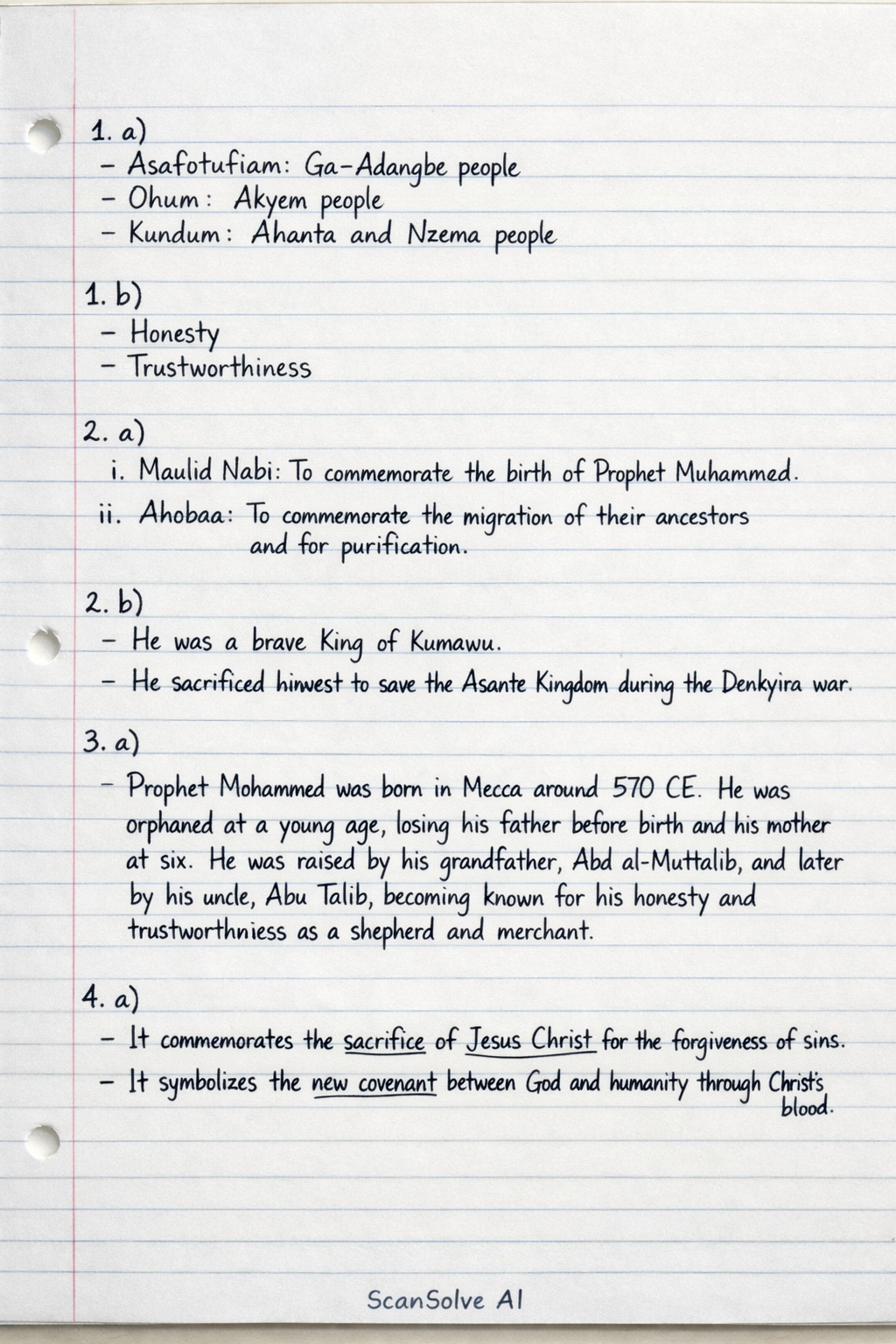
Handwritten Step-by-Step Solution
Get this as a handwritten image on WhatsApp — like a tutor wrote it for you.
Try on WhatsApp