
We read your photo as:
What are the answers to the following questions about the Universal Declaration of Human Rights?
ScanSolve AI Answer
Answer
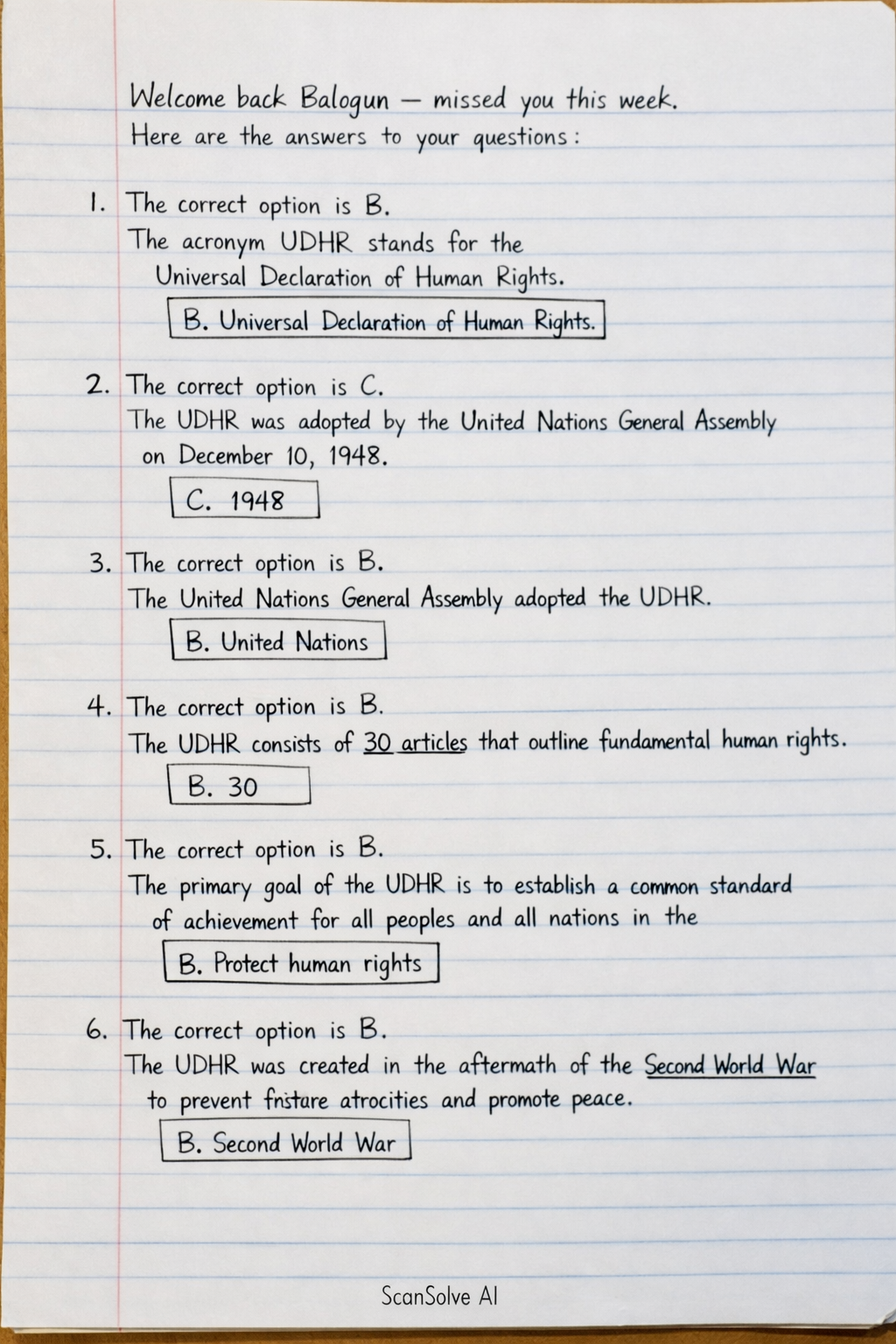
Here are the answers to your questions:
-
The correct option is B. The acronym UDHR stands for the Universal Declaration of Human Rights.
-
The correct option is C. The UDHR was adopted by the United Nations General Assembly on December 10, 1948.
-
The correct option is B. The United Nations General Assembly adopted the UDHR.
-
The correct option is B. The UDHR consists of 30 articles that outline fundamental human rights.
-
The correct option is B. The primary goal of the UDHR is to establish a common standard of achievement for all peoples and all nations in the protection of human rights.
-
The correct option is B. The UDHR was created in the aftermath of the Second World War to prevent future atrocities and promote peace.
-
The correct option is B. Freedom from discrimination means that all individuals should be treated equally regardless of differences such as race, religion, gender, or origin.
-
The correct option is B. Freedom from want refers to the right to an adequate standard of living, including basic needs like food and shelter.
-
The correct option is A. Freedom from fear means the right to live without threats or violence and to feel secure.
-
The correct option is C. Freedom of expression is the right to express one's opinions freely without fear of censorship or punishment.
-
The correct option is B. Freedom of movement allows individuals to travel freely within and outside a country and to choose where they live.
-
The correct option is B. Freedom of religion means the right to choose and practice any religion or no religion at all, without coercion.
-
The correct option is B. Individuals promote the UDHR by respecting others' rights and upholding the principles of human dignity.
-
The correct option is B. NGOs (Non-Governmental Organizations) are groups that actively work to promote and protect human rights.
-
The correct option is B. One key role of NGOs in relation to the UDHR is to educate people on their rights and advocate for their protection.
-
The correct option is B. Governments promote the UDHR by making and enforcing laws that protect human rights and by ensuring justice.
-
The correct option is A. A fundamental responsibility of government under the UDHR is to protect citizens' rights and ensure their well-being.
-
The correct option is C. The UDHR is a universal document, meaning it applies to all human beings everywhere, regardless of nationality, race, gender, or any other status.
-
The correct option is C. The violation of human rights often leads to conflict and injustice, undermining peace and stability.
-
The correct option is A. Individuals can help protect human rights by reporting abuses to relevant authorities or human rights organizations.
Try one yourself
A new problem that tests the same skill.
Still stuck on this one?
Ask a follow-up, and the answer starts from this question.
More History Questions
Handwritten Step-by-Step Solution
Get this as a handwritten image on WhatsApp — like a tutor wrote it for you.
Try on WhatsApp