
We read your photo as:
What were the key consequences and significance of the storming of the Bastille during the French Revolution?
History
ScanSolve AI Answer
Answer
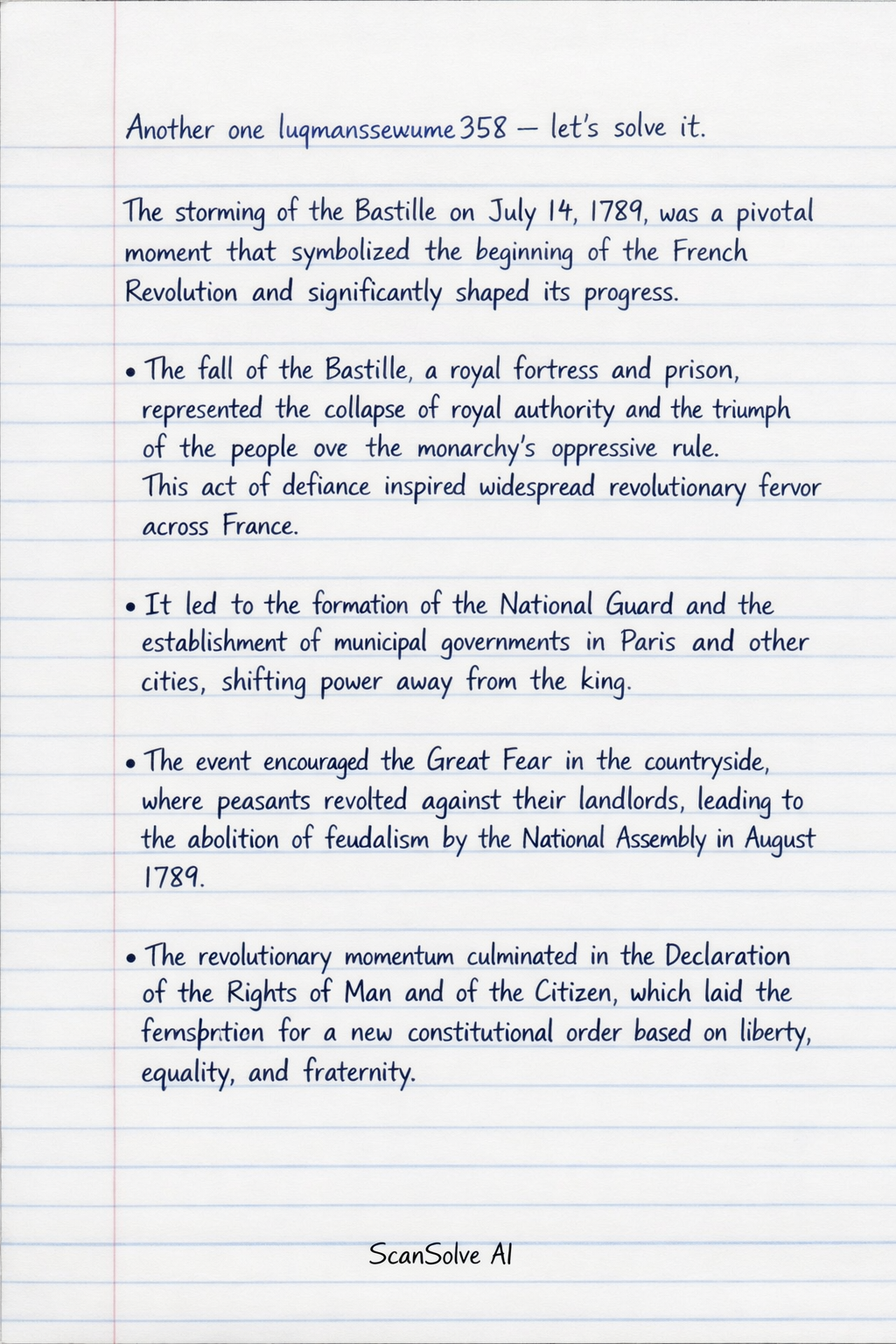
The storming of the Bastille on July 14, 1789, was a pivotal moment that symbolized the beginning of the French Revolution and significantly shaped its progress.
- The fall of the Bastille, a royal fortress and prison, represented the collapse of royal authority and the triumph of the people over the monarchy's oppressive rule. This act of defiance inspired widespread revolutionary fervor across France.
- It led to the formation of the National Guard and the establishment of municipal governments in Paris and other cities, shifting power away from the king.
- The event encouraged the Great Fear in the countryside, where peasants revolted against their landlords, leading to the abolition of feudalism by the National Assembly in August 1789.
- The revolutionary momentum culminated in the Declaration of the Rights of Man and of the Citizen, which laid the foundation for a new constitutional order based on liberty, equality, and fraternity.
- Other events, such as the Women's March on Versailles in October 1789, forced the royal family to move to Paris, further diminishing their power and placing them under the watchful eye of the revolutionaries. These events collectively transformed France from an absolute monarchy into a republic, setting the stage for further radicalization and conflict.
Was this helpful?
Still stuck on this one?
Ask a follow-up, and the answer starts from this question.
Got a different question?Ask your own question
More History Questions
QSummarize this for a student in tight bullet points, then add 3 quick self-test questions: The…QWhat were the main positive and negative consequences of the French Revolution on France?QWhat were the key events of the French Revolution between 1789 and 1799?QHow did economic hardships contribute to the French Revolution?QWhat were the main causes of the French Revolution?
Browse by topic:World History
Handwritten Step-by-Step Solution
Get this as a handwritten image on WhatsApp — like a tutor wrote it for you.
Try on WhatsApp