
We read your photo as:
Define citizen rights and responsibilities, and list five examples of each.
Law
ScanSolve AI Answer
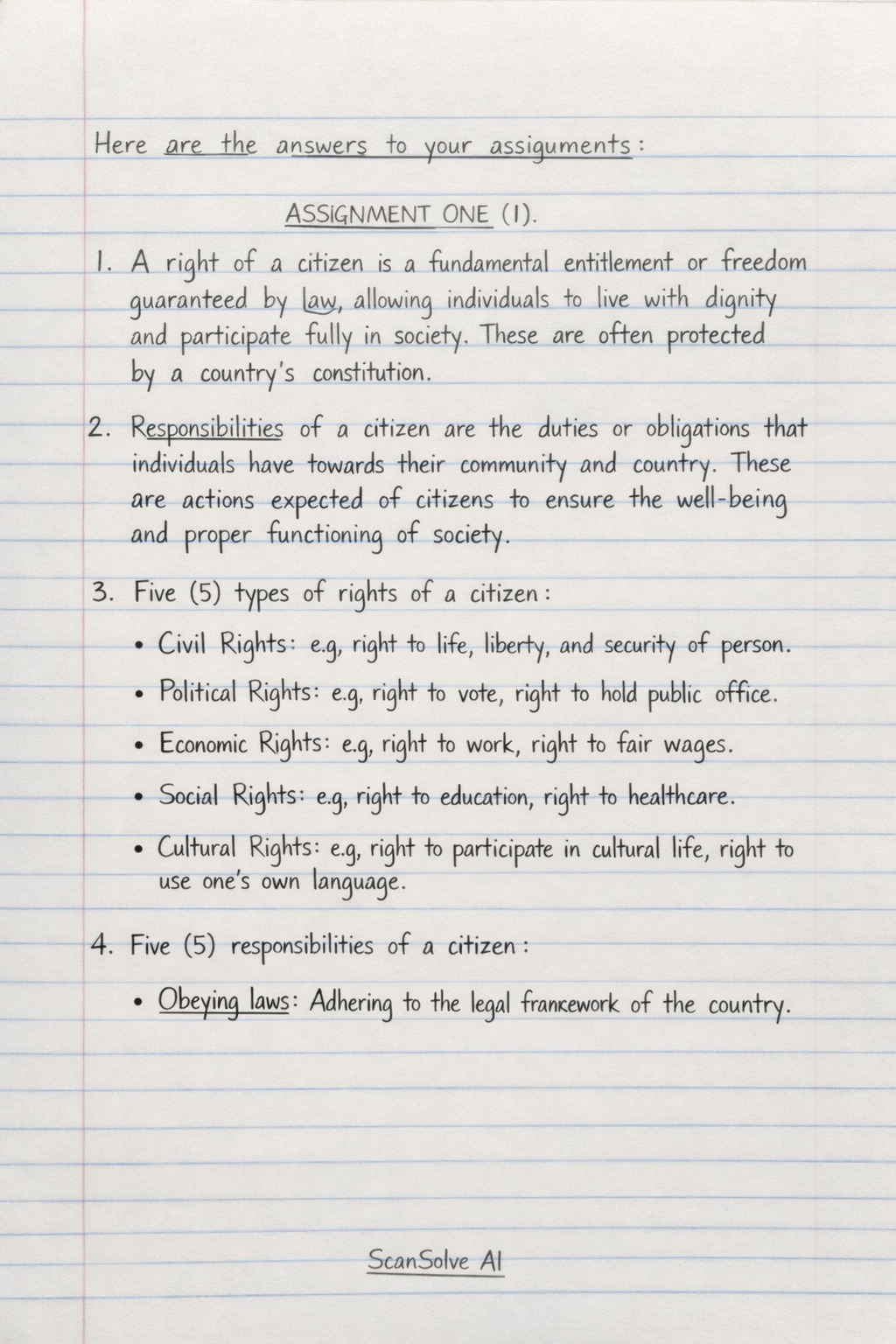
Here are the answers to your assignments:
ASSIGNMENT ONE (1)
- A right of a citizen is a fundamental entitlement or freedom guaranteed by law, allowing individuals to live with dignity and participate fully in society. These are often protected by a country's constitution.
- Responsibilities of a citizen are the duties or obligations that individuals have towards their community and country. These are actions expected of citizens to ensure the well-being and proper functioning of society.
- Five (5) types of rights of a citizen:
- • Civil Rights: e.g., right to life, liberty, and security of person.
- • Political Rights: e.g., right to vote, right to hold public office.
- • Economic Rights: e.g., right to work, right to fair wages.
- • Social Rights: e.g., right to education, right to healthcare.
- • Cultural Rights: e.g., right to participate in cultural life, right to use one's own language.
- Five (5) responsibilities of a citizen:
- • Obeying laws: Adhering to the legal framework of the country.
- • Paying taxes: Contributing to public services and national development.
- • Voting: Participating in democratic processes to elect leaders.
- • Community service: Volunteering time and effort for local improvement.
- • Defending the nation: Being prepared to protect the country if required.
- Four (4) benefits of performing your responsibilities:
- • Contributes to a stable and orderly society.
- • Enhances community development and progress.
- • Strengthens democracy and good governance.
- • Fosters a sense of belonging and national unity.
ASSIGNMENT TWO (2)
- Conflict in the exercise of rights and responsibilities occurs when an individual's pursuit of their personal freedoms clashes with their duties to the community, or when one person's rights negatively impact the rights or well-being of others. For example, the right to free speech might conflict with the responsibility to not incite violence.
- Individual interest refers to the personal goals, desires, and well-being of a single person or their immediate family. It focuses on what an individual believes is best for themselves, often driven by personal gain or satisfaction.
- National interest refers to the collective goals, security, and well-being of an entire country. It represents what is considered beneficial for the nation as a whole, prioritizing national security, economic stability, and the welfare of all its citizens.
- Four (4) circumstances under which individual rights can be curtailed:
- • During a state of emergency or war.
- • When exercising the right infringes upon the rights of others.
- • To maintain public order, safety, or morality.
- • As a consequence of committing a crime (e.g., loss of liberty through imprisonment).
- Four (4) benefits of performing your Civic duties in Ghana:
- • Promotes good governance and accountability.
- • Ensures peace and stability within the nation.
- • Facilitates socio-economic development.
- • Strengthens national identity and cohesion.
ASSIGNMENT THREE (3)
- Good citizenship means actively participating in and contributing positively to one's community and country. It involves understanding and upholding laws, respecting others' rights, performing civic duties, and working towards the common good for the benefit of all.
- Four (4) ways of becoming a citizen of Ghana:
- • By birth: Born in Ghana or born outside Ghana to Ghanaian parents.
- • By registration: For persons of Ghanaian descent or spouses of Ghanaian citizens.
- • By naturalization: After residing in Ghana for a specified period and meeting other legal requirements.
- • By adoption: A child adopted by a Ghanaian citizen.
- Four (4) benefits of payment of taxes as a citizen:
- • Funds public services like roads, schools, and hospitals.
- • Supports national security and defense.
- • Contributes to economic stability and development.
- • Ensures social welfare programs for vulnerable populations.
- Four (4) benefits of being a good citizen:
- • Enjoys protection of rights and freedoms by the state.
- • Contributes to a harmonious and prosperous society.
- • Gains a sense of belonging and pride in one's nation.
- • Has the opportunity to influence governance through participation.
Was this helpful?
Still stuck on this one?
Ask a follow-up, and the answer starts from this question.
Got a different question?Ask your own question
More Law Questions
QDefine citizen rights and responsibilities, list 5 citizen rights with examples, and 4 benefits of…QExplain the concept of a citizen, detailing their rights and responsibilities.QIist and explain on five duties of citizen to the countryQResponsibilities of a good citizenQExplain the duties of the government and citizens for the following rights: life, privacy…
Handwritten Step-by-Step Solution
Get this as a handwritten image on WhatsApp — like a tutor wrote it for you.
Try on WhatsApp