
We read your photo as:
Discuss the roles and functions of the Department of Correctional Service, focusing on custody, care, and rehabilitation.
ScanSolve AI Answer
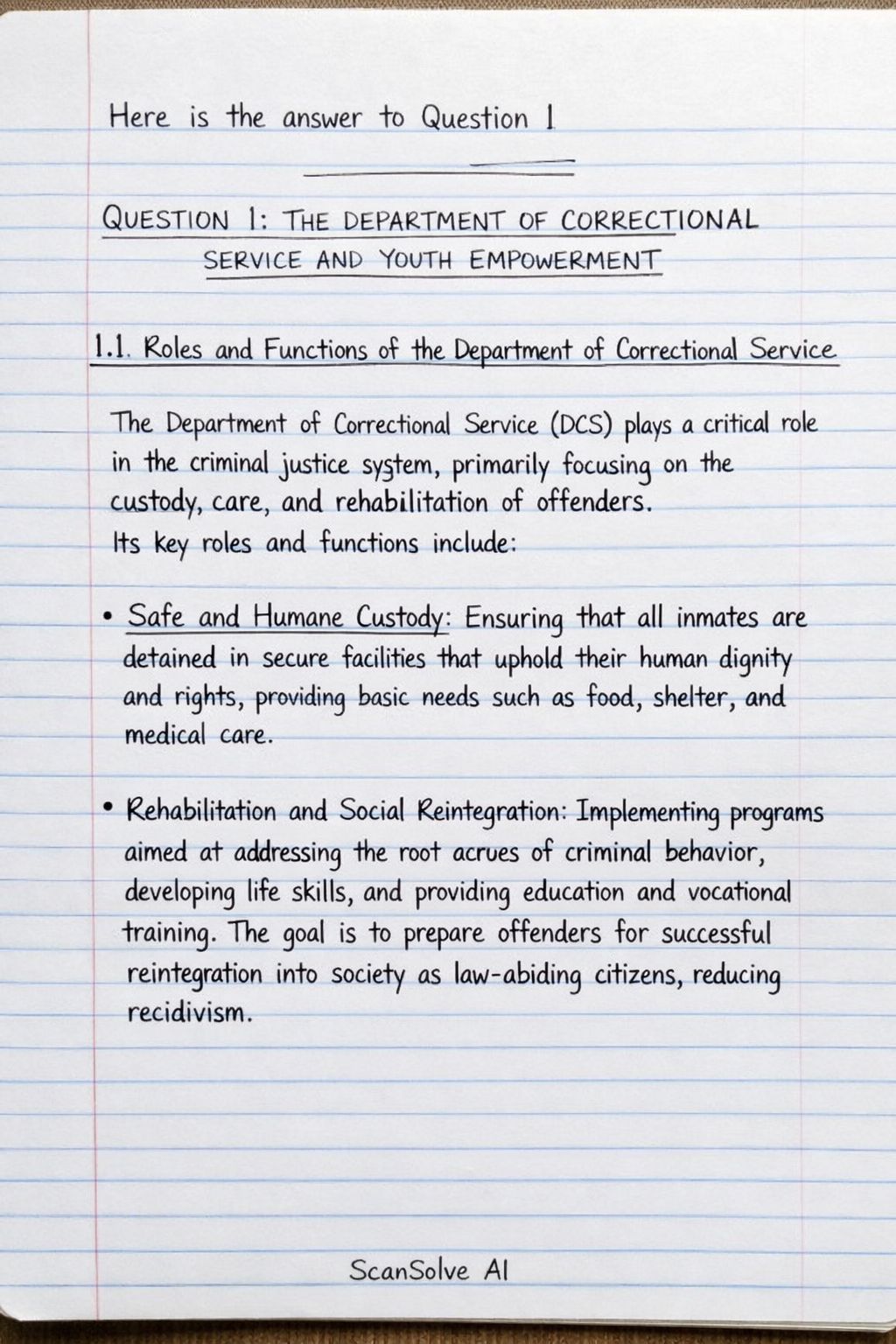
Here is the answer to Question 1:
QUESTION 1: THE DEPARTMENT OF CORRECTIONAL SERVICE AND YOUTH EMPOWERMENT
1.1 Roles and Functions of the Department of Correctional Service
The Department of Correctional Service (DCS) plays a critical role in the criminal justice system, primarily focusing on the custody, care, and rehabilitation of offenders. Its key roles and functions include:
- Safe and Humane Custody: Ensuring that all inmates are detained in secure facilities that uphold their human dignity and rights, providing basic needs such as food, shelter, and medical care.
- Rehabilitation and Social Reintegration: Implementing programs aimed at addressing the root causes of criminal behavior, developing life skills, and providing education and vocational training. The goal is to prepare offenders for successful reintegration into society as law-abiding citizens, reducing recidivism.
- Correctional Supervision and Parole: Managing offenders who are serving sentences outside correctional facilities under strict conditions, as well as those released on parole. This involves monitoring their compliance, providing support, and facilitating their transition back into the community.
- Promoting Social Responsibility: Encouraging offenders to take accountability for their actions and understand their impact on victims and society. This often involves restorative justice initiatives.
- Community Corrections: Working with communities to facilitate the reintegration process, including public awareness campaigns and partnerships with non-governmental organizations to support ex-offenders.
1.2 Ways the Department of Criminal Justice System Can Develop and Empower Young Offenders
The Department of Criminal Justice System can develop and empower young offenders through targeted interventions and support mechanisms:
- Individualized Rehabilitation Plans: Developing personalized plans that address the specific needs, risks, and strengths of each young offender. These plans should include educational support, vocational training, and psychological counseling tailored to their developmental stage.
- Mentorship Programs: Establishing programs where positive role models (volunteers, community leaders, or reformed ex-offenders) guide young offenders, offering support, advice, and encouragement to make positive life choices.
- Skill Development and Education: Providing access to quality education, literacy programs, and practical vocational training (e.g., carpentry, IT, culinary arts). Equipping young offenders with marketable skills enhances their employability and reduces the likelihood of re-offending.
- Restorative Justice Practices: Implementing restorative justice conferences or circles where young offenders can meet with victims (if appropriate and safe), community members, and support persons. This process helps them understand the harm caused, take responsibility, and contribute to repairing the damage, fostering empathy and accountability.
- Community-Based Alternatives and Diversion: Utilizing diversion programs for minor offenses that keep young offenders out of formal correctional facilities. These programs often involve community service, counseling, and educational workshops, allowing them to remain connected to their families and communities while addressing their behavior.
Still stuck on this one?
Ask a follow-up, and the answer starts from this question.
More Law Questions
Handwritten Step-by-Step Solution
Get this as a handwritten image on WhatsApp — like a tutor wrote it for you.
Try on WhatsApp