
Feminist legal philosophy looks at how laws are created, understood, and used, especially in common law systems. By exploring ideas like fairness, awareness, and legal change through a feminist viewpoint, we can see how these concepts are formed and how they often maintain existing biases and inequalities. Fairness What is Fairness: Traditional legal systems often see fairness as treating everyone equally under the law. However, feminist critiques point out that this view ignores the real inequalities in society. For example, the law might seem to treat everyone the same, but different groups, especially women and marginalized communities, don't start from the same place. Effects on Women: Laws about family, work, and violence often impact women more negatively. For instance, divorce laws and custody decisions might look fair but can actually create financial and social problems for women. Feminist legal experts argue for a broader understanding of fairness that takes into account how different identities (like gender, race, and class) influence experiences of inequality. Awareness Recognizing Bias: A major point in feminist legal theory is recognizing the biases that exist in legal systems. Legal professionals, like judges and lawmakers, often believe they are neutral, which can hide their own biases and the biases in the laws. Feminist critiques show how laws reflect social norms that favor some groups over others. Research Awareness: Feminist legal scholars promote using real-world research to show how laws affect different genders. For instance, looking at how laws respond to domestic violence differently for men and women can reveal biases in how those laws are enforced. Legal Change How Change Happens: Feminist legal theory supports changing laws in a way that not only fixes them but also changes the societal beliefs that shape those laws. This means questioning and updating existing legal rules to ensure they promote fairness instead of reinforcing gender norms. Using the Legal System for Change: Feminist activists use strategic litigation to challenge unfair laws and practices. For example, the case _Reed v. Reed (1971) in the U.S. tackled gender discrimination in inheritance laws, showing how legal change can come from recognizing systemic inequalities in court.
ScanSolve AI Answer
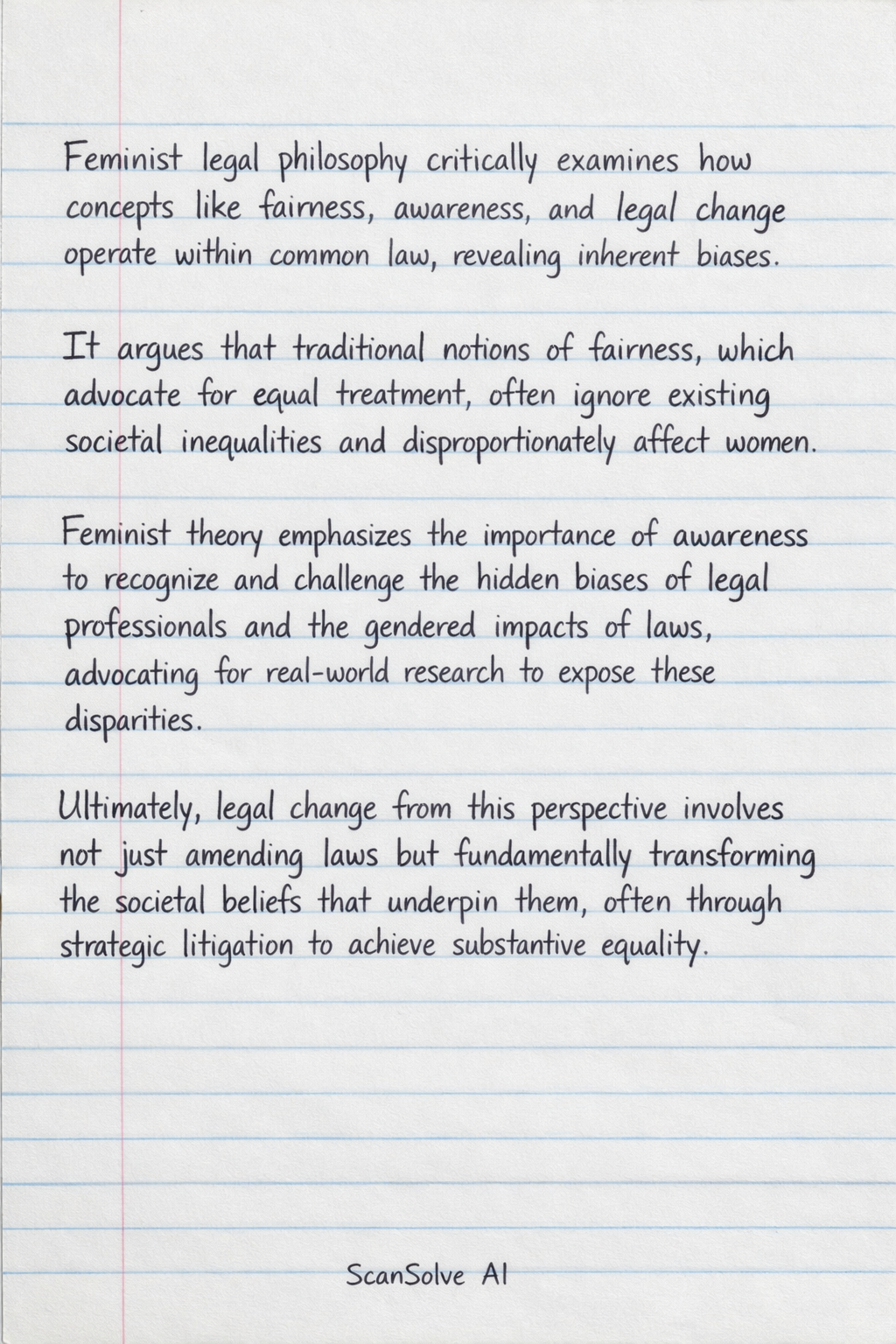
Feminist legal philosophy critically examines how concepts like fairness, awareness, and legal change operate within common law, revealing inherent biases. It argues that traditional notions of fairness, which advocate for equal treatment, often ignore existing societal inequalities and disproportionately affect women. Feminist theory emphasizes the importance of awareness to recognize and challenge the hidden biases of legal professionals and the gendered impacts of laws, advocating for real-world research to expose these disparities. Ultimately, legal change from this perspective involves not just amending laws but fundamentally transforming the societal beliefs that underpin them, often through strategic litigation to achieve substantive equality.
Still stuck on this one?
Ask a follow-up, and the answer starts from this question.
More Law Questions
Handwritten Step-by-Step Solution
Get this as a handwritten image on WhatsApp — like a tutor wrote it for you.
Try on WhatsApp