
German Annexation and Establishment of Rule The German annexation treaty in Cameroon was signed on: A. 12 July 1884 B. 14 July 1884 C. 4 August 1884 D. 1 January 1885 The German representative who signed the treaty with Douala chiefs was: A. Gustav Nachtigal B. Otto von Bismarck C. Jesko von Puttkamer D. Julius von Soden The main Douala chiefs who signed the treaty included: A. Njoya and Galega II B. Bell and Akwa C. Kuva Likenye and Manga Williams D. Asibong and Atangana Germany acquired Cameroon mainly because of: A. Religious motives only B. Economic and strategic interests C. Slave trade D. Tourism The Berlin Conference was held between: A. 1880–1881 B. 1882–1883 C. 1884–1885 D. 1886–1887 German Administration The first capital of German Kamerun was: A. Yaoundé B. Buea C. Douala D. Garoua Germany mainly used: A. Indirect rule B. Assimilation C. Direct rule D. Federalism The first German Governor of Kamerun was: A. Julius von Soden B. Gustav Nachtigal C. Karl Ebermaier D. Theodor Seitz The German administration depended heavily on: A. African elections B. Forced labour C. Trade unions D. Referendums Which cash crop was greatly encouraged by the Germans? A. Wheat B. Rice C. Cocoa D. Tea German Economic Policies The Germans established plantations mainly in: A. Adamawa Plateau B. Coastal Cameroon C. Lake Chad Basin D. Mandara Mountains Which company became famous for plantation agriculture? A. CDC B. UAC C. Jantzen & Thormählen D. PAMOL The major purpose of German road and railway construction was: A. Tourism B. Military and economic exploitation C. Recreation D. Education The railway line from Douala was first extended towards: A. Yaoundé B. Nkongsamba C. Kumba D. Maroua One major effect of German plantations was: A. Increase in African land ownership B. Land alienation from Africans C. End of taxation D. Decline in exports Resistance to German Rule The Bakweri resisted German land seizures because: A. Germans banned farming B. Germans seized fertile lands C. Germans abolished chieftaincy D. Germans introduced Islam The leader of the Bakoko resistance was: A. Martin Paul Samba B. Rudolf Duala Manga Bell C. Lock Priso D. Kuva Likenye The Buea resistance was led by: A. Kuva Likenye B. King Bell C. Njoya D. Manga Williams Kuva Likenye belonged to the: A. Bakweri B. Bamum C. Fulani D. Tikar One reason for African resistance was: A. Introduction of hospitals B. Forced labour and taxation C. Road construction D. Trade expansion Rudolf Duala Manga Bell Rudolf Duala Manga Bell was the king of the: A. Bamum B. Douala C. Bakweri D. Fulani He opposed German policies because: A. They promoted African rights B. They planned to expropriate Douala lands C. They reduced taxes D. They expanded education Manga Bell appealed to: A. Britain only B. Germany's courts and parliament C. France only D. Belgium Rudolf Duala Manga Bell was executed in: A. 1905 B. 1910 C. 1914 D. 1916 He was accused of: A. Theft B. Treason C. Smuggling D. Desertion Social and Educational Developments The Basel Mission mainly promoted: A. Islam B. Christianity and education C. Military training D. Plantation farming Mission schools contributed to: A. Illiteracy B. Western education C. Slavery D. Segregation The Bamum ruler who encouraged education was: A. Njoya B. Bell C. Akwa D. Kuva Sultan Njoya invented: A. Bamum script B. Arabic language C. French language D. Swahili The Bamum kingdom was centred at: A. Douala B. Foumban C. Garoua D. Kribi Cameroon and the First World War The First World War began in: A. 1912 B. 1913 C. 1914 D. 1915 Cameroon became involved in the war because it was: A. A British colony B. A German colony C. Independent D. A French colony The Allied powers that attacked Cameroon were: A. Britain and France B. Britain and Belgium only C. France and Portugal only D. Italy and France The German administrative capital during much of the war was: A. Douala B. Yaoundé C. Buea D. Garoua The Germans evacuated to: A. Nigeria B. Spanish Guinea C. Chad D. Sudan The last German resistance centre was: A. Douala B. Yaoundé C. Mora D. Kribi Mora finally fell in: A. 1914 B. 1915 C. 1916 D. 1918 Consequences of German Rule German rule ended in: A. 1914 B. 1915 C. 1916 D. 1918 One positive legacy of German rule was: A. Infrastructure development B. End of taxation C. Democracy D. Independence One negative legacy was: A. Forced labour B. Universal suffrage C. Free education D. Industrialization Difficult Questions The protectorate declared by Germany in 1884 was mainly intended to: A. Protect Africans from Europeans B. Secure German commercial interests C. End all taxation D. Promote democracy The German policy of direct rule differed from British indirect rule because: A. Germans governed through elected councils B. Germans exercised direct administrative control C. Germans abolished governors D. Germans avoided taxation The execution of Manga Bell occurred shortly before: A. The First World War B. The Berlin Conference C. The Mandate System D. Reunification The major source of labour on plantations was: A. Voluntary workers only B. Forced labour and recruited labour C. European migrants D. Slaves from America The Germans established Yaoundé mainly as: A. A port city B. An administrative centre inland C. A mining town D. A religious centre Which factor most weakened African resistance? A. Lack of unity among ethnic groups B. Excessive industrialization C. Too much education D. Strong alliances The Bamum kingdom cooperated with the Germans mainly because: A. Njoya sought modernization and protection B. Njoya feared Britain C. Njoya wanted independence immediately D. Njoya rejected education The defeat of Germany in Cameroon resulted directly in: A. Independence B. Partition by Britain and France C. Reunification D. Federalism Which of the following best describes German colonial policy? A. Assimilation B. Association C. Direct rule and economic exploitation D. Indirect rule The most important long-term consequence of German defeat in Cameroon was: A. Creation of the Mandate System and partition of Cameroon B. Immediate independence C. Creation of the OAU D. Abolition of all traditional rulers
ScanSolve AI Answer
Answer
12 July 1884
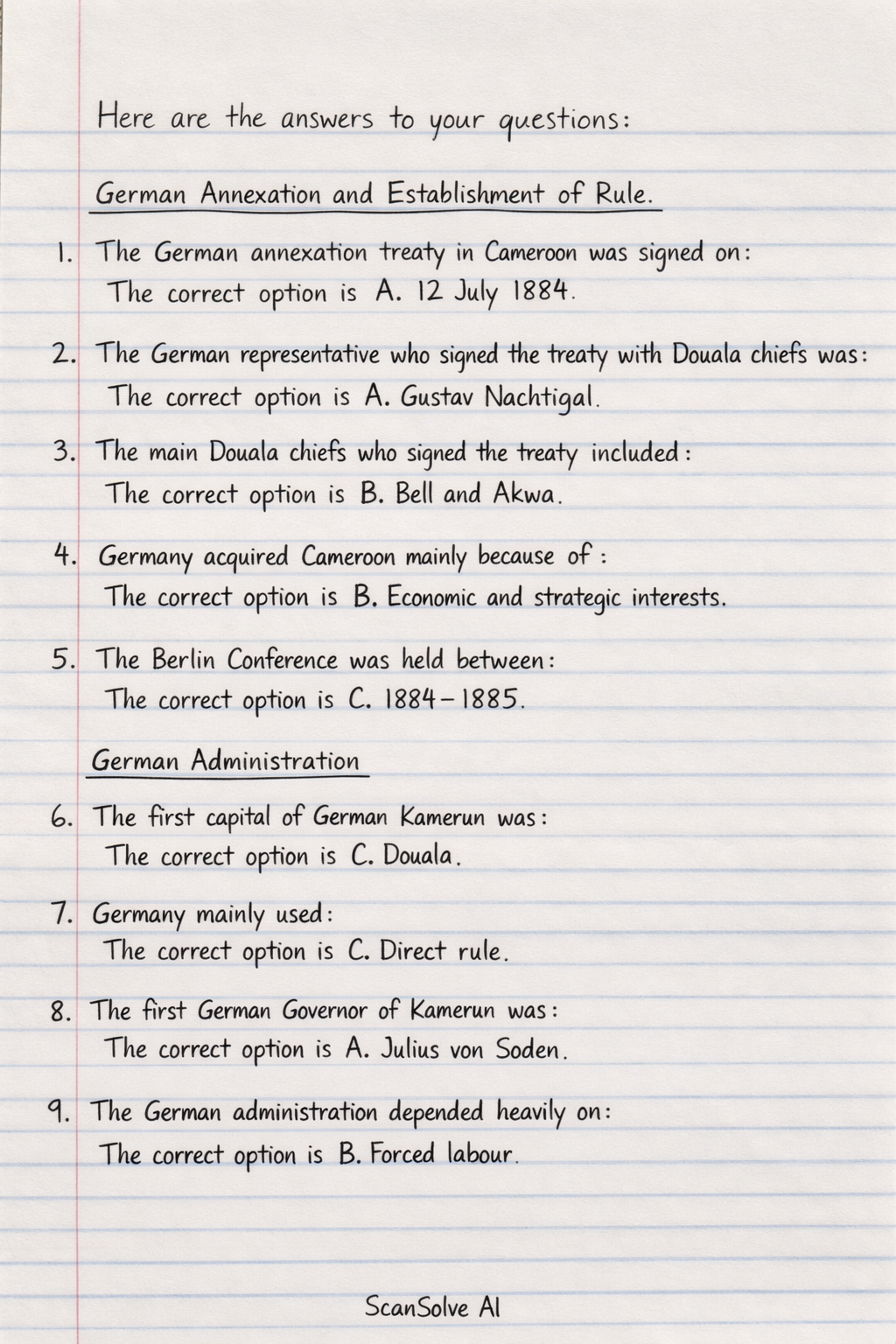
Here are the answers to your questions:
German Annexation and Establishment of Rule
-
The German annexation treaty in Cameroon was signed on: The correct option is A. 12 July 1884.
-
The German representative who signed the treaty with Douala chiefs was: The correct option is A. Gustav Nachtigal.
-
The main Douala chiefs who signed the treaty included: The correct option is B. Bell and Akwa.
-
Germany acquired Cameroon mainly because of: The correct option is B. Economic and strategic interests.
-
The Berlin Conference was held between: The correct option is C. 1884–1885.
German Administration
-
The first capital of German Kamerun was: The correct option is C. Douala.
-
Germany mainly used: The correct option is C. Direct rule.
-
The first German Governor of Kamerun was: The correct option is A. Julius von Soden.
-
The German administration depended heavily on: The correct option is B. Forced labour.
-
Which cash crop was greatly encouraged by the Germans? The correct option is C. Cocoa.
German Economic Policies
-
The Germans established plantations mainly in: The correct option is B. Coastal Cameroon.
-
Which company became famous for plantation agriculture? The correct option is C. Jantzen & Thormählen.
-
The major purpose of German road and railway construction was: The correct option is B. Military and economic exploitation.
-
The railway line from Douala was first extended towards: The correct option is B. Nkongsamba.
-
One major effect of German plantations was: The correct option is B. Land alienation from Africans.
Resistance to German Rule
-
The Bakweri resisted German land seizures because: The correct option is B. Germans seized fertile lands.
-
The leader of the Bakoko resistance was: The correct option is C. Lock Priso.
-
The Buea resistance was led by: The correct option is A. Kuva Likenye.
-
Kuva Likenye belonged to the: The correct option is A. Bakweri.
-
One reason for African resistance was: The correct option is B. Forced labour and taxation.
Rudolf Duala Manga Bell
-
Rudolf Duala Manga Bell was the king of the: The correct option is B. Douala.
-
He opposed German policies because: The correct option is B. They planned to expropriate Douala lands.
-
Manga Bell appealed to: The correct option is B. Germany's courts and parliament.
-
Rudolf Duala Manga Bell was executed in: The correct option is C. 1914.
-
He was accused of: The correct option is B. Treason.
Social and Educational Developments
-
The Basel Mission mainly promoted: The correct option is B. Christianity and education.
-
Mission schools contributed to: The correct option is B. Western education.
-
The Bamum ruler who encouraged education was: The correct option is A. Njoya.
-
Sultan Njoya invented: The correct option is A. Bamum script.
-
The Bamum kingdom was centred at: The correct option is B. Foumban.
Cameroon and the First World War
-
The First World War began in: The correct option is C. 1914.
-
Cameroon became involved in the war because it was: The correct option is B. A German colony.
-
The Allied powers that attacked Cameroon were: The correct option is A. Britain and France.
-
The German administrative capital during much of the war was: The correct option is B. Yaoundé.
-
The Germans evacuated to: The correct option is B. Spanish Guinea.
-
The last German resistance centre was: The correct option is C. Mora.
-
Mora finally fell in: The correct option is C. 1916.
Consequences of German Rule
-
German rule ended in: The correct option is C. 1916.
-
One positive legacy of German rule was: The correct option is A. Infrastructure development.
-
One negative legacy was: The correct option is A. Forced labour.
Difficult Questions
-
The protectorate declared by Germany in 1884 was mainly intended to: The correct option is B. Secure German commercial interests.
-
The German policy of direct rule differed from British indirect rule because: The correct option is B. Germans exercised direct administrative control.
-
The execution of Manga Bell occurred shortly before: The correct option is A. The First World War.
-
The major source of labour on plantations was: The correct option is B. Forced labour and recruited labour.
-
The Germans established Yaoundé mainly as: The correct option is B. An administrative centre inland.
-
Which factor most weakened African resistance? The correct option is A. Lack of unity among ethnic groups.
-
The Bamum kingdom cooperated with the Germans mainly because: The correct option is A. Njoya sought modernization and protection.
-
The defeat of Germany in Cameroon resulted directly in: The correct option is B. Partition by Britain and France.
-
Which of the following best describes German colonial policy? The correct option is C. Direct rule and economic exploitation.
-
The most important long-term consequence of German defeat in Cameroon was: The correct option is A. Creation of the Mandate System and partition of Cameroon.
Try one yourself
A new problem that tests the same skill.
Still stuck on this one?
Ask a follow-up, and the answer starts from this question.
More Law Questions
Handwritten Step-by-Step Solution
Get this as a handwritten image on WhatsApp — like a tutor wrote it for you.
Try on WhatsApp