
We read your photo as:
What are the definitions, causes, effects, and preventative measures of corruption in Cameroon, and what bodies are responsible for elections?
ScanSolve AI Answer
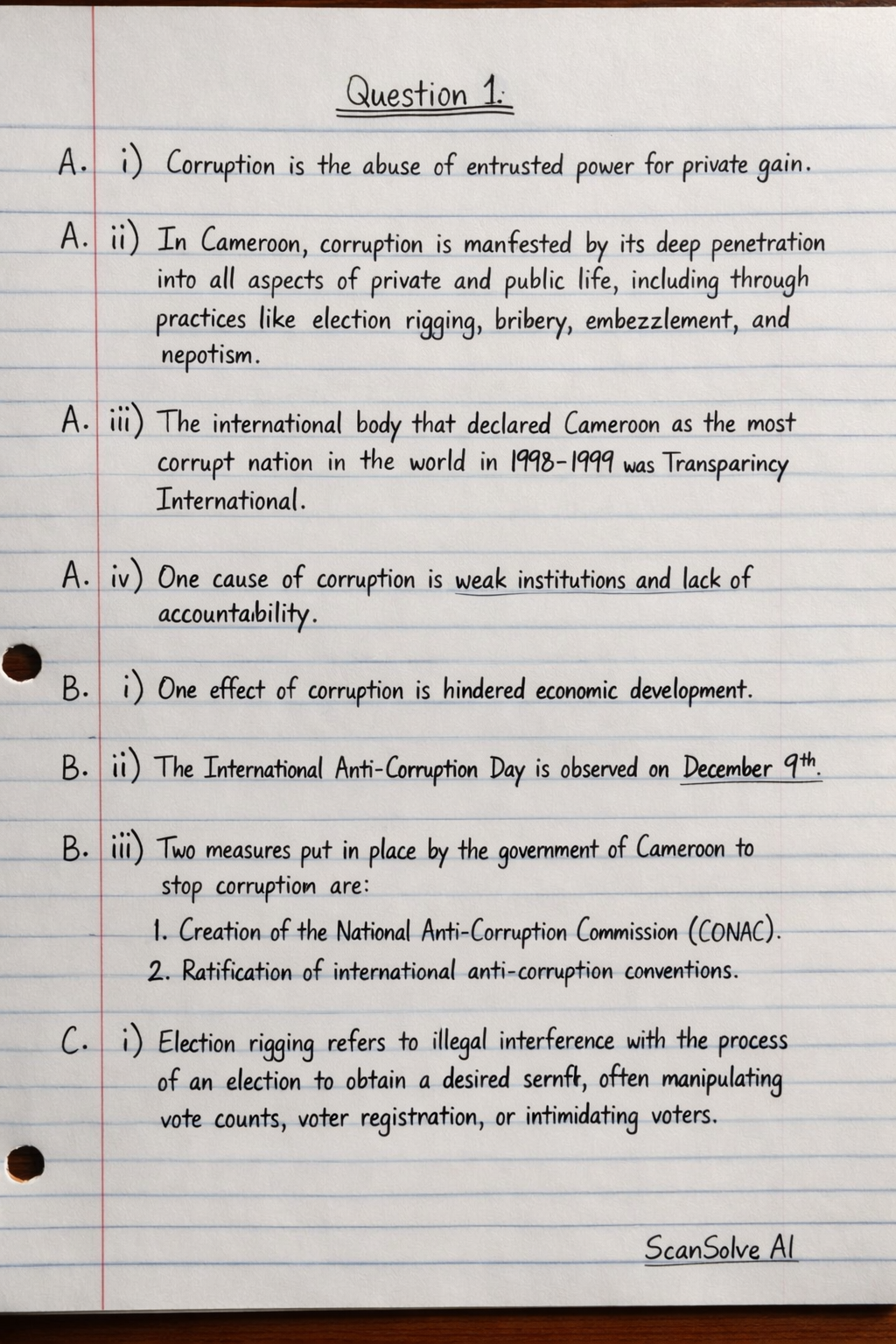
Question 1
A. i) Corruption is the abuse of entrusted power for private gain.
A. ii) In Cameroon, corruption is manifested by its deep penetration into all aspects of private and public life, including through practices like election rigging, bribery, embezzlement, and nepotism.
A. iii) The international body that declared Cameroon as the most corrupt nation in the world in 1998-1999 was Transparency International.
A. iv) One cause of corruption is weak institutions and lack of accountability.
B. i) One effect of corruption is hindered economic development.
B. ii) The International Anti-Corruption Day is observed on December 9th.
B. iii) Two measures put in place by the government of Cameroon to stop corruption are:
- Creation of the National Anti-Corruption Commission (CONAC).
- Ratification of international anti-corruption conventions.
C. i) Election rigging refers to illegal interference with the process of an election to obtain a desired result, often by manipulating vote counts, voter registration, or intimidating voters.
C. ii) The structure responsible for the organization of elections in Cameroon is Elections Cameroon (ELECAM).
C. iii) The body responsible for proclaiming election results in Cameroon is The Constitutional Council.
C. iv) Two types of elections organized in Cameroon through Universal Suffrage are:
- Presidential elections.
- Legislative elections.
D. i) Juvenile delinquency refers to the participation by a minor (a person under the legal age of adulthood) in illegal behavior or activities.
D. ii) Two other vices apart from corruption and juvenile delinquency are:
- Drug abuse.
- Prostitution.
D. iii) Two measures the government has put in place to curb juvenile delinquency are:
- Implementation of educational programs and vocational training for youth.
- Establishment of rehabilitation centers for young offenders.
Question 2
a) A family is a basic social unit consisting of parents and their children, considered as a group, whether living together or not, bound by ties of blood, marriage, or adoption.
b) Four types of families in Cameroon are:
- Nuclear Family: This consists of a husband, wife, and their biological or adopted children living together as a single household. It is often considered the traditional family unit.
- Extended Family: This type includes the nuclear family along with other relatives such as grandparents, aunts, uncles, and cousins, often living in the same household or in close proximity and maintaining strong ties.
- Single-Parent Family: This family structure consists of one parent (either a mother or a father) raising one or more children. This can result from divorce, separation, death of a spouse, or a parent choosing to raise a child alone.
- Reconstituted/Blended Family: This family is formed when two separate families merge into one, typically through remarriage. It often involves children from previous relationships of one or both parents, creating a new family dynamic.
c) The responsibilities of the following family stakeholders are:
i) the parents
- Providing for the basic needs of their children, including food, shelter, clothing, and healthcare.
- Ensuring their children's education, moral upbringing, and instilling values.
- Protecting children from harm, providing emotional support, and fostering a nurturing environment.
ii) the children
- Respecting and obeying their parents and elders.
- Assisting with household chores and contributing to family well-being.
- Focusing on their education and personal development to become responsible members of society.
Question 3
a) Three types of councils that exist in Cameroon are:
- Urban Councils: These councils govern major cities and urban areas. They are responsible for urban planning, infrastructure development (roads, drainage), public services (waste management, street lighting), and local economic development within their jurisdiction.
- Rural Councils: These councils administer rural areas and smaller towns. Their focus is on local development, agricultural support, basic community services, and maintaining local infrastructure in less densely populated regions.
- City Councils: These councils oversee larger metropolitan areas, often coordinating the activities of multiple urban councils within a broader city region. They are responsible for strategic planning, major infrastructure projects, and overall governance of the larger urban agglomeration.
b) The sources of Council revenue include:
- Local taxes: Such as property taxes, business taxes, market taxes, and various local levies.
- Government grants: Funds allocated by the central government to local councils to support their operations and specific development projects.
- Fees and charges: Revenue generated from permits, licenses, administrative services, and user fees for public utilities.
- Donations and loans: Funds received from individuals, non-governmental organizations, or financial institutions for specific projects or general development.
c) The functions of the City Mayor include:
- Chief Executive: The Mayor serves as the chief executive officer of the city, responsible for implementing council decisions and managing the daily administration of the city's affairs.
- Presiding Officer: The Mayor presides over council meetings, ensuring proper conduct of proceedings and facilitating discussions among councilors.
- Representative: The Mayor acts as the official representative of the city in various capacities, both locally and internationally, promoting the city's interests.
- Budget Management: The Mayor is responsible for preparing the city's budget, overseeing its execution, and ensuring prudent financial management.
Still stuck on this one?
Ask a follow-up, and the answer starts from this question.
More Law Questions
Handwritten Step-by-Step Solution
Get this as a handwritten image on WhatsApp — like a tutor wrote it for you.
Try on WhatsApp