

This biology question covers important biological concepts and processes. The step-by-step explanation below helps you understand the underlying mechanisms and reasoning.
ScanSolve AI Answer
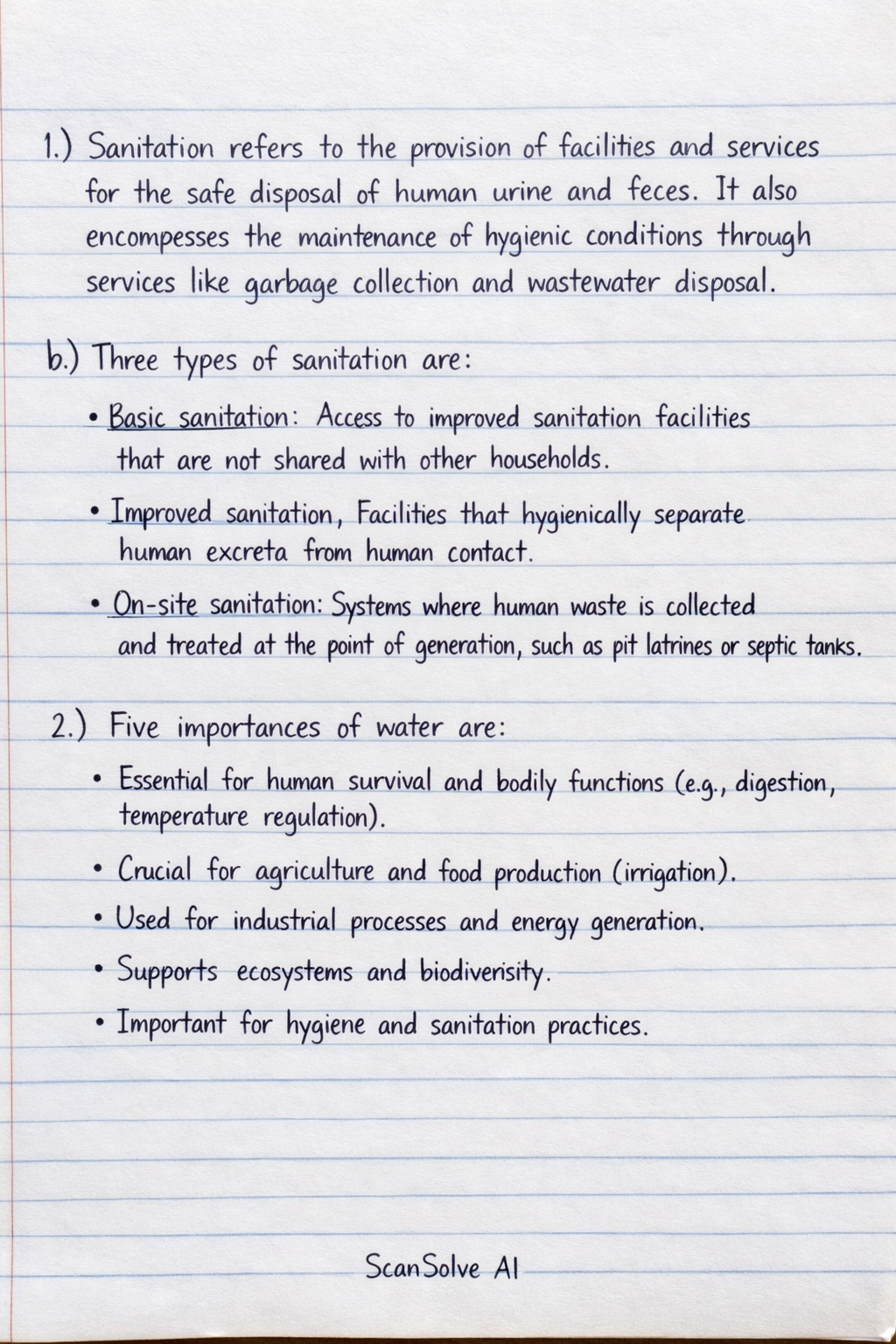
1. a) Sanitation refers to the provision of facilities and services for the safe disposal of human urine and feces. It also encompasses the maintenance of hygienic conditions through services like garbage collection and wastewater disposal. b) Three types of sanitation are: Basic sanitation*: Access to improved sanitation facilities that are not shared with other households. Improved sanitation*: Facilities that hygienically separate human excreta from human contact. On-site sanitation*: Systems where human waste is collected and treated at the point of generation, such as pit latrines or septic tanks. 2. a) Five importances of water are: Essential for human survival* and bodily functions (e.g., digestion, temperature regulation). Crucial for agriculture* and food production (irrigation). Used for industrial processes* and energy generation. Supports ecosystems* and biodiversity. Important for hygiene* and sanitation practices. b) Five health problems associated with wastewater are: Cholera*: Caused by bacteria, leading to severe diarrhea and dehydration. Typhoid fever*: Bacterial infection causing high fever, fatigue, and abdominal pain. Dysentery*: Intestinal infection causing bloody diarrhea. Hepatitis A*: Viral liver infection. Polio*: Viral disease that can cause paralysis. 3. a) The characteristics of personal hygiene include: Cleanliness*: Regular washing of the body, hair, and hands. Oral hygiene*: Brushing teeth and maintaining gum health. Clothing hygiene*: Wearing clean clothes. Nail hygiene*: Keeping nails clean and trimmed. Foot hygiene*: Washing and caring for feet. b) Three food hygiene rules are: Clean*: Wash hands, surfaces, and utensils frequently. Separate*: Keep raw meat, poultry, seafood, and eggs separate from other foods. Cook*: Cook food to the correct internal temperature to kill harmful bacteria. 4. a) Five components of environmental health are: Water quality and sanitation*: Ensuring access to safe drinking water and proper waste disposal. Air quality*: Reducing air pollution from various sources. Waste management*: Proper collection, treatment, and disposal of solid and hazardous waste. Food safety*: Preventing contamination of food from production to consumption. Vector control*: Managing populations of disease-carrying organisms. b) V.I.P. in relation to excreta disposal system stands for Ventilated Improved Pit latrine. It is a type of pit latrine designed to reduce odors and flies by incorporating a vent pipe covered with a fly screen. 5. a) Five principles of excreta disposal system are: Prevention of contamination of water sources*: Ensuring that human waste does not pollute drinking water. Prevention of soil contamination*: Avoiding the spread of pathogens into the soil. Prevention of contact with flies and other vectors*: Designing systems to minimize insect access to excreta. Prevention of odors*: Managing waste to reduce unpleasant smells. Simplicity and affordability*: Systems should be easy to construct, operate, and maintain, and be cost-effective. b) Five types of vectors and their associated diseases: Mosquitoes: Malaria* Ticks: Lyme disease* Fleas: Plague* Tsetse flies: Sleeping sickness* Snails: Schistosomiasis*