
We read your photo as:
LCM of 40; 120; and 200 3. Nyeleti took out a loan of R 80 000.00 from the lender which charges her 15% interest at the end of each year. How much will she owe in 5 years' time?
ScanSolve AI Answer
Answers
5 partsStep-by-step solution
15 stepsHere are the solutions to the questions:
Part 2.2· 3 steps
Your answer: LCM = -25, 960
❌ Incorrect. The LCM cannot be negative.
Find the prime factorization of each number.
Identify the highest power of each prime factor present in any of the factorizations.
The prime factors are 2, 3, and 5.
Highest power of 2:
Highest power of 3:
Highest power of 5:Multiply these highest powers together to find the LCM.
The LCM of 40, 120, and 200 is .
Part 2.3
Your work: "80000-5x15" and "7498923"
❌ Incorrect. This is a compound interest problem, not simple interest or a subtraction.
Identify the principal amount (P), interest rate (r), and number of years (n).
Use the compound interest formula .
Calculate the value of .
Multiply by the principal amount.
Nyeleti will owe approximately in 5 years' time.
Part 3
[INTEGERS]
Part 3.19
Your answer: 9
Calculate the powers and the square root.
Substitute these values back into the expression and perform the operations.
✅ Correct. The value is .
Part 3.2-20
Your answer: -26
❌ Incorrect.
Perform the operation inside the parentheses.
Perform the multiplication.
Substitute these values back into the expression and perform the additions/subtractions from left to right.
The value is .
Part 3.3
Your work: ""
❌ Incorrect. You removed the square root signs.
Calculate the value inside the first square root.
Calculate the second square root.
Substitute these values back into the expression.
This can also be written as .
The value is or approximately .
Try one yourself
A new problem that tests the same skill.
Still stuck on this one?
Ask a follow-up, and the answer starts from this question.
More Mathematics Questions
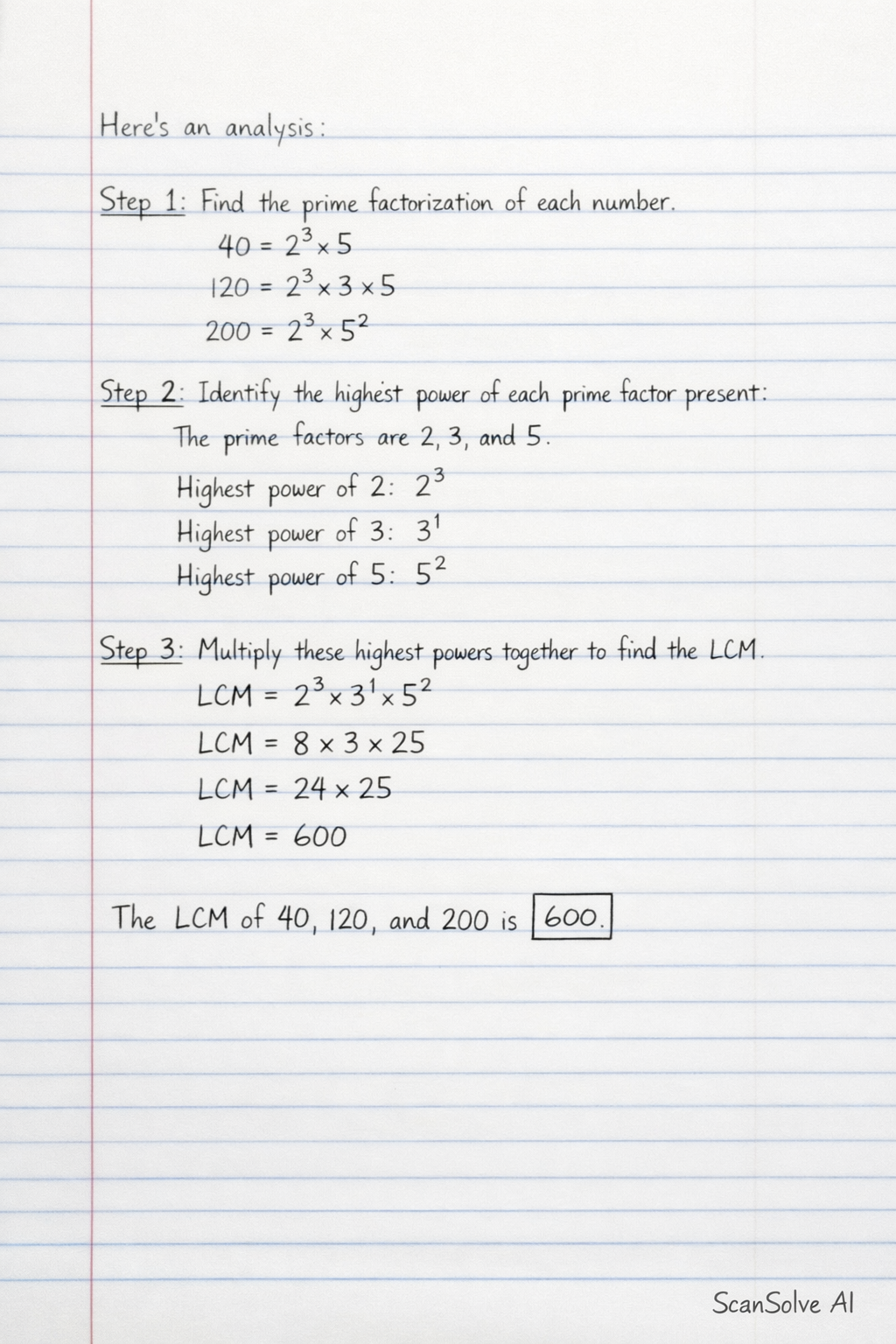
Handwritten Step-by-Step Solution
Get this as a handwritten image on WhatsApp — like a tutor wrote it for you.
Try on WhatsApp