
We read your photo as:
Bipin wants to invest Rs 1,00,000 for 2 years. Calculate the compound interest for annual, semi-annual, and quarterly compounding at 10% per annum. Which option yields the most interest?
Mathematics
ScanSolve AI Answer
Here's the solution to question 2:
Given:
Principal
Time
Rate
The formula for compound amount is , where is the number of times interest is compounded per year.
a) Which option among the three alternatives helps Bipin to get more interest? Write it.
Step 1: Calculate the compound amount and interest for annual compounding ().
Interest $I_{\text{
Was this helpful?
Still stuck on this one?
Ask a follow-up, and the answer starts from this question.
Got a different question?Ask your own question
More Mathematics Questions
QAn investment of GHS 10,000 is being considered for two options. Option A offers an 8% annual…QBonita invest R25 000 into a fixed deposit account, which offers her an interest rate of 12%. The…QBenita invest £25000 into a fixed deposit account, which offers her an interest of rate of 12% time…QA sum of money invested at 5% per annum compound interest for 2 years and 146 days amounts to Rs…QIdentify the given compound interests for the first and second years.
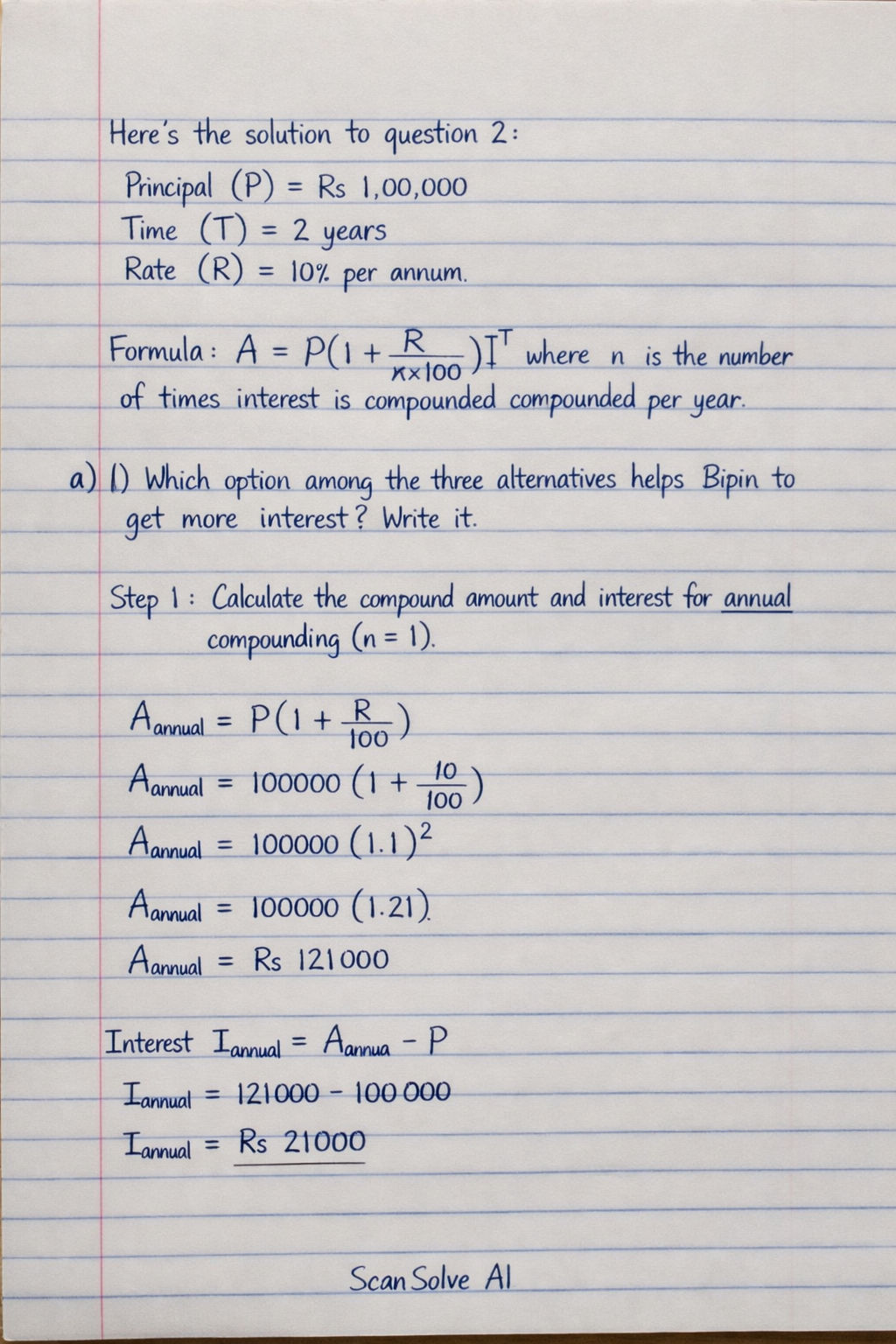
Handwritten Step-by-Step Solution
Get this as a handwritten image on WhatsApp — like a tutor wrote it for you.
Try on WhatsApp