
Different probability and non-probability sampling techniques
ScanSolve AI Answer
Answer
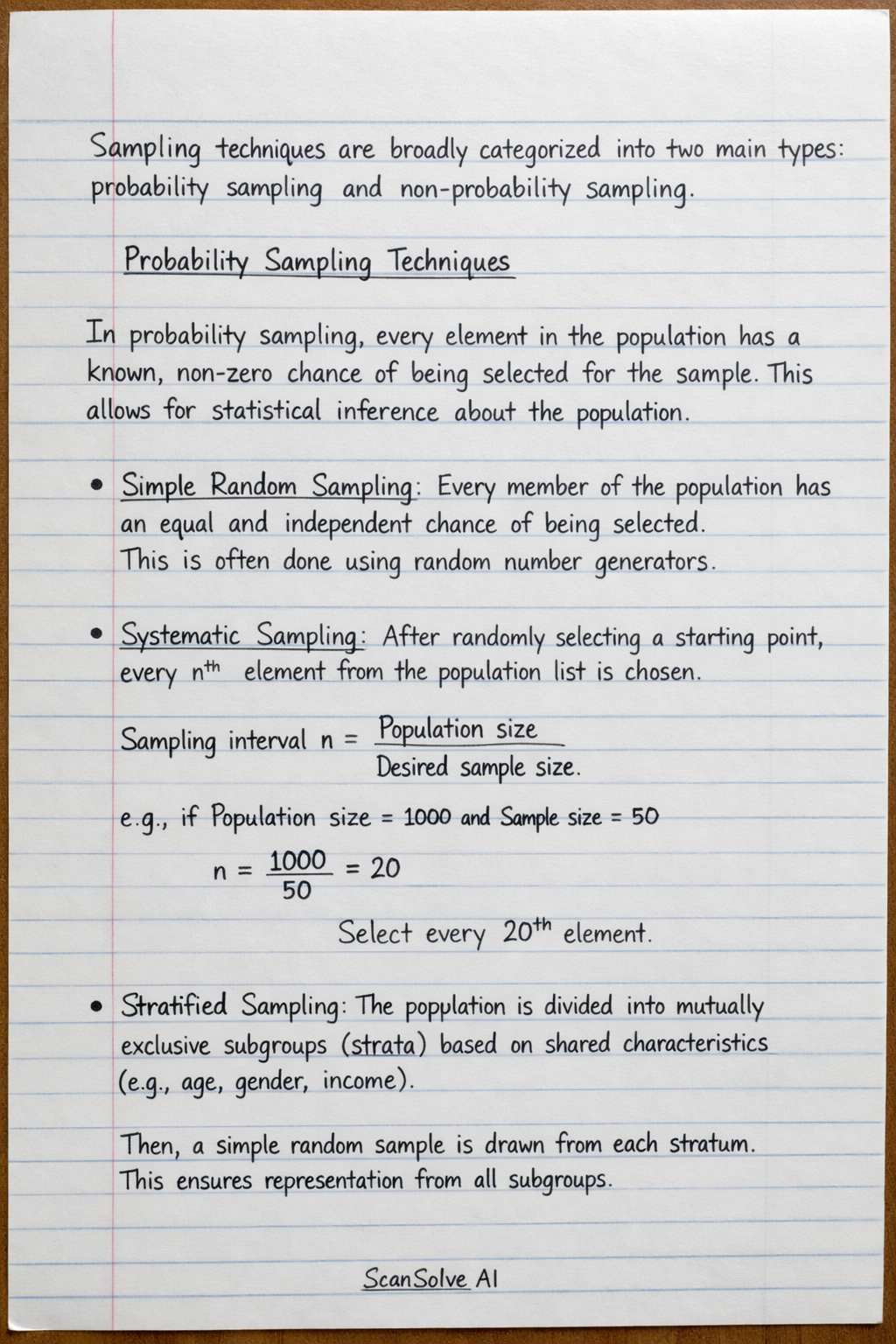
Sampling techniques are broadly categorized into two main types: probability sampling and non-probability sampling.
Probability Sampling Techniques
In probability sampling, every element in the population has a known, non-zero chance of being selected for the sample. This allows for statistical inference about the population.
- Simple Random Sampling: Every member of the population has an equal and independent chance of being selected. This is often done using random number generators.
- Systematic Sampling: After randomly selecting a starting point, every element from the population list is chosen. The sampling interval is calculated by dividing the population size by the desired sample size.
- Stratified Sampling: The population is divided into mutually exclusive subgroups (strata) based on shared characteristics (e.g., age, gender, income). Then, a simple random sample is drawn from each stratum. This ensures representation from all subgroups.
- Cluster Sampling: The population is divided into naturally occurring groups or clusters (e.g., geographic areas, schools). A random sample of clusters is selected, and then all members within the chosen clusters are included in the sample.
Non-Probability Sampling Techniques
In non-probability sampling, the selection of elements is not based on random chance. This means that not every member of the population has a known chance of being selected, and thus, the results cannot be generalized to the entire population with statistical confidence.
- Convenience Sampling: Participants are selected based on their easy availability and accessibility to the researcher. This is often used for preliminary research due to its low cost and speed.
- Quota Sampling: Similar to stratified sampling, the population is divided into subgroups. However, instead of random selection, the researcher sets a quota for each subgroup and then uses convenience or judgmental methods to select participants until the quota is met.
- Purposive (Judgmental) Sampling: The researcher hand-picks participants based on their expert judgment and knowledge of the research topic, believing these individuals are most representative or possess specific characteristics relevant to the study.
- Snowball Sampling: This technique is used when it is difficult to find participants. Initial participants are selected, and then they are asked to identify and refer other potential participants who meet the study criteria. This process continues like a snowball growing in size.
Still stuck on this one?
Ask a follow-up, and the answer starts from this question.
More Mathematics Questions
Handwritten Step-by-Step Solution
Get this as a handwritten image on WhatsApp — like a tutor wrote it for you.
Try on WhatsApp