
We read your photo as:
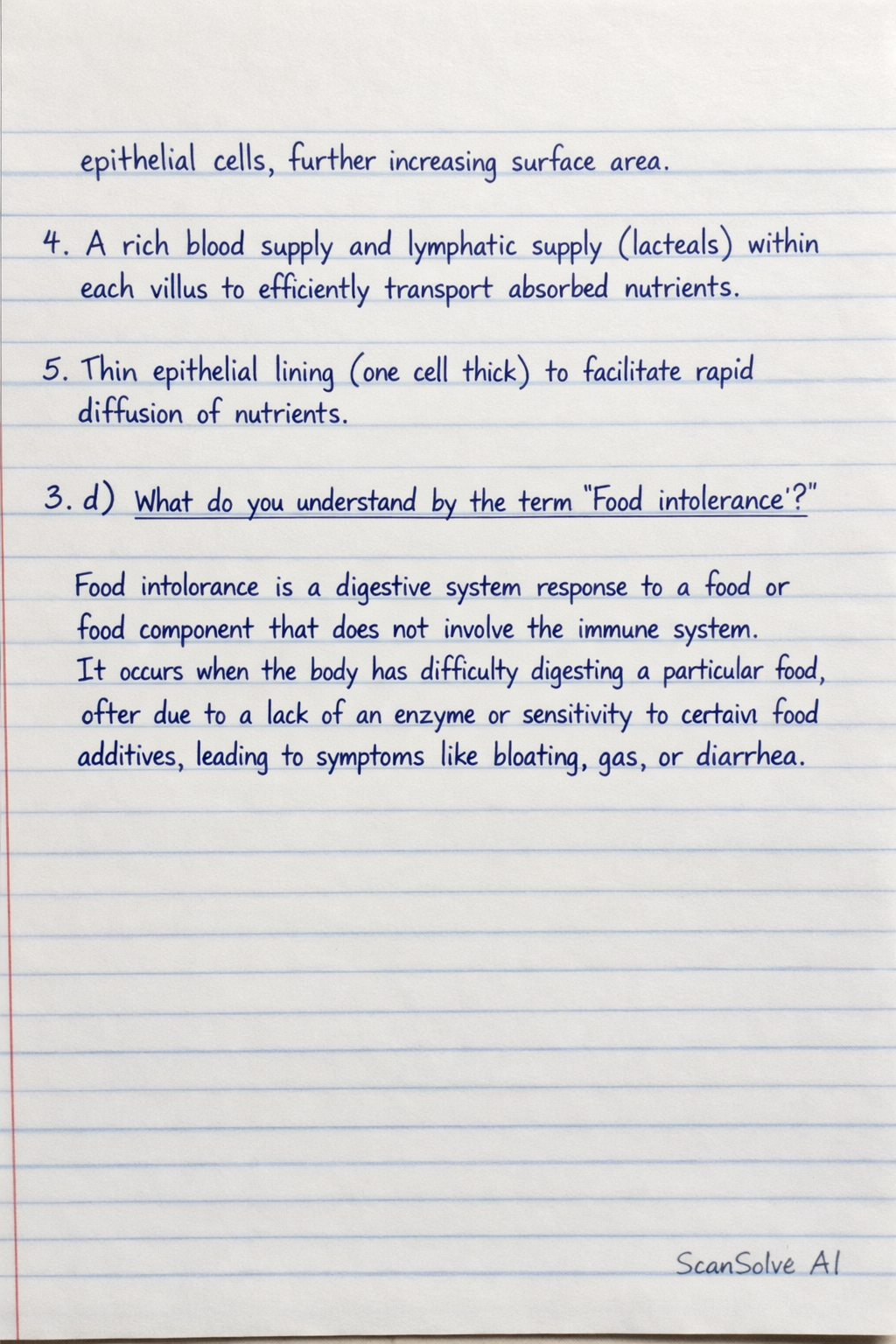
Epithelial cells, further increasing surface area.
ScanSolve AI Answer
epithelial cells, further increasing surface area. 4. A rich blood supply and lymphatic supply (lacteals) within each villus to efficiently transport absorbed nutrients. 5. Thin epithelial lining (one cell thick) to facilitate rapid diffusion of nutrients.
3. d) What do you understand by the term 'Food intolerance'?
Food intolerance is a digestive system response to a food or food component that does not involve the immune system. It occurs when the body has difficulty digesting a particular food, often due to a lack of an enzyme or sensitivity to certain food additives, leading to symptoms like bloating, gas, or diarrhea.
3. e) What are the causes of food intolerance?
Common causes of food intolerance include:
- Enzyme deficiencies: Lack of specific enzymes needed to break down certain food components (e.g., lactase deficiency causing lactose intolerance).
- Pharmacological agents: Sensitivity to naturally occurring chemicals in foods, such as caffeine in coffee or histamine in aged cheeses.
- Food additives: Reactions to artificial colors, preservatives (e.g., sulfites), or flavor enhancers (e.g., MSG).
- Irritable Bowel Syndrome (IBS): Certain foods can trigger symptoms in individuals with IBS.
- Psychological factors: Stress or anxiety can sometimes exacerbate digestive symptoms related to food.
4. a) Discuss four principles of consumer education.
- Right to Safety: Consumers should be educated about product safety, how to use products correctly, and potential hazards to avoid injury or harm.
- Right to Information: Consumers need access to clear, accurate, and comprehensive information about products and services to make informed purchasing decisions. This includes understanding labels, ingredients, and terms and conditions.
- Right to Choose: Education should empower consumers to compare products and services, understand market options, and make choices based on their needs and preferences without undue influence.
- Right to be Heard: Consumers should be aware of avenues for expressing their concerns, complaints, and feedback about products or services, and know that their input will be considered in policy and product development.
4. b) Explain four basic rights of a consumer.
- The Right to Safety: Consumers have the right to be protected against products, production processes, and services that are hazardous to health or life. This includes safe food, drugs, and products that meet safety standards.
- The Right to be Informed: Consumers have the right to be given the facts needed to make an informed choice, and to be protected against dishonest or misleading advertising or labeling. This ensures transparency about product contents and quality.
- The Right to Choose: Consumers have the right to choose from a range of products and services offered at competitive prices with an assurance of satisfactory quality. This promotes competition and variety in the market.
- The Right to be Heard: Consumers have the right to have consumer interests represented in the making and execution of government policy, and in the development of products and services. This ensures that consumer voices are considered in decision-making processes.
Still stuck on this one?
Ask a follow-up, and the answer starts from this question.
More Mathematics Questions
Handwritten Step-by-Step Solution
Get this as a handwritten image on WhatsApp — like a tutor wrote it for you.
Try on WhatsApp