This geography problem is solved step by step below, with detailed explanations to help you understand the method and arrive at the correct answer.
Discuss the population structure of Kenya and give its implications on economic development.
Geography

ScanSolve AI Answer
Question Three:
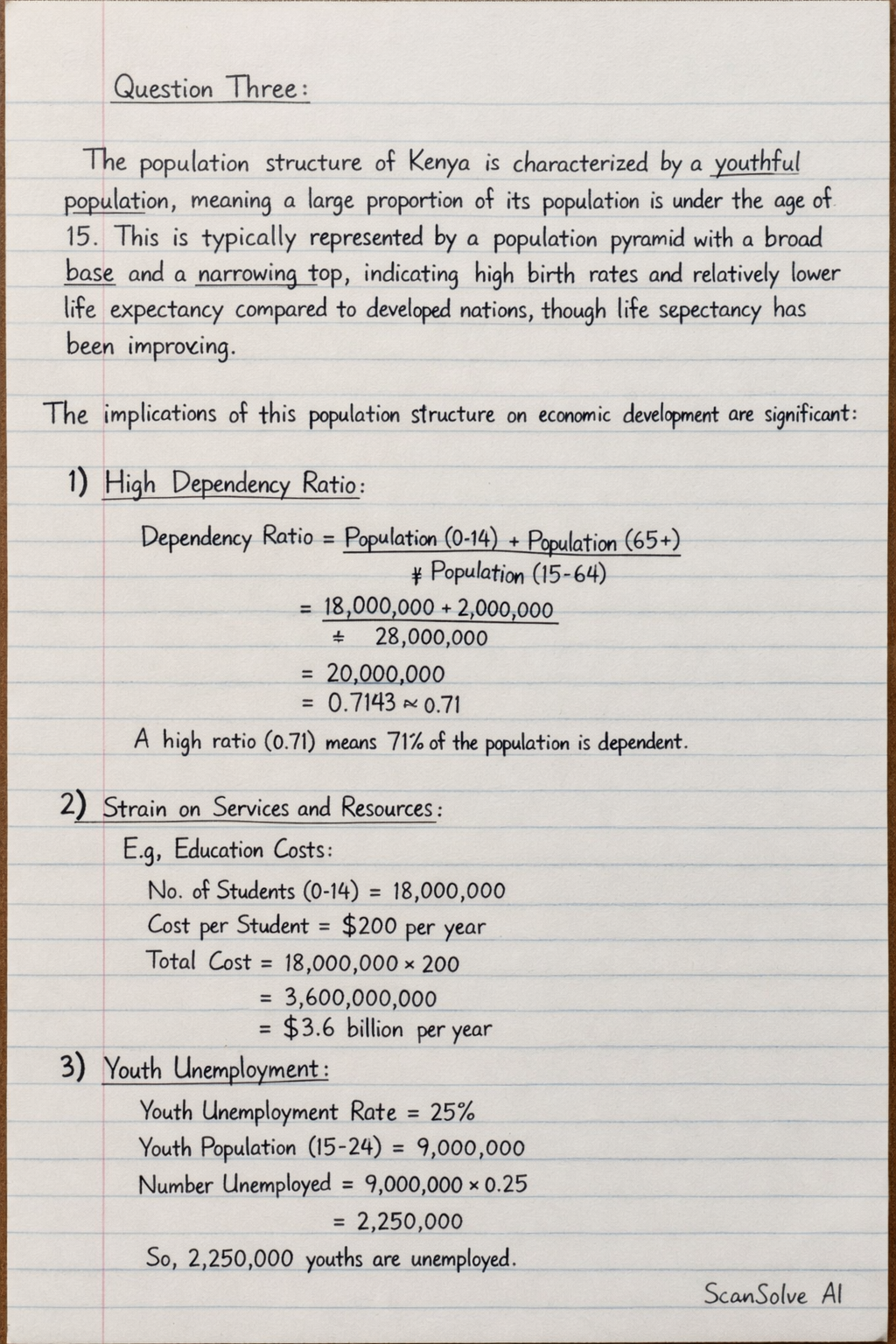
The population structure of Kenya is characterized by a youthful population, meaning a large proportion of its population is under the age of 15. This is typically represented by a population pyramid with a broad base and a narrowing top, indicating high birth rates and relatively lower life expectancy compared to developed nations, though life expectancy has been improving.
The implications of this population structure on economic development are significant:
- High Dependency Ratio: A large youth population results in a high dependency ratio, where a smaller working-age population supports a larger number of dependents (children). This strains the resources of the working population and the government.
- Strain on Social Services: There is immense pressure on public services such as education, healthcare, and housing. The government must allocate substantial resources to build schools, train teachers, provide healthcare facilities, and ensure food security for a growing young population, potentially diverting funds from other productive sectors.
- Labor Force Challenges: While a youthful population provides a potential future labor force, it also presents challenges. If sufficient jobs are not created, it can lead to high rates of youth unemployment, social unrest, and underutilization of human capital.
- Lower Savings and Investment: Households with many dependents tend to have lower savings rates as a larger portion of income is spent on immediate consumption needs. This can reduce national savings and limit the capital available for investment in productive economic activities.
- Potential for Demographic Dividend: If appropriate policies are implemented, a large youth cohort can eventually transition into a productive working-age population, leading to a demographic dividend. This requires investments in quality education, healthcare, and job creation to harness the potential of this large workforce for economic growth. Without these investments, the dividend can turn into a demographic burden.
- Economic Growth: The high dependency ratio and strain on resources can hinder per capita economic growth. Resources that could be invested in infrastructure or industrial development are often consumed by the needs of a rapidly growing young population.
Was this helpful?
Need help with your own homework?
Get instant step-by-step solutions to any question. Free to start.
Ask Your Question
Handwritten Step-by-Step Solution
Get this as a handwritten image on WhatsApp — like a tutor wrote it for you.
Try on WhatsAppMore Geography Questions
QDraw a simple sketch map of Nakasongola between Eastings 37 and 44 Northings 40 and 50, and on it ma…QComplete the statistics in the previous tables with the information provided in this table and state…Q6 year old children interview with questions and answers about Australian culture and geographyQAn interview question and answers about australia culture and geographyQPlan an interview with someone about Australian culture and geography
Still have questions?
Quick Answer
- This strains the resources of the working population and the government.
- Strain on Social Services: There is immense pressure on public services such as education, healthcare, and housing*.
- Labor Force Challenges: While a youthful population provides a potential future labor force, it also presents challenges.
- If sufficient jobs are not created, it can lead to high rates of youth unemployment*, social unrest, and underutilization of human capital.
ScanSolve AI Answer
Question Three: The population structure of Kenya is characterized by a youthful population, meaning a large proportion of its population is under the age of 15. This is typically represented by a population pyramid with a broad base and a narrowing top, indicating high birth rates and relatively lower life expectancy compared to developed nations, though life expectancy has been improving. The implications of this population structure on economic development are significant: High Dependency Ratio: A large youth population results in a high dependency ratio*, where a smaller working-age population supports a larger number of dependents (children). This strains the resources of the working population and the government. Strain on Social Services: There is immense pressure on public services such as education, healthcare, and housing*. The government must allocate substantial resources to build schools, train teachers, provide healthcare facilities, and ensure food security for a growing young population, potentially diverting funds from other productive sectors. Labor Force Challenges: While a youthful population provides a potential future labor force, it also presents challenges. If sufficient jobs are not created, it can lead to high rates of youth unemployment*, social unrest, and underutilization of human capital. Lower Savings and Investment: Households with many dependents tend to have lower savings rates as a larger portion of income is spent on immediate consumption needs. This can reduce national savings and limit the capital available for investment* in productive economic activities. Potential for Demographic Dividend: If appropriate policies are implemented, a large youth cohort can eventually transition into a productive working-age population, leading to a demographic dividend*. This requires investments in quality education, healthcare, and job creation to harness the potential of this large workforce for economic growth. Without these investments, the dividend can turn into a demographic burden. Economic Growth: The high dependency ratio and strain on resources can hinder per capita economic growth. Resources that could be invested in infrastructure or industrial development are often consumed by the needs of a rapidly growing young population.