Waxing is a temporary method of removing unwanted hair using wax. Therapists to advise the client appropriately they must understand the advantages and disadvantages of the method.

Biology
Waxing is a temporary method of removing unwanted hair using wax. Therapists to advise the client appropriately they must understand the advantages and disadvantages of the method.

ScanSolve AI Answer

11 steps

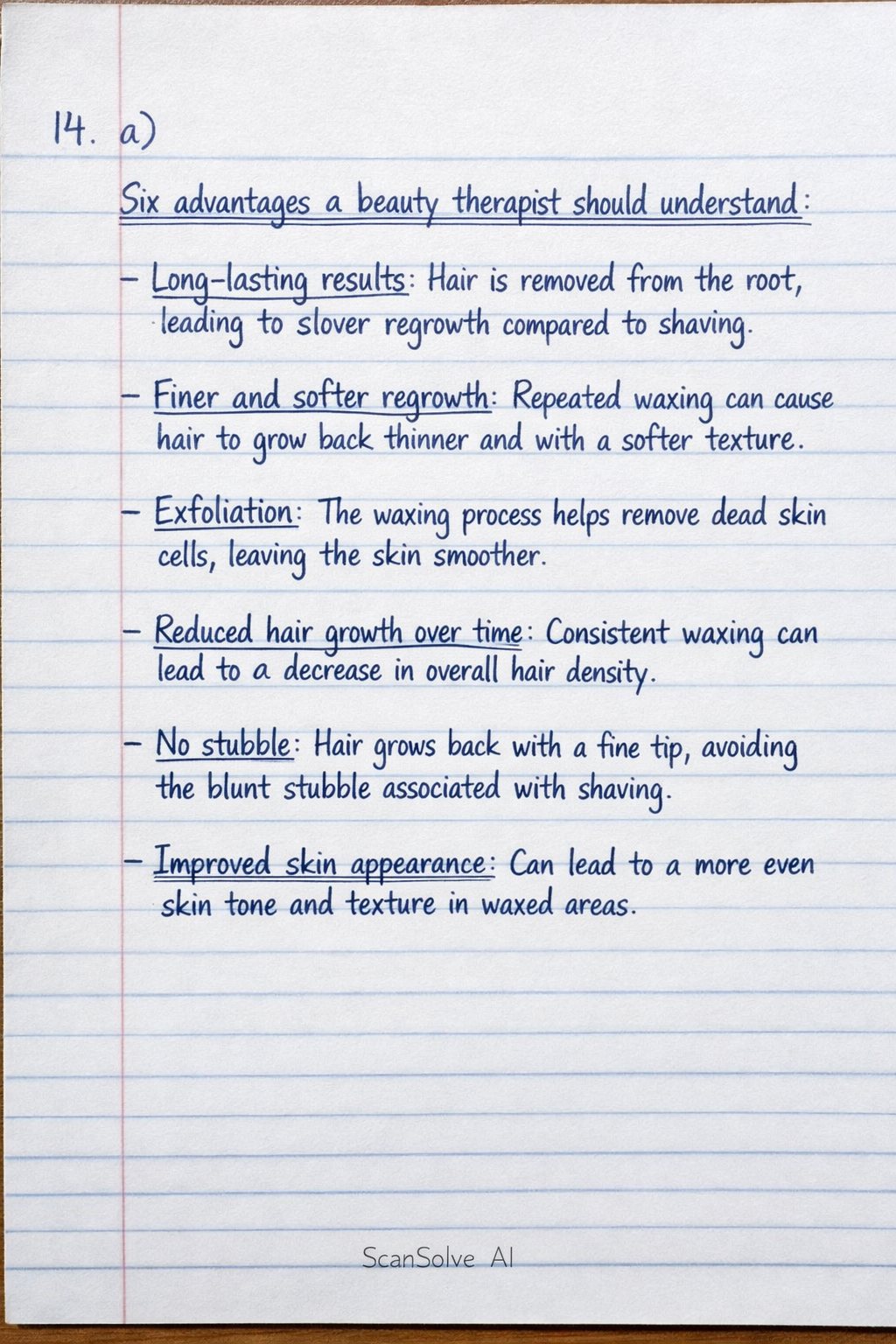
a) SIX advantages a beauty therapist should understand: • Long-lasting results: Hair is removed from the root, leading to slower regrowth compared to shaving. • Finer and softer regrowth: Repeated waxing can cause hair to grow back thinner and with a softer texture. • Exfoliation: The waxing process helps remove dead skin cells, leaving the skin smoother. • Reduced hair growth over time: Consistent waxing can lead to a decrease in overall hair density. • No stubble: Hair grows back with a fine tip, avoiding the blunt stubble associated with shaving. • Improved skin appearance: Can lead to a more even skin tone and texture in waxed areas.

FOUR disadvantages a beauty therapist should understand: • Pain and discomfort: The process can be painful, especially for sensitive areas or first-time clients. • Skin irritation and redness: Temporary redness, bumps, or inflammation are common side effects. • Ingrown hairs: Hair can grow back under the skin, leading to painful bumps and potential infection. • Risk of infection: If proper hygiene and sanitation are not maintained, there is a risk of bacterial infection.

b) TEN basic procedures for waxing a client:

  1. Client consultation and skin analysis: Assess the client's medical history, skin condition, and any contraindications.
  2. Prepare the treatment area: Ensure the area is clean, hygienic, and well-lit.
  3. Cleanse the skin: Thoroughly cleanse the area to be waxed to remove oils, dirt, and makeup.
  4. Apply pre-wax product: Apply a pre-wax oil or powder to protect the skin and ensure proper wax adhesion.
  5. Test wax temperature: Always test the wax on a small, inconspicuous area (e.g., inner wrist) to ensure it is not too hot.
  6. Apply wax: Apply the wax thinly and evenly in the direction of hair growth.
  7. Apply and remove strip (for soft wax): Place a waxing strip firmly over the wax, then quickly pull it off against the direction of hair growth while holding the skin taut.
  8. Remove wax residue: Use a post-wax oil or cleanser to remove any sticky wax residue from the skin.
  9. Apply post-wax product: Apply a soothing lotion or cream to calm the skin and reduce redness.
  10. Provide aftercare advice: Instruct the client on how to care for their skin post-waxing, including avoiding sun exposure, exfoliation, and tight clothing.
Was this helpful?

Need help with your own homework?

Get instant step-by-step solutions to any question. Free to start.

Ask Your Question
Handwritten step-by-step solution preview

Handwritten Step-by-Step Solution

Get this as a handwritten image on WhatsApp — like a tutor wrote it for you.

Try on WhatsApp

Still have questions?

Quick Answer
  1. • Finer and softer regrowth: Repeated waxing can cause hair to grow back thinner and with a softer texture.
  2. • Exfoliation: The waxing process helps remove dead skin cells, leaving the skin smoother.
  3. • Reduced hair growth over time: Consistent waxing can lead to a decrease in overall hair density.
  4. • No stubble: Hair grows back with a fine tip, avoiding the blunt stubble associated with shaving.
Waxing is a temporary method of removing unwanted hair using wax. Therapists to advise the client appropriately they must understand the advantages and disadvantages of the method.
Biology

This biology question covers important biological concepts and processes. The step-by-step explanation below helps you understand the underlying mechanisms and reasoning.

ScanSolve AI Answer
14. a) SIX advantages a beauty therapist should understand: • Long-lasting results: Hair is removed from the root, leading to slower regrowth compared to shaving. • Finer and softer regrowth: Repeated waxing can cause hair to grow back thinner and with a softer texture. • Exfoliation: The waxing process helps remove dead skin cells, leaving the skin smoother. • Reduced hair growth over time: Consistent waxing can lead to a decrease in overall hair density. • No stubble: Hair grows back with a fine tip, avoiding the blunt stubble associated with shaving. • Improved skin appearance: Can lead to a more even skin tone and texture in waxed areas. FOUR disadvantages a beauty therapist should understand: • Pain and discomfort: The process can be painful, especially for sensitive areas or first-time clients. • Skin irritation and redness: Temporary redness, bumps, or inflammation are common side effects. • Ingrown hairs: Hair can grow back under the skin, leading to painful bumps and potential infection. • Risk of infection: If proper hygiene and sanitation are not maintained, there is a risk of bacterial infection. b) TEN basic procedures for waxing a client: 1. Client consultation and skin analysis: Assess the client's medical history, skin condition, and any contraindications. 2. Prepare the treatment area: Ensure the area is clean, hygienic, and well-lit. 3. Cleanse the skin: Thoroughly cleanse the area to be waxed to remove oils, dirt, and makeup. 4. Apply pre-wax product: Apply a pre-wax oil or powder to protect the skin and ensure proper wax adhesion. 5. Test wax temperature: Always test the wax on a small, inconspicuous area (e.g., inner wrist) to ensure it is not too hot. 6. Apply wax: Apply the wax thinly and evenly in the direction of hair growth. 7. Apply and remove strip (for soft wax): Place a waxing strip firmly over the wax, then quickly pull it off against the direction of hair growth while holding the skin taut. 8. Remove wax residue: Use a post-wax oil or cleanser to remove any sticky wax residue from the skin. 9. Apply post-wax product: Apply a soothing lotion or cream to calm the skin and reduce redness. 10. Provide aftercare advice: Instruct the client on how to care for their skin post-waxing, including avoiding sun exposure, exfoliation, and tight clothing.