Describe and explain the nature of health and diseases in areas where you live.

Geography
Describe and explain the nature of health and diseases in areas where you live.

ScanSolve AI Answer

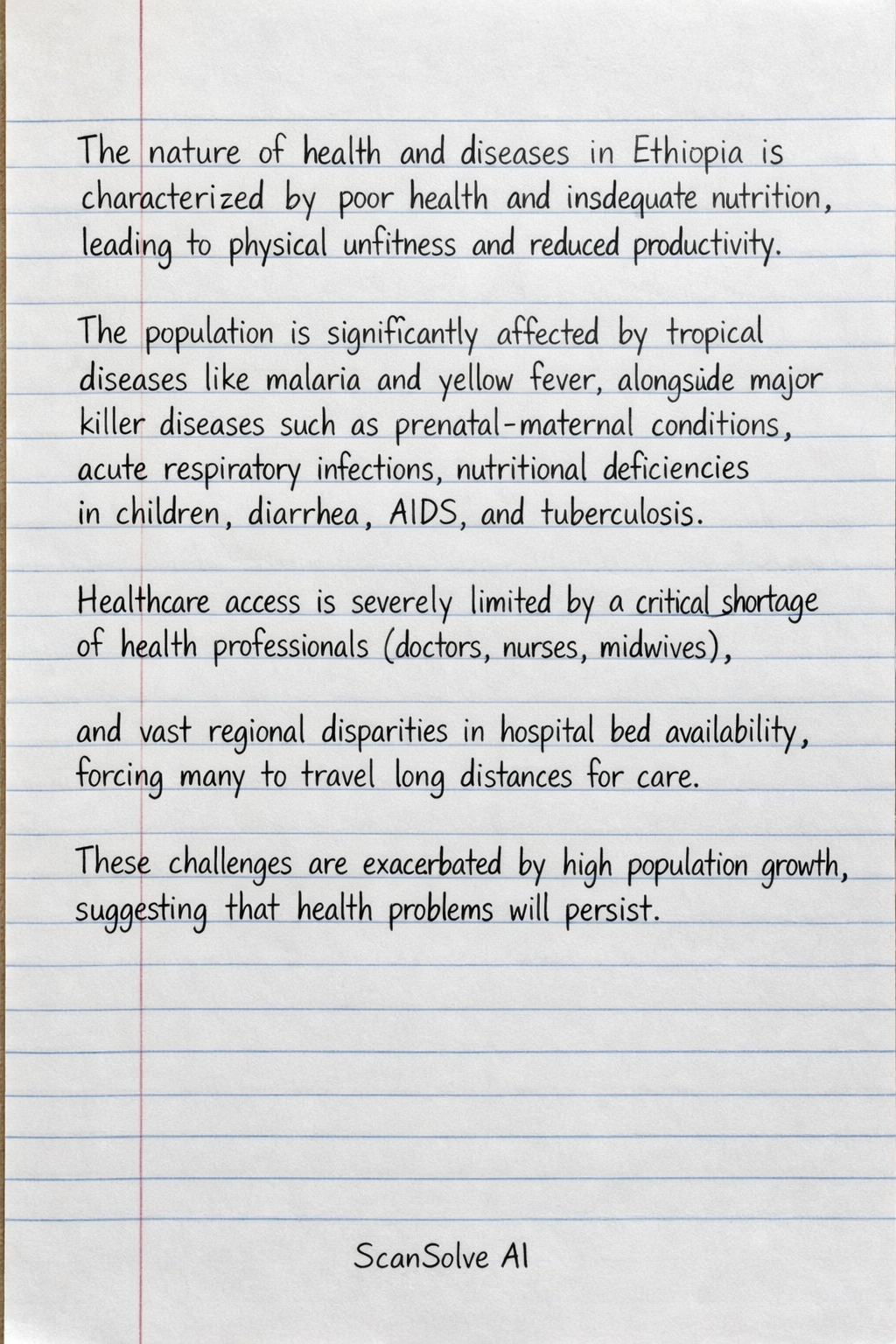
The nature of health and diseases in Ethiopia is characterized by poor health and inadequate nutrition, leading to physical unfitness and reduced productivity. The population is significantly affected by tropical diseases like malaria and yellow fever, alongside major killer diseases such as prenatal-maternal conditions, acute respiratory infections, nutritional deficiencies in children, diarrhea, AIDS, and tuberculosis. Healthcare access is severely limited by a critical shortage of health professionals (doctors, nurses, midwives) and vast regional disparities in hospital bed availability, forcing many to travel long distances for care. These challenges are exacerbated by high population growth, suggesting that health problems will persist.

Was this helpful?

Need help with your own homework?

Get instant step-by-step solutions to any question. Free to start.

Ask Your Question
Handwritten step-by-step solution preview

Handwritten Step-by-Step Solution

Get this as a handwritten image on WhatsApp — like a tutor wrote it for you.

Try on WhatsApp

Still have questions?

Quick Answer

The nature of health and diseases in Ethiopia is characterized by poor health and inadequate nutrition, leading to physical unfitness and reduced productivity.

Describe and explain the nature of health and diseases in areas where you live.
Geography

This geography problem is solved step by step below, with detailed explanations to help you understand the method and arrive at the correct answer.

ScanSolve AI Answer
The nature of health and diseases in Ethiopia is characterized by poor health and inadequate nutrition, leading to physical unfitness and reduced productivity. The population is significantly affected by tropical diseases like malaria and yellow fever, alongside major killer diseases such as prenatal-maternal conditions, acute respiratory infections, nutritional deficiencies in children, diarrhea, AIDS, and tuberculosis. Healthcare access is severely limited by a critical shortage of health professionals (doctors, nurses, midwives) and vast regional disparities in hospital bed availability, forcing many to travel long distances for care. These challenges are exacerbated by high population growth, suggesting that health problems will persist.