State four applications of echo

Physics

ScanSolve AI Answer

Here are four applications of echo:

  • Sonar (Sound Navigation and Ranging): Used by ships and submarines to detect underwater objects, measure ocean depth, and map the seafloor.
  • Medical Ultrasound: Utilized to create images of internal body organs and structures, such as in prenatal scans or diagnosing medical conditions.
  • Echolocation: Employed by animals like bats and dolphins to navigate, locate prey, and avoid obstacles in their environment.
  • Geological Exploration: Used in seismic surveys to locate underground oil, gas, and mineral deposits by analyzing reflected sound waves.

You're doing great! What's the next question?

Was this helpful?

Need help with your own homework?

Get instant step-by-step solutions to any question. Free to start.

Ask Your Question
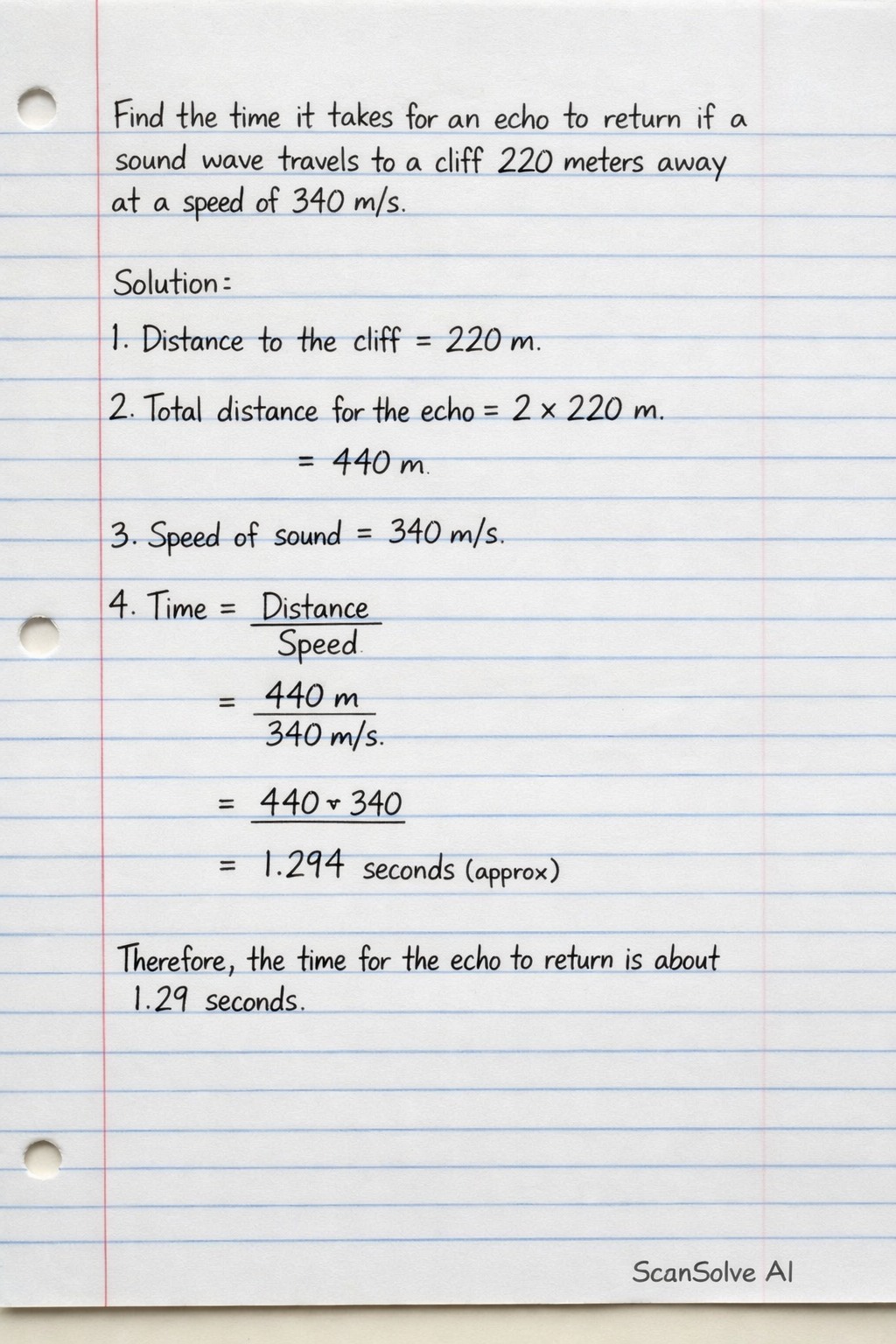
Handwritten step-by-step solution preview

Handwritten Step-by-Step Solution

Get this as a handwritten image on WhatsApp — like a tutor wrote it for you.

Try on WhatsApp

Still have questions?

Quick Answer

Sonar (Sound Navigation and Ranging)*: Used by ships and submarines to detect underwater objects, measure ocean depth, and map the seafloor.

State four applications of echo
Physics

This physics problem tests your understanding of fundamental physical laws and their applications. The step-by-step solution below breaks down the problem using relevant equations and physical reasoning.

ScanSolve AI Answer
Here are four applications of echo: Sonar (Sound Navigation and Ranging)*: Used by ships and submarines to detect underwater objects, measure ocean depth, and map the seafloor. Medical Ultrasound*: Utilized to create images of internal body organs and structures, such as in prenatal scans or diagnosing medical conditions. Echolocation*: Employed by animals like bats and dolphins to navigate, locate prey, and avoid obstacles in their environment. Geological Exploration*: Used in seismic surveys to locate underground oil, gas, and mineral deposits by analyzing reflected sound waves. You're doing great! What's the next question?