With the aid of labelled diagrams, explain the following methods of speed control of d.c series motors: (i) field diverter method; (ii) armature diverter.

Physics
With the aid of labelled diagrams, explain the following methods of speed control of d.c series motors: (i) field diverter method; (ii) armature diverter.

ScanSolve AI Answer

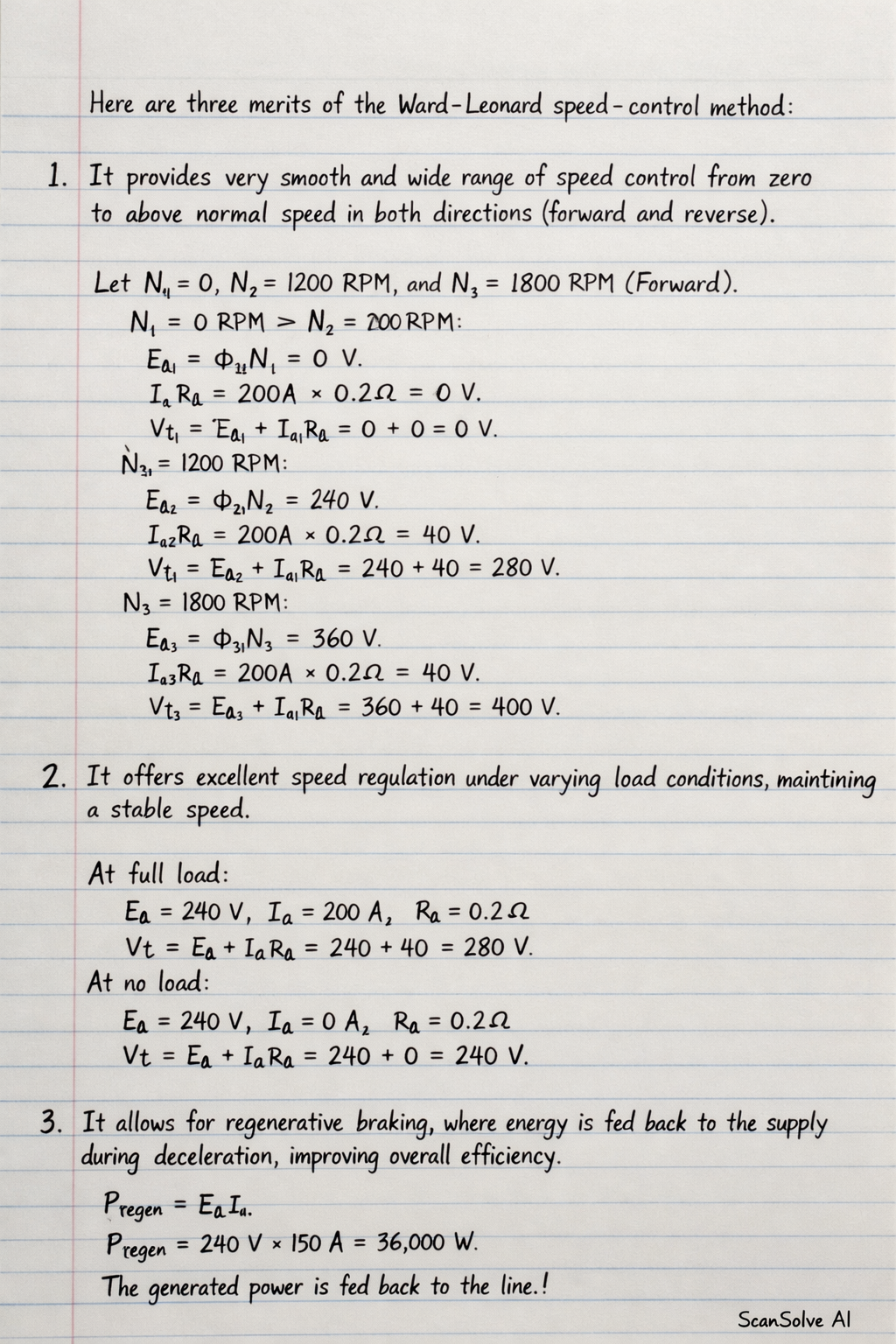
Here are three merits of the Ward-Leonard speed-control method:

  • It provides very smooth and wide range of speed control from zero to above normal speed in both directions (forward and reverse).
  • It offers excellent speed regulation under varying load conditions, maintaining a stable speed.
  • It allows for regenerative braking, where energy is fed back to the supply during deceleration, improving overall efficiency.
Was this helpful?

Need help with your own homework?

Get instant step-by-step solutions to any question. Free to start.

Ask Your Question
Handwritten step-by-step solution preview

Handwritten Step-by-Step Solution

Get this as a handwritten image on WhatsApp — like a tutor wrote it for you.

Try on WhatsApp

Still have questions?

Quick Answer

It provides very smooth and wide range of speed control* from zero to above normal speed in both directions (forward and reverse).

With the aid of labelled diagrams, explain the following methods of speed control of d.c series motors: (i) field diverter method; (ii) armature diverter.
Physics

This physics problem tests your understanding of fundamental physical laws and their applications. The step-by-step solution below breaks down the problem using relevant equations and physical reasoning.

ScanSolve AI Answer
Here are three merits of the Ward-Leonard speed-control method: It provides very smooth and wide range of speed control* from zero to above normal speed in both directions (forward and reverse). It offers excellent speed regulation* under varying load conditions, maintaining a stable speed. It allows for regenerative braking*, where energy is fed back to the supply during deceleration, improving overall efficiency.