

This physics problem tests your understanding of fundamental physical laws and their applications. The step-by-step solution below breaks down the problem using relevant equations and physical reasoning.
ScanSolve AI Answer
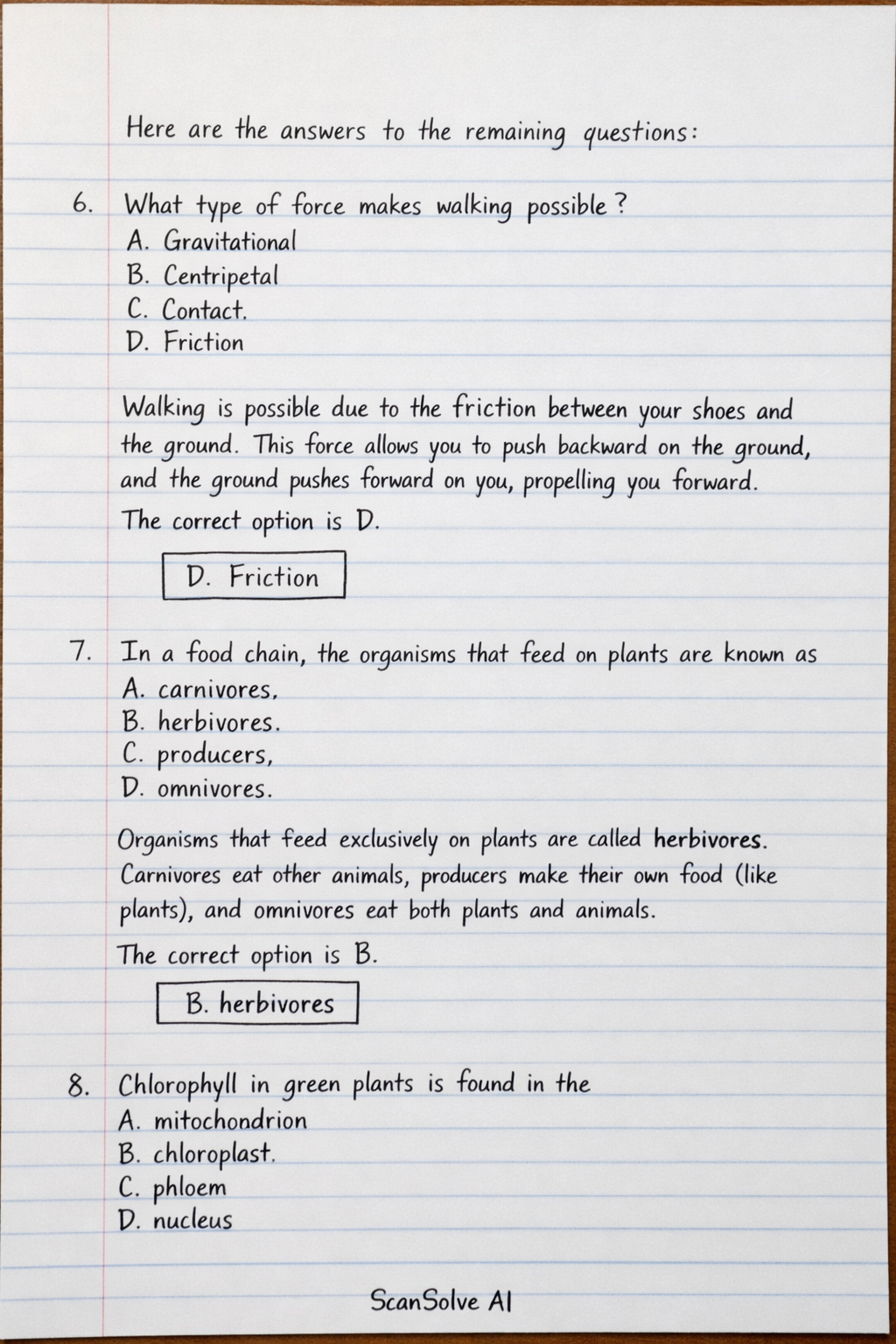
Here are the answers to the remaining questions: 6. What type of force makes walking possible? A. Gravitational B. Centripetal C. Contact D. Friction Walking is possible due to the friction between your shoes and the ground. This force allows you to push backward on the ground, and the ground pushes forward on you, propelling you forward. The correct option is D. D. Friction 7. In a food chain, the organisms that feed on plants are known as A. carnivores. B. herbivores. C. producers. D. omnivores. Organisms that feed exclusively on plants are called herbivores. Carnivores eat other animals, producers make their own food (like plants), and omnivores eat both plants and animals. The correct option is B. B. herbivores 8. Chlorophyll in green plants is found in the A. mitochondrion B. chloroplast C. phloem D. nucleus Chlorophyll, the pigment responsible for the green color of plants and essential for photosynthesis, is located within the chloroplasts of plant cells. The correct option is B. B. chloroplast 9. Meat, eggs and beans are sources of A. carbohydrates. B. vitamins. C. proteins. D. fats. Meat, eggs, and beans are all excellent sources of proteins, which are essential for building and repairing tissues in the body. The correct option is C. C. proteins 10. The solar system refers to the A. nine planets, satellites and sun. B. stars, moon and meteoroids. C. sun, stars and comets. D. sun, nine planets and meteoroids. The solar system consists of the Sun, the eight (not nine, as Pluto is now classified as a dwarf planet) major planets and their moons (satellites), dwarf planets, asteroids, comets, and meteoroids. Option D is the most comprehensive and accurate description among the choices, even if the number of planets is outdated. The correct option is D. D. sun, nine planets and meteoroids That's 2 down. 3 left today — send the next one.