
We read your photo as:
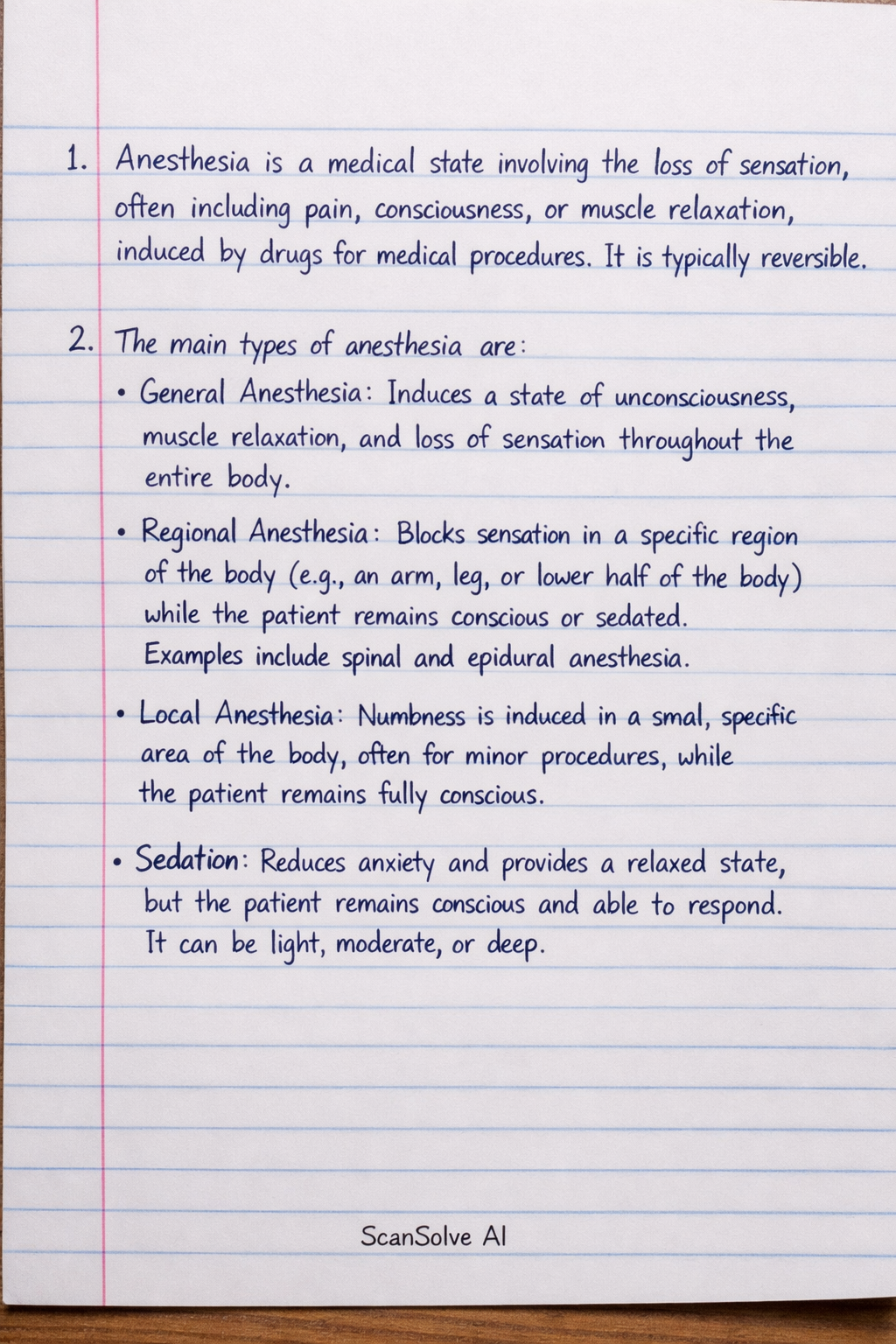
Anesthesia is a medical state involving the loss of sensation, often including pain, consciousness, or muscle relaxation, induced by drugs for medical procedures. It is typically reversible.
Psychology
ScanSolve AI Answer
-
Anesthesia is a medical state involving the loss of sensation, often including pain, consciousness, or muscle relaxation, induced by drugs for medical procedures. It is typically reversible.
-
The main types of anesthesia are:
- General Anesthesia: Induces a state of unconsciousness, muscle relaxation, and loss of sensation throughout the entire body.
- Regional Anesthesia: Blocks sensation in a specific region of the body (e.g., an arm, leg, or lower half of the body) while the patient remains conscious or sedated. Examples include spinal and epidural anesthesia.
- Local Anesthesia: Numbness is induced in a small, specific area of the body, often for minor procedures, while the patient remains fully conscious.
- Sedation: Reduces anxiety and provides a relaxed state, but the patient remains conscious and able to respond. It can be light, moderate, or deep.
-
Common routes of anesthesia administration include:
- Inhalation: Anesthetic gases or vapors are breathed in through a mask or breathing tube.
- Intravenous (IV): Anesthetic drugs are injected directly into a vein.
- Topical: Applied directly to the skin or mucous membranes (e.g., creams, sprays).
- Local Infiltration: Injected directly into the tissue around the surgical site.
- Spinal/Epidural: Injected into the space around the spinal cord to block sensation in a larger region.
- Nerve Block: Injected near specific nerves to numb a particular area.
-
Complications of General & Regional Anesthesia:
- General Anesthesia Complications:
- Nausea and vomiting
- Sore throat
- Confusion or delirium (especially in older adults)
- Shivering
- Dental damage
- Allergic reactions
- Malignant hyperthermia (rare)
- Awareness during surgery (rare)
- Regional Anesthesia Complications:
- Headache (post-dural puncture headache)
- Back pain
- Nerve damage (rare, temporary or permanent)
- Infection at the injection site
- Bleeding or hematoma formation
- Low blood pressure
- Urinary retention
- General Anesthesia Complications:
Was this helpful?
Still stuck on this one?
Ask a follow-up, and the answer starts from this question.
Got a different question?Ask your own question
More Psychology Questions
QWhat role does anesthetics play in the nervous systemQThis slide explains regional anesthesia for pain relief during labor and Caesarean section. Regional…QState four (4) tissue effects of muscarinic receptor activation (4mks) Differentiate between general…QLoss of appetite medical termQAntacids Antiemetic Antihelmintic Anticholonergic Analgesic Anesthetic Antidepressants
Handwritten Step-by-Step Solution
Get this as a handwritten image on WhatsApp — like a tutor wrote it for you.
Try on WhatsApp