
Psychology Homework Help
Step-by-step AI solutions. Ask your own question →
Psychology Questions

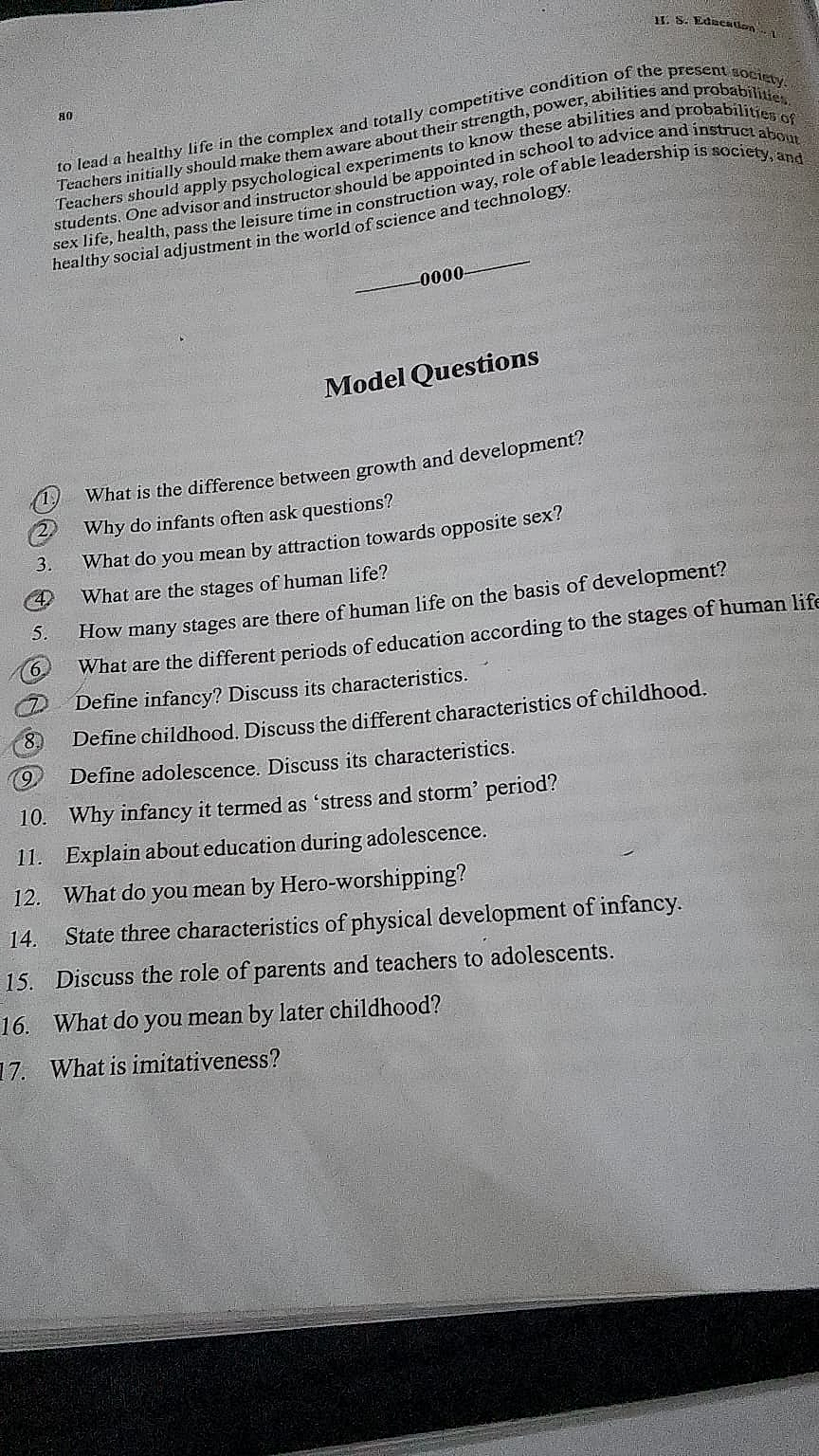
What is the difference between growth and development? Why do infants often ask questions? What do you mean by attractio…
View Solution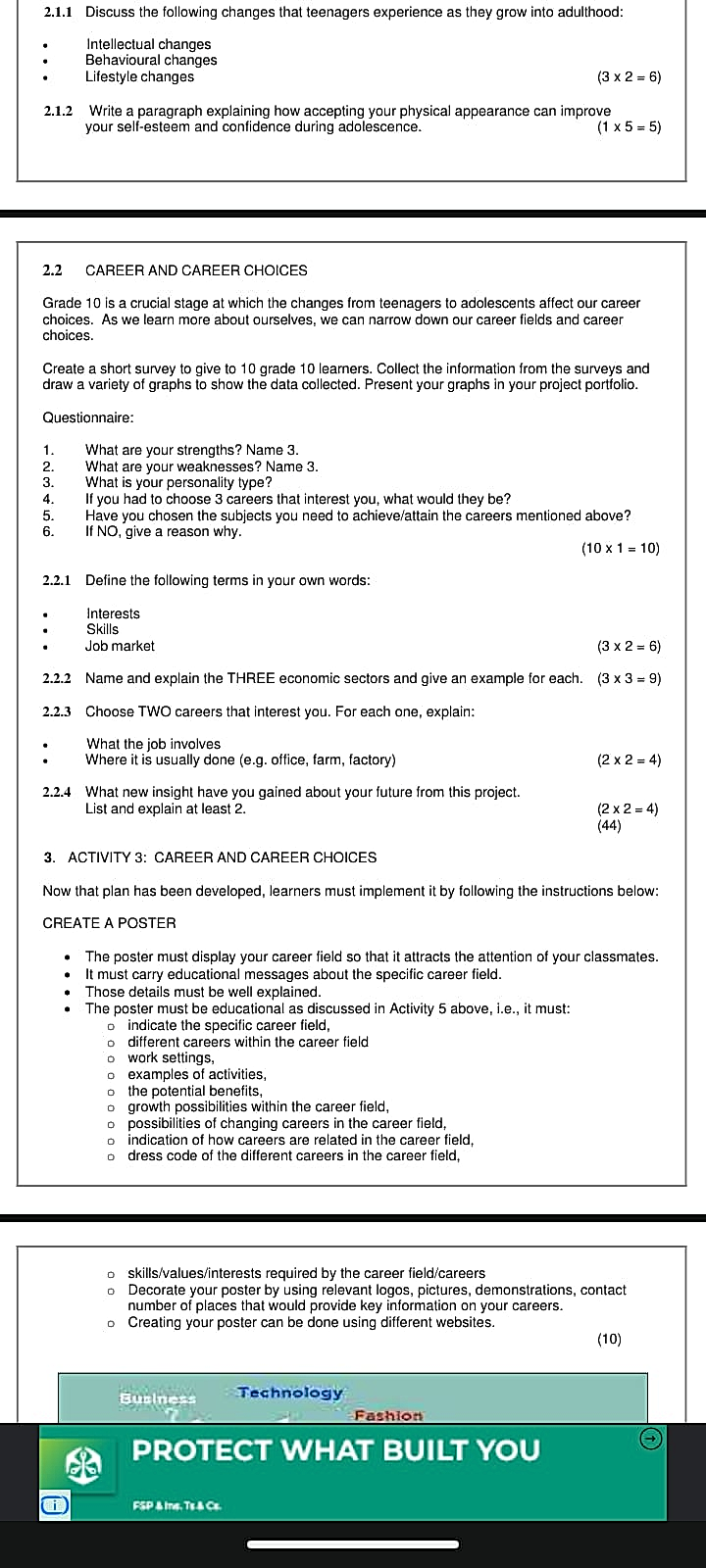
Discuss the following changes that teenagers experience as they grow into adulthood: Intellectual changes, Behavioural c…
View Solution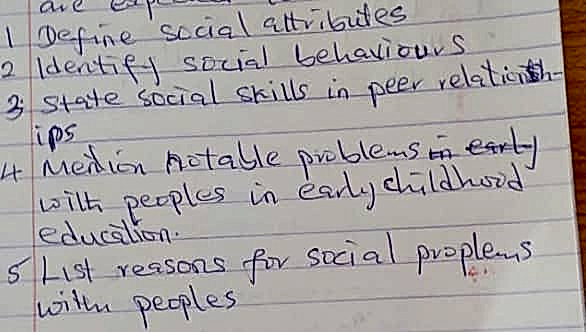
1 Define social attributes 2 Identify social behaviours 3 State social skills in peer relations ips 4 Mention notable pr…
View Solution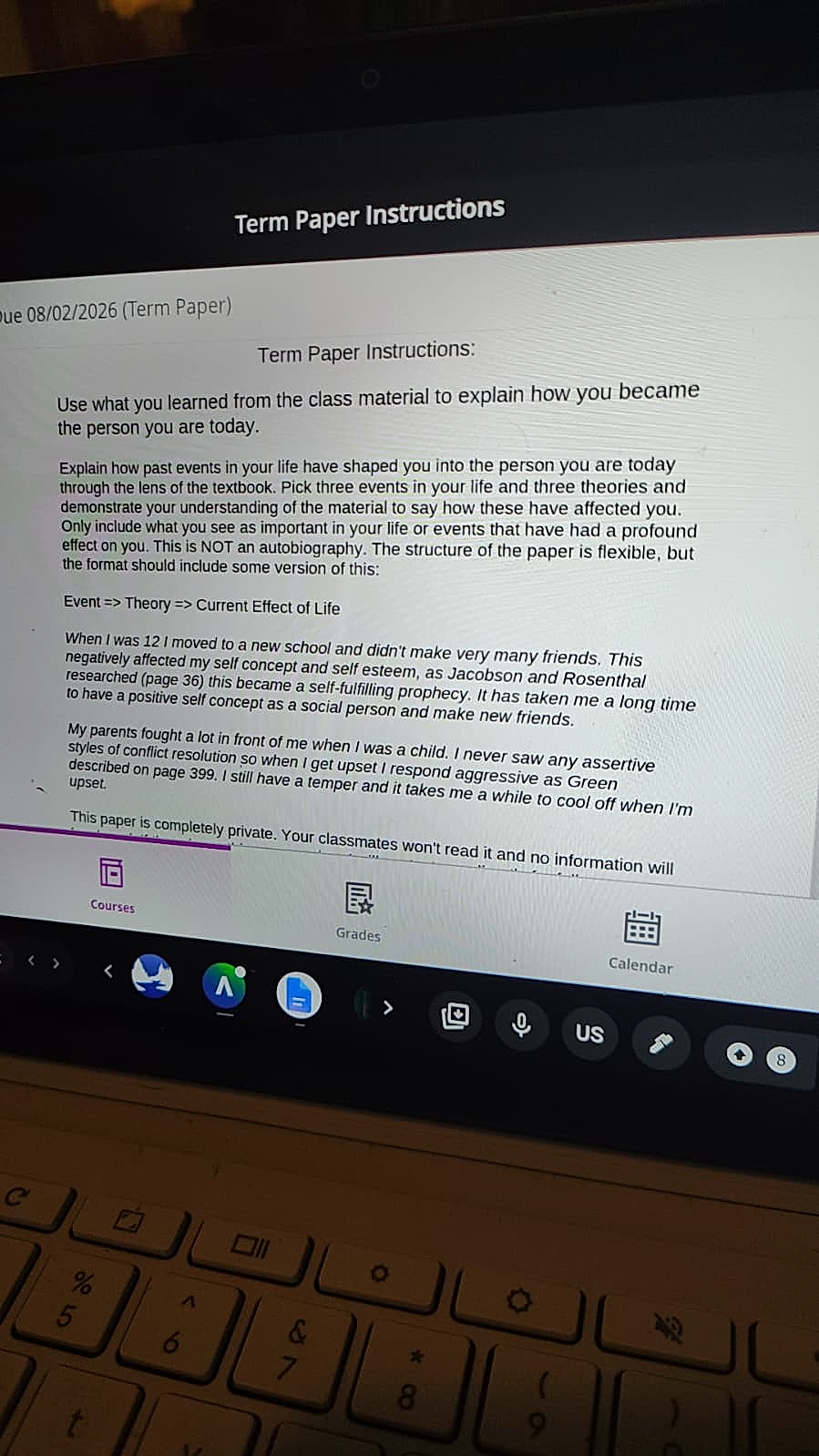
Explain how past events in your life have shaped you into the person you are today. Pick three events in your life and t…
View SolutionRelevant Theories/Models for Chronic Disease Applied to Hypertension using the biopsychosocial spiritual model and cogni…
View SolutionDiscuss and Explain into details according to the physical, mental, social and spiritual approach in psychology followin…
View SolutionExplain all according to physical, mental, social, and spiritual approah in psychology
View Solution
About Psychology
Psychology homework ranges from the history of the discipline to the everyday: stress and depression, perception, self-esteem, motivation theories, guidance and counselling, and the social skills people use in relationships and at work. Students also meet research methods, positive psychology, and applied fields such as consumer psychology. Questions usually ask you to define a concept, explain it, and apply it to a person or situation.
Popular Topics in Psychology
Mental Health
Classes of mental health disorders, depression, anxiety, and how conditions such as autism spectrum disorder are described.
Stress & Coping
Acute and chronic stress, common stressors for students and workers, and healthy ways of coping.
Perception & Cognition
How we perceive, attend and remember, and the methods early psychologists used to study the mind.
Motivation Theories
Content and process theories of motivation, and applying them to study or the workplace.
Guidance & Counselling
What counselling is, its stages, and why follow-up services matter.
Self-Esteem & Personality
Healthy and unhealthy self-esteem, strengths and weaknesses, and how personality is described.
Social Psychology
Social attributes and behaviours, peer relationships, human relations and impressions people form of each other.
Positive Psychology
Strengths and virtues such as wisdom, and how the field studies well-being.
History of Psychology
Key milestones and schools of thought, from introspection and reductionism to modern approaches.
Research Methods
Writing research objectives, choosing methods, and studying topics such as social media and academic performance.
How ScanSolve Helps with Psychology
Photograph or type the question, and ScanSolve answers the way psychology is marked: a precise definition, an explanation in plain language, and an application to the case or example given. When a question asks you to list or state a number of points, the answer gives that many, clearly separated.
For theory questions, the answer names the theorist or model and shows how it explains the behaviour in the question. For case studies, it ties each point back to what the person in the scenario actually did or said.
For research tasks, ScanSolve helps you turn a broad topic into clear objectives and a method you can defend.
Study Tips for Psychology
Learn each key term with a one-line definition and a real-life example. Most questions test both.
When you use a theory, name it and apply it to the scenario. Describing a theory without applying it rarely earns full marks.
Compare related concepts side by side, such as acute and chronic stress. Differences are a favourite exam question.
Treat case studies as evidence: underline what the person does and says, and use it in your answer.
Get Psychology Help on WhatsApp
Send a photo of your psychology homework and get step-by-step solutions instantly. No app download needed.
Message Us on WhatsAppFrequently Asked Psychology Questions
How can ScanSolve help with Psychology homework?
ScanSolve's AI solves psychology problems step by step. Snap a photo of your homework or type your question to get instant, detailed solutions with clear explanations.
Is Psychology homework help free on ScanSolve?
Yes, ScanSolve offers free psychology homework help with step-by-step solutions. Upgrade to Pro at $89.99/year (about $7.50/month) or $9.99/week for unlimited answers and priority support.
What Psychology topics does ScanSolve cover?
ScanSolve covers all psychology topics including Mental Health, Stress & Coping, Perception & Cognition, Motivation Theories, Guidance & Counselling. Upload any psychology problem and get a step-by-step solution.
Can ScanSolve solve psychology problems from a photo?
Yes. Take a photo of your psychology homework and ScanSolve's AI will read the problem, identify the method needed, and provide a complete step-by-step solution.
How accurate are ScanSolve's psychology solutions?
ScanSolve uses advanced AI to deliver accurate, step-by-step psychology solutions. Each answer includes detailed explanations so you can verify the reasoning and learn the method.
Psychology Study Guides & Articles
Classical Conditioning Explained: Pavlov's Theory Made Simple
Learn classical conditioning in simple terms. Understand Pavlov's dog experiment, key concepts like stimulus and response, and real-life examples.
PsychologyStages of Child Development: Piaget's Theory Explained
Learn Piaget's four stages of cognitive development — sensorimotor, preoperational, concrete operational, and formal operational — with clear examples.
Languages10 Proven Tips for Learning a New Language Fast
Discover 10 science-backed tips for learning a new language quickly. From immersion techniques to spaced repetition, learn strategies that actually work.
LanguagesWhat Is Sociolinguistics? How Language and Society Connect
Explore sociolinguistics — how language varies by region, class, gender, and culture. Learn key concepts like dialects, code-switching, and language change.
Explore More Subjects
Have a Psychology question?
Get an instant AI-powered step-by-step solution in seconds.