Define rhythm and explain the term dysrhythmia (arrhythmia).

Biology
Define rhythm and explain the term dysrhythmia (arrhythmia).

ScanSolve AI Answer

6 steps

Answer

120/80 mmHg

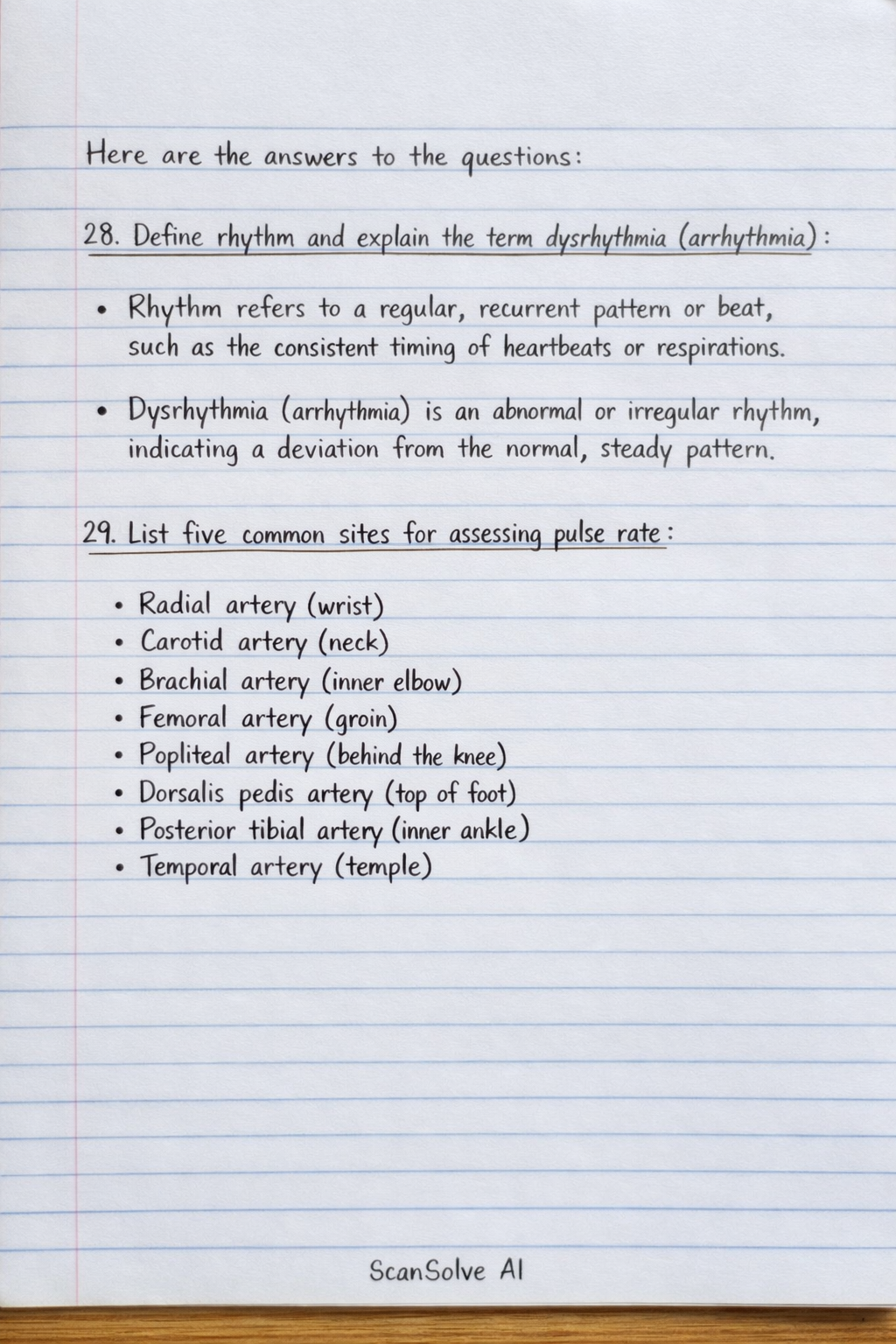
Here are the answers to the questions:

28. Define rhythm and explain the term dysrhythmia (arrhythmia).

  • Rhythm refers to a regular, recurrent pattern or beat, such as the consistent timing of heartbeats or respirations.
  • Dysrhythmia (arrhythmia) is an abnormal or irregular rhythm, indicating a deviation from the normal, steady pattern.

29. List five common sites for assessing pulse rate.

  • Radial artery (wrist)
  • Carotid artery (neck)
  • Brachial artery (inner elbow)
  • Femoral artery (groin)
  • Popliteal artery (behind the knee)
  • Dorsalis pedis artery (top of foot)
  • Posterior tibial artery (inner ankle)
  • Temporal artery (temple)

30. Outline the steps involved in assessing the radial pulse.

  1. Position the patient's arm with the palm facing up.
  2. Locate the radial artery on the thumb side of the wrist, just below the base of the thumb.
  3. Place the pads of your index and middle fingers lightly over the artery. Do not use your thumb.
  4. Apply gentle pressure until you feel the pulse.
  5. Count the beats for 30 seconds and multiply by two for a regular pulse, or count for a full 60 seconds if irregular.
  6. Note the rate, rhythm, and strength of the pulse.

31. Describe the dietary preparation required before collecting stool for occult blood. For a fecal occult blood test (FOBT), patients should avoid red meat, poultry, fish, and certain vegetables (like broccoli, turnips, radishes, and horseradish) for at least 3 days prior to and during the collection period. They should also avoid vitamin C supplements and iron preparations, as these can interfere with test results.

32. Define respiratory rate and state how it is measured.

  • Respiratory rate is the number of breaths a person takes per minute.
  • It is measured by observing and counting the rise and fall of the patient's chest or abdomen for one full minute, ideally without the patient being aware to ensure an accurate, resting rate.

33. List five factors that affect the respiratory rate.

  • Exercise
  • Pain
  • Anxiety/Stress
  • Fever
  • Medications (e.g., opioids decrease, stimulants increase)
  • Illness/Disease (e.g., asthma, pneumonia)
  • Age

34. State the units and method of recording blood pressure.

  • The units for blood pressure are millimeters of mercury (mmHg\text{mmHg}).
  • Blood pressure is recorded as a fraction, with the systolic pressure (the maximum pressure during heart contraction) written over the diastolic pressure (the minimum pressure when the heart rests between beats). For example, 120/80mmHg\boxed{120/80 mmHg}.

35. List three factors that affect blood pressure.

  • Cardiac output (the amount of blood pumped by the heart per minute)
  • Peripheral vascular resistance (the resistance to blood flow in the arteries)
  • Blood volume (the total amount of blood in the circulatory system)
  • Elasticity of arterial walls
  • Viscosity of blood
Was this helpful?

Need help with your own homework?

Get instant step-by-step solutions to any question. Free to start.

Ask Your Question
Handwritten step-by-step solution preview

Handwritten Step-by-Step Solution

Get this as a handwritten image on WhatsApp — like a tutor wrote it for you.

Try on WhatsApp

Still have questions?

Quick Answer

28. Define rhythm and explain the term dysrhythmia (arrhythmia).

Define rhythm and explain the term dysrhythmia (arrhythmia).
Biology

This biology question covers important biological concepts and processes. The step-by-step explanation below helps you understand the underlying mechanisms and reasoning.

ScanSolve AI Answer
Here are the answers to the questions: 28. Define rhythm and explain the term dysrhythmia (arrhythmia). Rhythm* refers to a regular, recurrent pattern or beat, such as the consistent timing of heartbeats or respirations. Dysrhythmia (arrhythmia)* is an abnormal or irregular rhythm, indicating a deviation from the normal, steady pattern. 29. List five common sites for assessing pulse rate. Radial artery* (wrist) Carotid artery* (neck) Brachial artery* (inner elbow) Femoral artery* (groin) Popliteal artery* (behind the knee) Dorsalis pedis artery* (top of foot) Posterior tibial artery* (inner ankle) Temporal artery* (temple) 30. Outline the steps involved in assessing the radial pulse. 1. Position the patient's arm with the palm facing up. 2. Locate the radial artery on the thumb side of the wrist, just below the base of the thumb. 3. Place the pads of your index and middle fingers lightly over the artery. Do not use your thumb. 4. Apply gentle pressure until you feel the pulse. 5. Count the beats for 30 seconds and multiply by two for a regular pulse, or count for a full 60 seconds if irregular. 6. Note the rate, rhythm, and strength of the pulse. 31. Describe the dietary preparation required before collecting stool for occult blood. For a fecal occult blood test (FOBT), patients should avoid red meat, poultry, fish, and certain vegetables (like broccoli, turnips, radishes, and horseradish) for at least 3 days prior to and during the collection period. They should also avoid vitamin C supplements and iron preparations, as these can interfere with test results. 32. Define respiratory rate and state how it is measured. Respiratory rate* is the number of breaths a person takes per minute. It is measured by observing and counting the rise and fall of the patient's chest or abdomen for one full minute, ideally without the patient being aware to ensure an accurate, resting rate. 33. List five factors that affect the respiratory rate. Exercise* Pain* Anxiety/Stress* Fever* Medications* (e.g., opioids decrease, stimulants increase) Illness/Disease* (e.g., asthma, pneumonia) Age* 34. State the units and method of recording blood pressure. The units for blood pressure are millimeters of mercury* (mmHg). Blood pressure is recorded as a fraction, with the systolic pressure (the maximum pressure during heart contraction) written over the diastolic pressure* (the minimum pressure when the heart rests between beats). For example, 120/80 mmHg. 35. List three factors that affect blood pressure. Cardiac output* (the amount of blood pumped by the heart per minute) Peripheral vascular resistance* (the resistance to blood flow in the arteries) Blood volume* (the total amount of blood in the circulatory system) Elasticity of arterial walls* Viscosity of blood*