

This psychology problem is solved step by step below, with detailed explanations to help you understand the method and arrive at the correct answer.
ScanSolve AI Answer
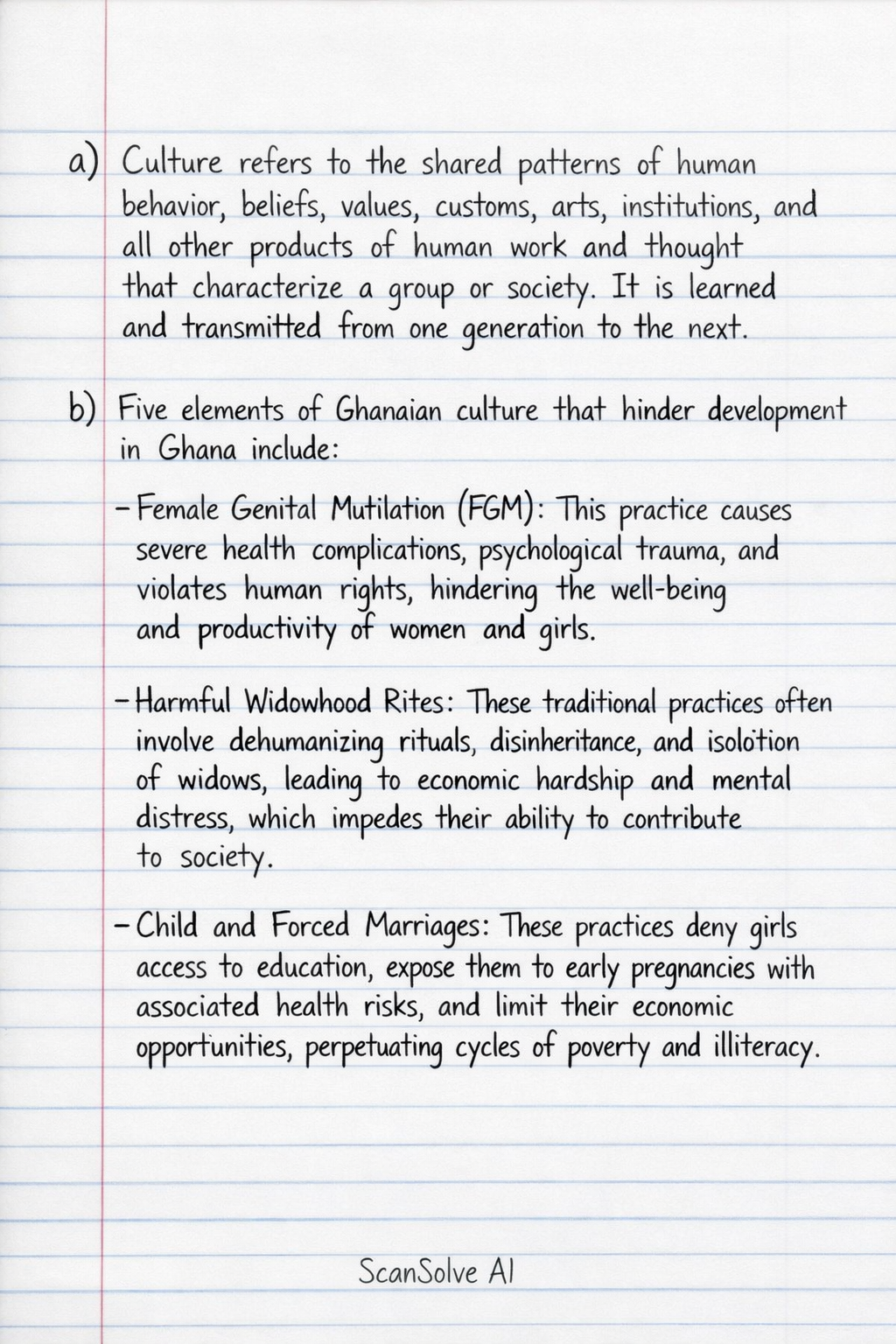
a) Culture refers to the shared patterns of human behavior, beliefs, values, customs, arts, institutions, and all other products of human work and thought that characterize a group or society. It is learned and transmitted from one generation to the next. b) Five elements of Ghanaian culture that hinder development in Ghana include: • Female Genital Mutilation (FGM): This practice causes severe health complications, psychological trauma, and violates human rights, hindering the well-being and productivity of women and girls. • Harmful Widowhood Rites: These traditional practices often involve dehumanizing rituals, disinheritance, and isolation of widows, leading to economic hardship and mental distress, which impedes their ability to contribute to society. • Child and Forced Marriages: These practices deny girls access to education, expose them to early pregnancies with associated health risks, and limit their economic opportunities, perpetuating cycles of poverty and illiteracy. • Superstitious Beliefs and Practices: Over-reliance on traditional healers for serious illnesses, fear of witchcraft, and other superstitious beliefs can hinder the adoption of modern healthcare, scientific farming methods, and critical thinking necessary for progress. • Patriarchal Social Structures: These structures often lead to gender inequality, limiting women's access to education, land ownership, financial resources, and decision-making roles, thereby underutilizing a significant portion of the human capital essential for national development. 3 done, 2 left today. You're making progress.