

This psychology problem is solved step by step below, with detailed explanations to help you understand the method and arrive at the correct answer.
ScanSolve AI Answer
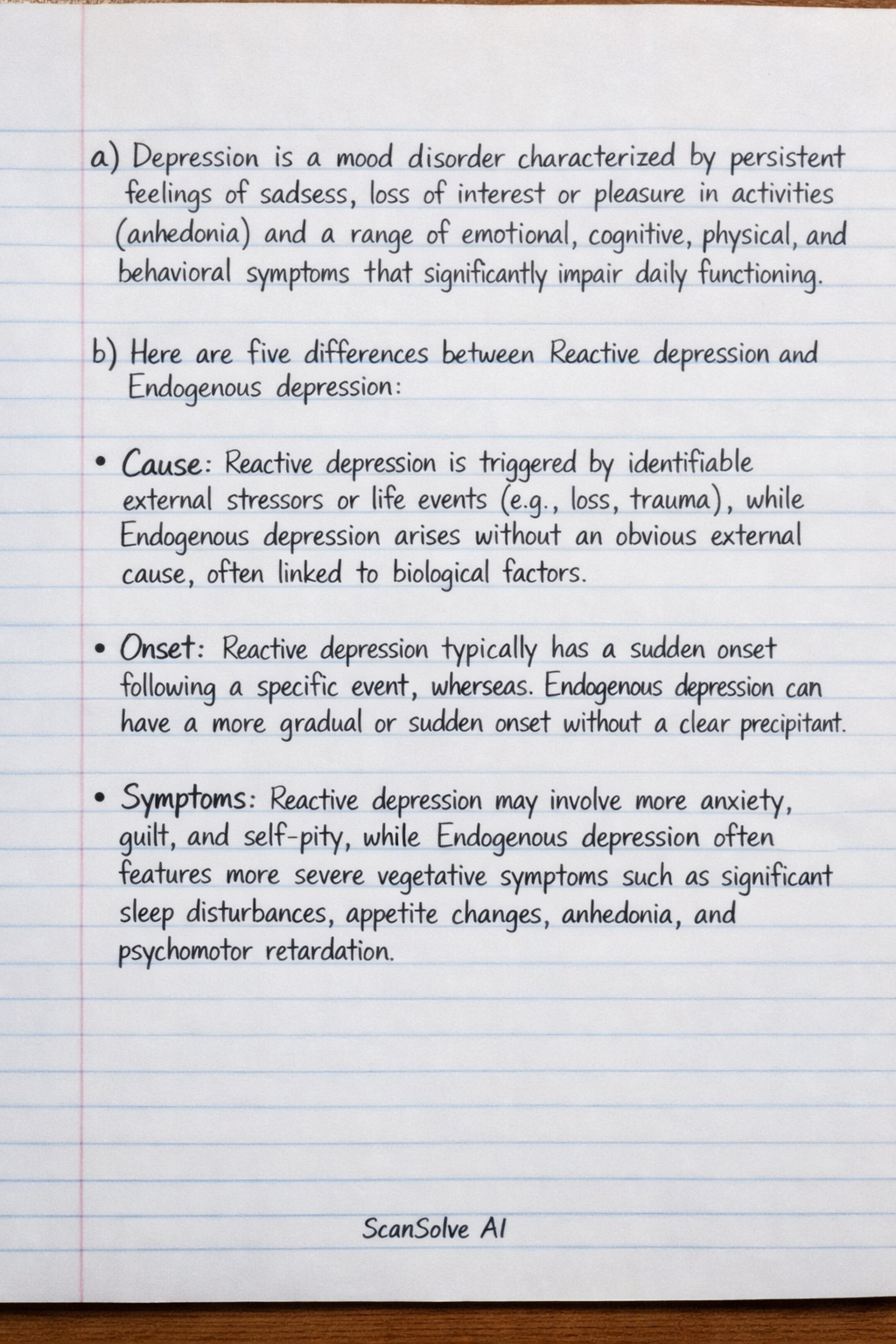
a) Depression is a mood disorder characterized by persistent feelings of sadness, loss of interest or pleasure in activities (anhedonia), and a range of emotional, cognitive, physical, and behavioral symptoms that significantly impair daily functioning. b) Here are five differences between Reactive depression and Endogenous depression: • Cause: Reactive depression is triggered by identifiable external stressors or life events (e.g., loss, trauma), while Endogenous depression arises without an obvious external cause, often linked to biological factors. • Onset: Reactive depression typically has a sudden onset following a specific event, whereas Endogenous depression can have a more gradual or sudden onset without a clear precipitant. • Symptoms: Reactive depression may involve more anxiety, guilt, and self-pity, while Endogenous depression often features more severe vegetative symptoms such as significant sleep disturbances, appetite changes, anhedonia, and psychomotor retardation. • Response to Treatment: Reactive depression often responds well to psychotherapy focused on coping mechanisms and stress management, while Endogenous depression frequently requires antidepressant medication due to its biological underpinnings. • Prognosis: Reactive depression may resolve once the stressor is managed or adapted to, whereas Endogenous depression can be more chronic or recurrent and may require long-term management. c) The management of Mr. Kalobwe, given his severe depression, mutism, neglect, and suicidal ideation, requires a comprehensive approach from admission to discharge. Admission and Acute Phase (Safety and Stabilization): Immediate Safety Assessment:* Upon admission, the highest priority is to assess and mitigate Mr. Kalobwe's suicidal risk. This involves a thorough evaluation of his suicidal ideation, intent, plan, and access to means. Secure Environment:* He must be placed in a safe, supervised environment, potentially with 1:1 observation, and all potential means of self-harm must be removed. Physical and Psychiatric Assessment:* A complete physical examination is necessary to rule out medical causes for his symptoms and address his physical neglect (e.g., nutrition, hydration, hygiene). A detailed psychiatric assessment will confirm the diagnosis of depression and identify any co-occurring conditions. Pharmacotherapy:* Antidepressant medication (e.g., SSRIs, SNRIs) should be initiated, starting with a low dose and gradually titrating up, with close monitoring for side effects and potential activation of suicidal thoughts, especially in the initial weeks. Psychotherapy: Individual therapy, such as Cognitive Behavioral Therapy (CBT) or Dialectical Behavior Therapy (DBT), should begin to address his depressive symptoms, cognitive distortions, and develop coping strategies for managing suicidal thoughts. A safety plan* must be collaboratively developed, outlining triggers, coping skills, and emergency contacts. Milieu Therapy:* A structured therapeutic environment with routine activities can help address his mutism and neglect, encouraging engagement and social interaction. For severe, treatment-resistant depression or high suicidal risk, Electroconvulsive Therapy (ECT) may be considered. Maintenance Phase (Recovery and Relapse Prevention): Continued Treatment:* Pharmacotherapy should be continued for several months to a year after remission to prevent relapse. Psychotherapy sessions should continue to reinforce coping skills, address underlying issues, and improve social functioning. Psychoeducation:* Mr. Kalobwe and his family should receive education about depression, medication adherence, and early warning signs of relapse. Social Support:* Encourage engagement in support groups and healthy social activities. Discharge Planning: Comprehensive Safety Plan:* A robust and personalized safety plan is crucial, detailing steps to take if suicidal thoughts return, including emergency contacts and crisis resources. Outpatient Follow-up:* Ensure scheduled appointments with a psychiatrist, therapist, and primary care physician are in place. Medication Management:* Confirm Mr. Kalobwe understands his medication regimen, potential side effects, and how to obtain refills. Family Involvement:* Involve family in the discharge plan to ensure ongoing support and monitoring, with clear instructions on how to respond to warning signs. d) When conducting intensive counseling sessions for Mr. Kalobwe, five essential counseling principles to observe include: • Empathy: The counselor must strive to deeply understand and share Mr. Kalobwe's feelings and experiences, especially his profound sadness and suicidal ideation. This helps build rapport and trust, making him feel heard and validated. • Unconditional Positive Regard: The counselor should accept Mr. Kalobwe without judgment, regardless of his thoughts, feelings, or behaviors. This creates a safe and non-threatening environment where he can openly express his suicidal ideas and other difficult emotions without fear of condemnation. • Congruence (Genuineness): The counselor needs to be authentic and transparent in the therapeutic relationship. Being genuine fosters trust and models healthy, open communication, which is vital for someone struggling with mutism and emotional withdrawal. • Confidentiality: Maintaining the privacy of Mr. Kalobwe's information is paramount. This ensures he feels secure enough to discuss highly sensitive topics like suicidal ideation. However, the limits of confidentiality, particularly regarding harm to self or others, must be clearly explained. • Establishing a Therapeutic Alliance: Building a strong, collaborative relationship based on mutual trust, respect, and shared goals is foundational. This alliance empowers Mr. Kalobwe to actively participate in his recovery process and work effectively with the counselor to manage his depression and suicidal thoughts. Send me the next one 📸