

This psychology problem is solved step by step below, with detailed explanations to help you understand the method and arrive at the correct answer.
ScanSolve AI Answer
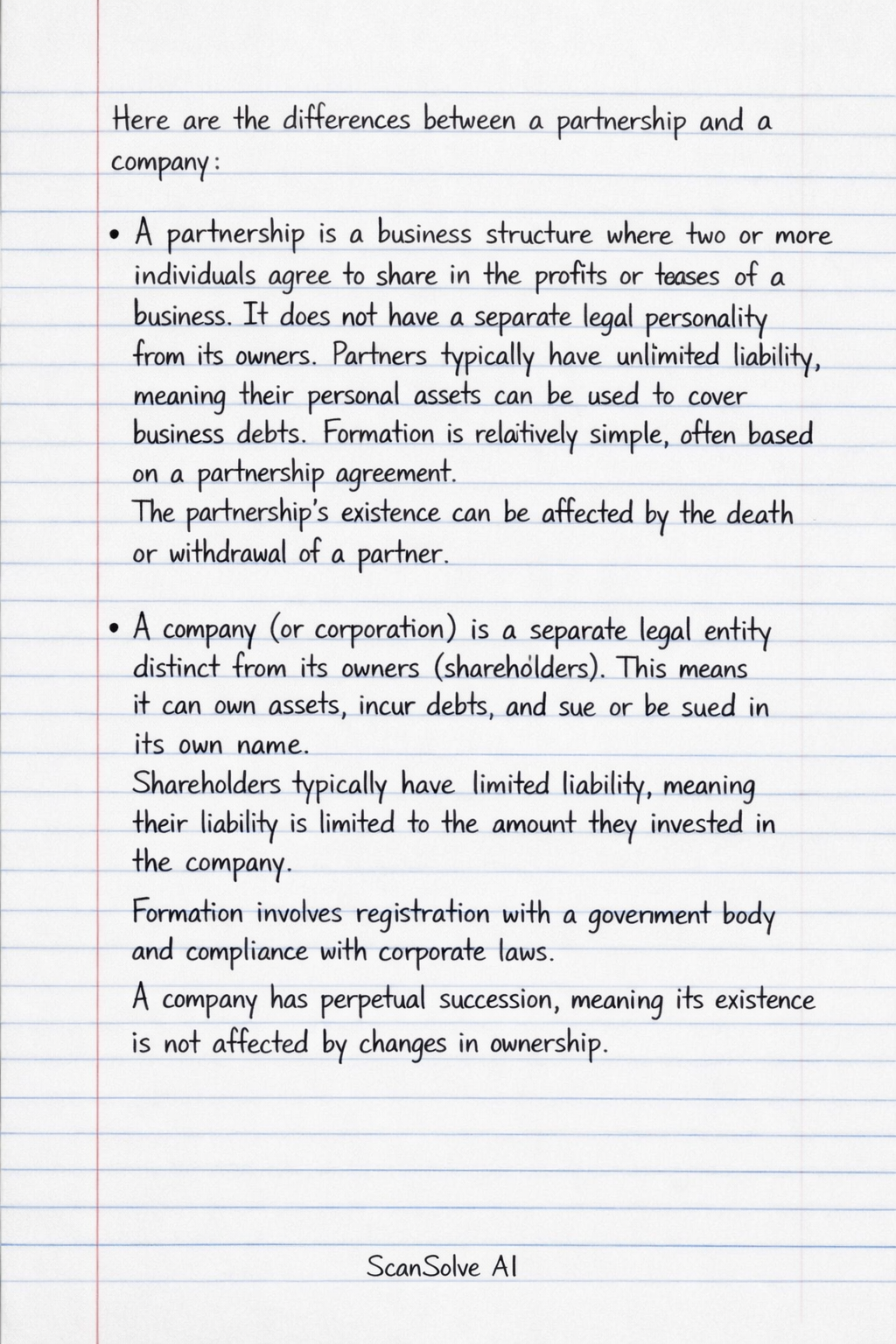
Here are the differences between a partnership and a company: • A partnership is a business structure where two or more individuals agree to share in the profits or losses of a business. It does not have a separate legal personality from its owners. Partners typically have unlimited liability, meaning their personal assets can be used to cover business debts. Formation is relatively simple, often based on a partnership agreement. The partnership's existence can be affected by the death or withdrawal of a partner. • A company (or corporation) is a separate legal entity distinct from its owners (shareholders). This means it can own assets, incur debts, and sue or be sued in its own name. Shareholders typically have limited liability, meaning their liability is limited to the amount they invested in the company. Formation involves registration with a government body and compliance with corporate laws. A company has perpetual succession, meaning its existence is not affected by changes in ownership.