
We read your photo as:
Analyze the potential negative consequences of Amani's belief in religious superiority within his village and suggest how he should reconsider his approach.
Psychology
ScanSolve AI Answer
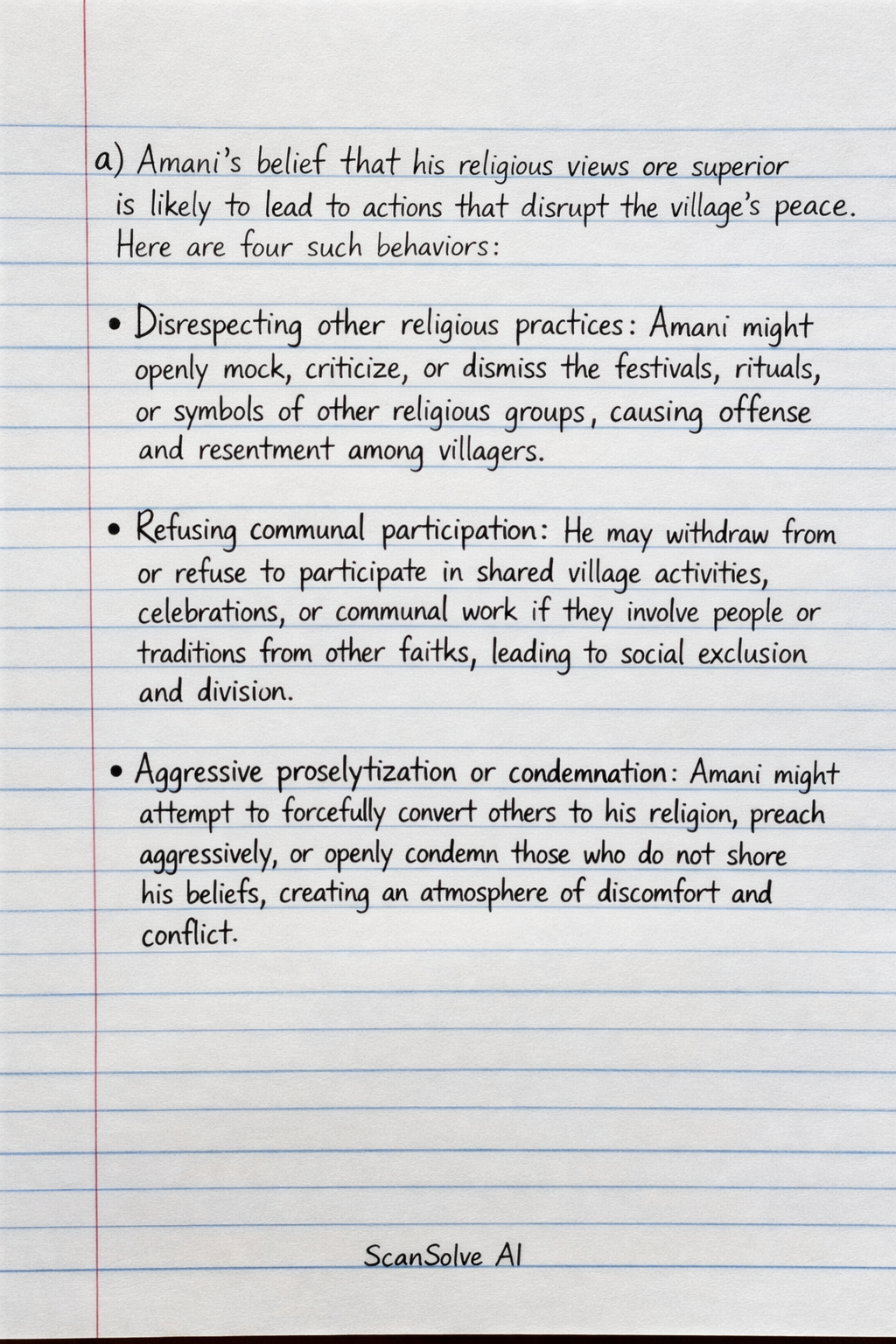
a) Amani's belief that his religious views are superior is likely to lead to actions that disrupt the village's peace. Here are four such behaviors:
- Disrespecting other religious practices: Amani might openly mock, criticize, or dismiss the festivals, rituals, or symbols of other religious groups, causing offense and resentment among villagers.
- Refusing communal participation: He may withdraw from or refuse to participate in shared village activities, celebrations, or communal work if they involve people or traditions from other faiths, leading to social exclusion and division.
- Aggressive proselytization or condemnation: Amani might attempt to forcefully convert others to his religion, preach aggressively, or openly condemn those who do not share his beliefs, creating an atmosphere of discomfort and conflict.
- Creating religious segregation: By constantly emphasizing the superiority of his own faith, he could foster an "us vs. them" mentality, leading to the formation of distinct religious factions and undermining the village's unity.
b) Amani should reconsider his line of thought for several important reasons:
- Promoting peace and harmony: The village thrives on mutual respect and understanding. His current attitude will inevitably lead to conflict and destroy the peaceful coexistence that has long been established.
- Fostering mutual learning and growth: By being open to other beliefs, Amani can learn about different cultures, traditions, and perspectives, which can broaden his own understanding and enrich his life.
- Building stronger community bonds: Participating in communal life and respecting diverse beliefs strengthens social cohesion, trust, and a sense of belonging for all villagers, including himself, making the community more resilient.
- Avoiding isolation and resentment: His divisive attitude will likely lead to him being ostracized and disliked by other villagers, making it difficult for him to integrate, form friendships, and receive support when he needs it.
Was this helpful?
Still stuck on this one?
Ask a follow-up, and the answer starts from this question.
Got a different question?Ask your own question
More Psychology Questions
QExplain to Amani the reason why he should reconsider his line of thought.QAnalyze the behaviors and consequences of Afia and Ama in the provided scenario, focusing on…QAnalyze Ananse's actions in the story: a) What unethical behaviors did he display? b) What ethical…QAnalyze Ousmane's critique of polygamy in the provided text, focusing on how Noumbe's experience…QA) Explain why it is important to respect traditional African religions even though many people…
Handwritten Step-by-Step Solution
Get this as a handwritten image on WhatsApp — like a tutor wrote it for you.
Try on WhatsApp