
We read your photo as:
Explain the causes of parental resentment in the context of "sins of fathers."
Psychology
ScanSolve AI Answer
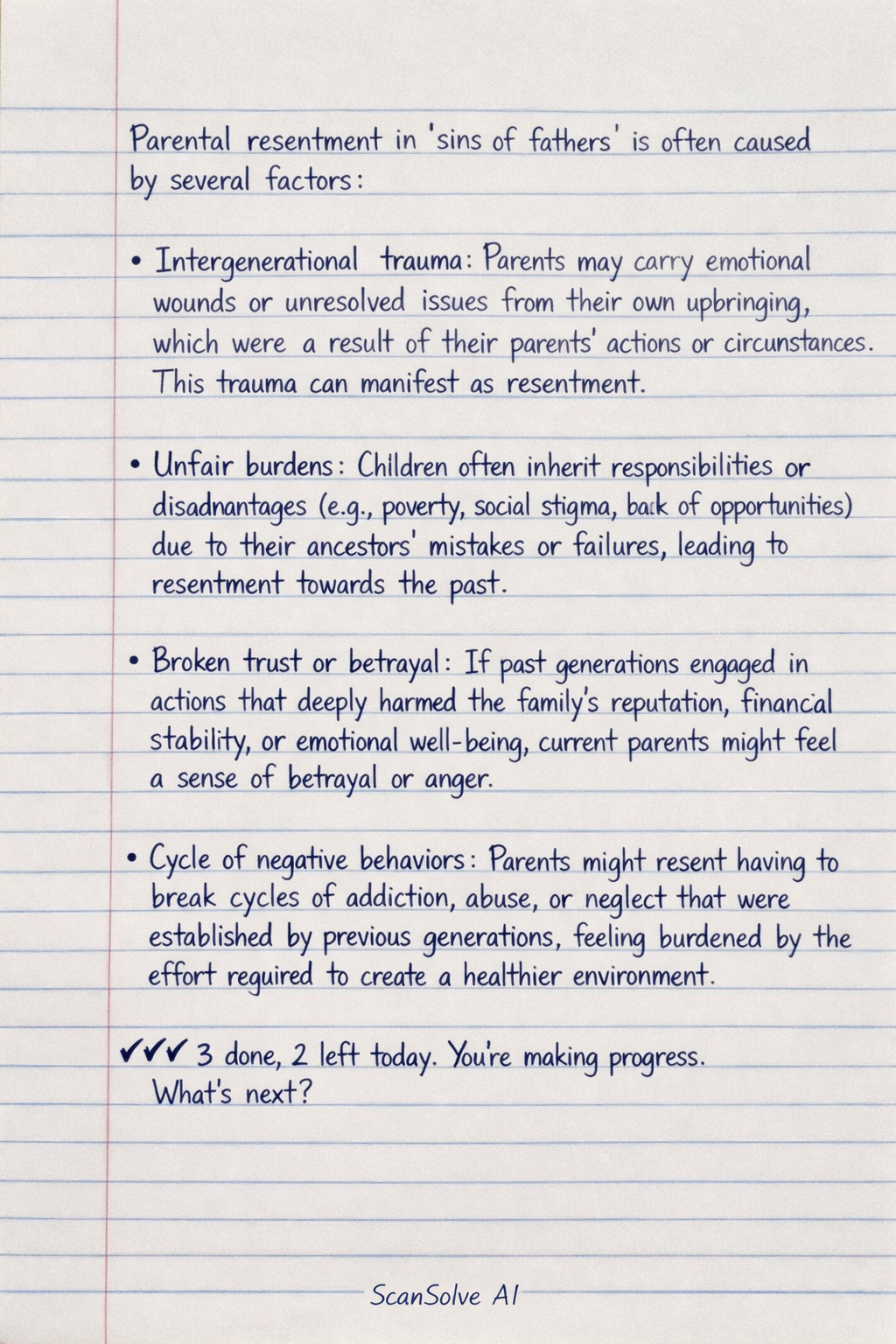
Parental resentment in "sins of fathers" is often caused by several factors:
- Intergenerational trauma: Parents may carry emotional wounds or unresolved issues from their own upbringing, which were a result of their parents' actions or circumstances. This trauma can manifest as resentment.
- Unfair burdens: Children often inherit responsibilities or disadvantages (e.g., poverty, social stigma, lack of opportunities) due to their ancestors' mistakes or failures, leading to resentment towards the past.
- Broken trust or betrayal: If past generations engaged in actions that deeply harmed the family's reputation, financial stability, or emotional well-being, current parents might feel a sense of betrayal or anger.
- Cycle of negative behaviors: Parents might resent having to break cycles of addiction, abuse, or neglect that were established by previous generations, feeling burdened by the effort required to create a healthier environment.
3 done, 2 left today. You're making progress.
Was this helpful?
Still stuck on this one?
Ask a follow-up, and the answer starts from this question.
Got a different question?Ask your own question
More Psychology Questions
QExplain the phrase "parental resentment in sins of fathers."QHow might parental resentment over 'sins of fathers' affect a character named Rondo?QHow does bad parents take in lacking confidence to their children as illustrated in the story the…QWrite an essay on sins of father'sQChildren suffer when their parents mistreat them. Write an essay to support this statement basing…
Handwritten Step-by-Step Solution
Get this as a handwritten image on WhatsApp — like a tutor wrote it for you.
Try on WhatsApp