

This psychology problem is solved step by step below, with detailed explanations to help you understand the method and arrive at the correct answer.
ScanSolve AI Answer
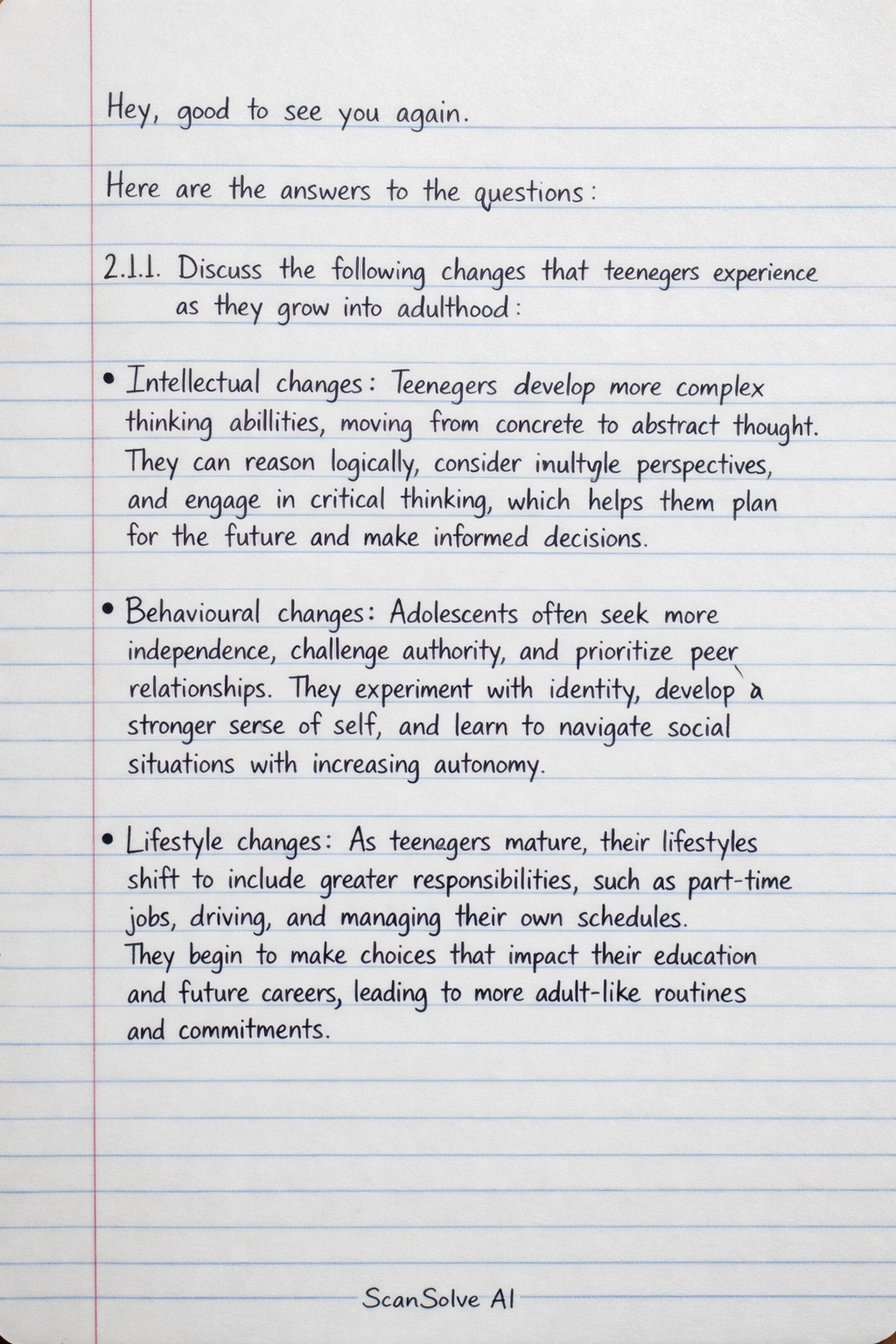
Here are the answers to the questions: 2.1.1 Discuss the following changes that teenagers experience as they grow into adulthood: Intellectual changes: Teenagers develop more complex thinking abilities, moving from concrete to abstract thought. They can reason logically, consider multiple perspectives, and engage in critical thinking, which helps them plan for the future and make informed decisions. Behavioural changes: Adolescents often seek more independence, challenge authority, and prioritize peer relationships. They experiment with identity, develop a stronger sense of self, and learn to navigate social situations with increasing autonomy. Lifestyle changes: As teenagers mature, their lifestyles shift to include greater responsibilities, such as part-time jobs, driving, and managing their own schedules. They begin to make choices that impact their education and future careers, leading to more adult-like routines and commitments. 2.1.2 Write a paragraph explaining how accepting your physical appearance can improve your self-esteem and confidence during adolescence. Accepting one's physical appearance is crucial for developing healthy self-esteem and confidence during adolescence. When teenagers embrace their unique physical traits, rather than comparing themselves to unrealistic ideals, they foster a positive body image. This acceptance reduces anxiety and self-consciousness, allowing them to focus their energy on personal growth, social interactions, and academic pursuits. Feeling comfortable in their own skin empowers adolescents to express themselves authentically, participate more actively in life, and build stronger, more genuine relationships, all of which contribute significantly to overall confidence. 2.2.1 Define the following terms in your own words: Interests: Interests are activities, subjects, or topics that a person finds engaging, enjoyable, or stimulating. They often reflect personal passions and can guide individuals toward specific hobbies, studies, or career paths that align with their natural curiosity and preferences. Skills: Skills are abilities or proficiencies developed through training, experience, or practice, allowing a person to perform specific tasks competently. They can be technical (like coding), practical (like cooking), or interpersonal (like communication), and are essential for success in various aspects of life, including careers. Job market: The job market refers to the overall supply and demand for labor within an economy. It encompasses all available jobs and the pool of individuals seeking employment, influencing factors such as wages, employment rates, and the types of skills employers are looking for. 2.2.2 Name and explain the THREE economic sectors and give an example for each. Primary Sector: This sector involves the extraction and production of raw materials directly from the earth. It includes activities like farming, fishing, mining, and forestry. Example:* A farmer growing corn. Secondary Sector: This sector processes raw materials into finished goods through manufacturing and construction. It transforms products from the primary sector into items ready for consumption or further use. Example:* A factory producing cars from steel and other components. Tertiary Sector: Also known as the service sector, this involves providing services rather than producing tangible goods. It includes a wide range of activities that support both individuals and businesses. Example:* A teacher educating students or a doctor providing medical care. 2.2.3 Choose TWO careers that interest you. For each one, explain: This question requires you to choose careers that personally interest you. Here are examples for two different careers to illustrate how you might answer: Career 1: Software Developer What the job involves: A software developer designs, codes, tests, and maintains software applications and systems. This includes writing programming code, debugging errors, collaborating with teams, and ensuring software meets user needs and specifications. Where it is usually done: Software development is typically done in an office environment, either at a company's headquarters or remotely from a home office. It often involves working at a computer for extended periods. Career 2: Registered Nurse What the job involves: A registered nurse provides direct patient care, administers medications, monitors vital signs, educates patients and their families about health conditions, and assists doctors during medical procedures. They are responsible for patient well-being and maintaining accurate medical records. Where it is usually done: Nursing is primarily performed in healthcare settings such as hospitals, clinics, doctor's offices, long-term care facilities, and sometimes in patients' homes for home healthcare services. 2.2.4 What new insight have you gained about your future from this project. List and explain at least 2. This question asks for your personal reflection on the project. You should consider what you learned about yourself, different careers, or the job market that you didn't know before. For example, you might have gained insight into: The importance of aligning interests with career choices: You might have realized that pursuing a career solely for financial gain without genuine interest can lead to dissatisfaction, and that understanding your passions is key to long-term career fulfillment. The diverse range of skills required for different professions: You may have discovered that many careers demand a combination of technical, soft, and interpersonal skills, and that continuously developing these skills is essential for adaptability and success in the evolving job market. Send me the next one 📸