
We read your photo as:
Discuss the typical verbal and non-verbal characteristics of the aggressive communication style, and explain its benefits and negative effects.
ScanSolve AI Answer
Question 2
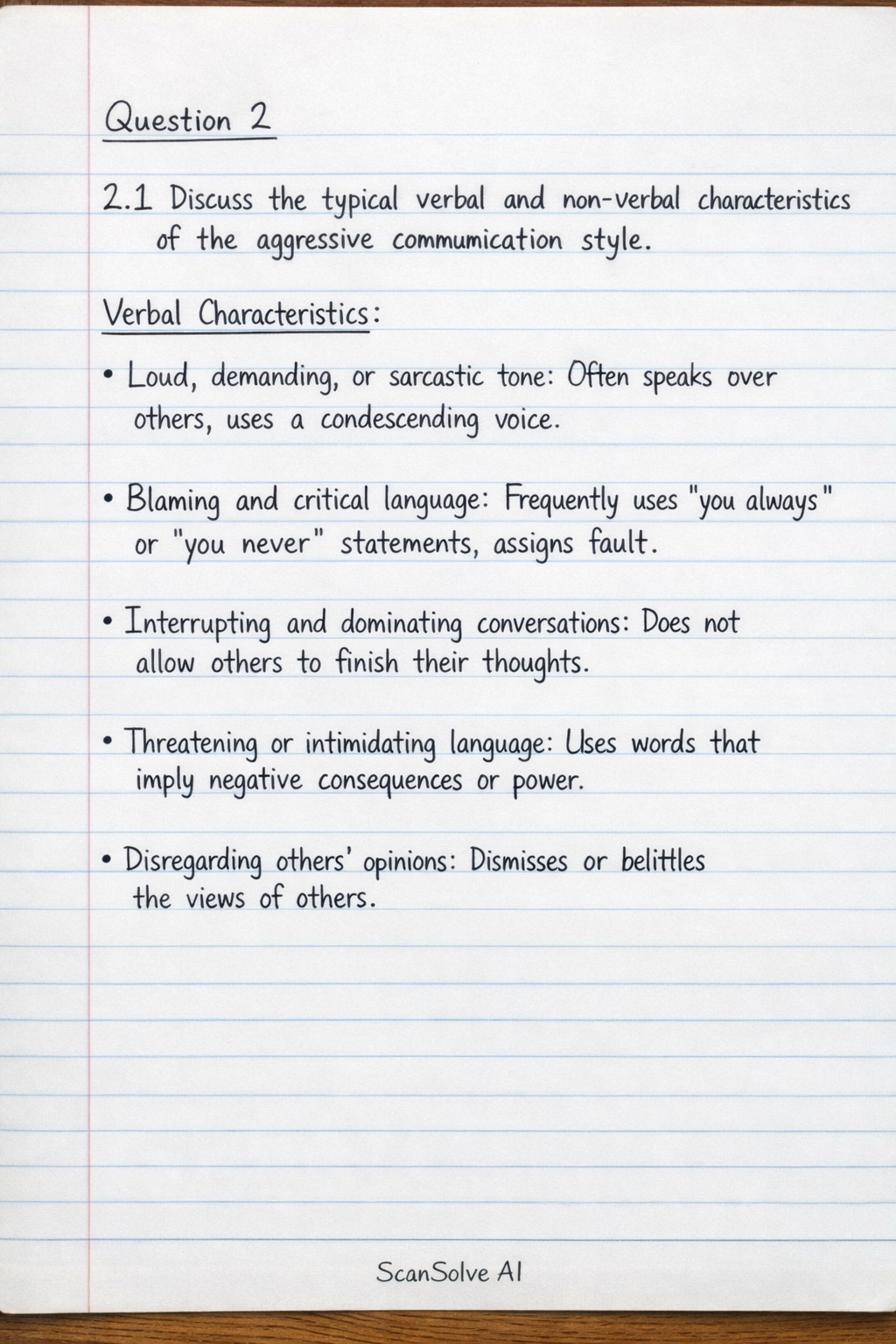
2.1 Discuss the typical verbal and non-verbal characteristics of the aggressive communication style.
-
Verbal Characteristics:
- Loud, demanding, or sarcastic tone: Often speaks over others, uses a condescending voice.
- Blaming and critical language: Frequently uses "you always" or "you never" statements, assigns fault.
- Interrupting and dominating conversations: Does not allow others to finish their thoughts.
- Threatening or intimidating language: Uses words that imply negative consequences or power.
- Disregarding others' opinions: Dismisses or belittles the views of others.
-
Non-Verbal Characteristics:
- Staring or intense eye contact: Often perceived as intimidating or challenging.
- Rigid or tense body posture: Stands tall, arms crossed, or hands on hips.
- Pointing fingers or making aggressive gestures: Used to emphasize points or intimidate.
- Invading personal space: Stands too close to others.
- Angry or scowling facial expressions: Shows displeasure or hostility.
2.2 Explain the benefits and negative effects associated with an aggressive communication style.
-
Perceived Benefits (often short-term or superficial):
- Quick decision-making: Can force immediate action or compliance from others.
- Perceived strength and control: May appear decisive and powerful, especially in crisis.
- Achieving personal goals: Can ensure one's own needs are met, often at the expense of others.
- Getting attention: Commands immediate focus from others.
-
Negative Effects:
- Damaged relationships: Erodes trust, respect, and rapport with colleagues and subordinates.
- Fosters resentment and fear: Creates a hostile work environment where employees feel undervalued or intimidated.
- Reduced morale and productivity: Employees may become disengaged, less motivated, and less willing to contribute ideas.
- High employee turnover: Talented individuals are likely to leave an environment where aggressive communication is prevalent.
- Poor problem-solving: Suppresses open discussion and diverse perspectives, leading to suboptimal solutions.
- Increased stress and conflict: Creates a tense atmosphere, leading to more disputes and emotional strain.
2.3 Explain why either passive or passive-aggressive communication does not contribute to healthy relationships on the workplace.
-
Passive Communication:
- Lack of clarity and unresolved issues: Passive communicators avoid expressing their true feelings, needs, or opinions directly. This means problems are often left unaddressed, leading to festering resentment and a build-up of unresolved conflict.
- Erosion of respect and trust: When individuals consistently fail to stand up for themselves or express their views, others may lose respect for them or take advantage of their perceived weakness. This creates an imbalance in relationships and prevents genuine trust from forming.
- Internalized frustration: Suppressing one's own needs and feelings can lead to significant internal stress, anxiety, and burnout, which can manifest in decreased job satisfaction and strained interactions.
-
Passive-Aggressive Communication:
- Indirect hostility and confusion: Passive-aggressive communicators express their negative feelings indirectly through sarcasm, procrastination, subtle sabotage, or backhanded compliments. This creates confusion and frustration for others, as the true source of discontent is never openly addressed.
- Breaks down trust and fosters suspicion: The indirect and often manipulative nature of passive-aggressive behavior makes it difficult for colleagues to trust the individual. It creates an environment of suspicion and makes genuine collaboration impossible, as intentions are always unclear.
- Prevents genuine problem-solving: Because issues are not confronted directly, passive-aggressive communication prevents constructive dialogue and resolution. Problems persist, and relationships remain strained by underlying tension and unexpressed anger.
2.4 What are the advantages of assertive communication?
- Clear and honest communication: Assertive individuals express their thoughts, feelings, and needs directly and respectfully, ensuring messages are understood without ambiguity.
- Mutual respect: It fosters an environment where everyone's rights and opinions are valued, leading to stronger, more respectful professional relationships.
- Effective problem-solving: By clearly stating needs and listening to others, assertive communication facilitates open dialogue and collaborative solutions that benefit all parties.
- Increased self-esteem and confidence: Individuals feel empowered when they can express themselves honestly and stand up for their rights, leading to greater self-worth.
- Reduced stress and conflict: Direct communication minimizes misunderstandings and prevents the build-up of resentment, leading to fewer conflicts and less emotional strain.
- Fair and equitable outcomes: Assertive individuals are more likely to achieve their goals while also considering the needs of others, leading to win-win solutions.
Question 3
Effective communication with customers requires a range of essential skills. Here are ten steps to take when handling a customer complaint, with examples of how to implement each in a real situation:
-
Listen Actively and Attentively:
- Explanation: Allow the customer to fully express their complaint without interruption. Show you are engaged by nodding, making eye contact (if in person), and using verbal affirmations.
- Implementation: A customer calls, upset about a delayed delivery. I would say, "Please tell me everything that happened," and listen patiently, letting them vent their frustration completely before speaking.
-
Empathize and Acknowledge Their Feelings:
- Explanation: Show that you understand and validate their emotions, even if you don't agree with their perspective. Use phrases that convey understanding.
- Implementation: After listening, I would say, "I can absolutely understand why you're feeling frustrated about the delay, especially when you were expecting your package by now."
-
Apologize Sincerely (for the situation, not necessarily fault):
- Explanation: Express regret for the inconvenience or negative experience the customer has faced, regardless of who is at fault.
- Implementation: "I sincerely apologize for the inconvenience and stress this delivery delay has caused you."
-
Gather All Necessary Information:
- Explanation: Ask open-ended and specific questions to fully understand the details of the complaint, ensuring you have all the facts.
- Implementation: "To help me resolve this, could you please provide your order number and confirm the expected delivery date you were given?"
-
Stay Calm and Professional:
- Explanation: Maintain a composed demeanor and tone of voice, even if the customer is agitated. Avoid becoming defensive or emotional.
- Implementation: If the customer raises their voice, I would consciously lower my own tone slightly and speak clearly and calmly, focusing on the facts of the situation.
-
Offer Solutions and Options:
- Explanation: Once you understand the problem, propose clear, actionable solutions. Offer choices where possible to give the customer a sense of control.
- Implementation: "We can either issue a full refund for the shipping cost, or we can offer you a 10% discount on your next purchase as compensation for the delay. Which option would you prefer?"
-
Take Prompt Action:
- Explanation: Once a solution is agreed upon, act quickly to implement it or explain the next steps clearly and set realistic expectations for resolution time.
- Implementation: If the customer chooses the shipping refund, I would immediately process it and say, "I've just processed your shipping refund; you should see it reflected in your account within 3-5 business days."
-
Confirm Understanding and Agreement:
- Explanation: Before concluding, ensure the customer understands the resolution and is satisfied with it.
- Implementation: "Does that resolution work for you, and is there anything else I can assist you with regarding this order?"
-
Follow Up (if necessary):
- Explanation: For complex issues or those requiring external action, follow up with the customer to ensure the resolution was successful and they are satisfied.
- Implementation: If a new product needs to be shipped, I would send a follow-up email a few days later: "Just checking in to ensure your replacement product arrived and is working to your satisfaction."
-
Document the Complaint and Learn from It:
- Explanation: Record the details of the complaint, the resolution, and any feedback for internal improvement. This helps track trends and prevent future issues.
- Implementation: I would log the complaint in our customer service system, categorizing the issue as "delivery delay" and noting the specific carrier, to contribute to data that could inform future logistics improvements.
Still stuck on this one?
Ask a follow-up, and the answer starts from this question.
More Psychology Questions
Handwritten Step-by-Step Solution
Get this as a handwritten image on WhatsApp — like a tutor wrote it for you.
Try on WhatsApp