
We read your photo as:
List the four levels of anxiety responses and identify five biological causes of anxiety disorders.
Psychology
ScanSolve AI Answer
Step-by-step solution
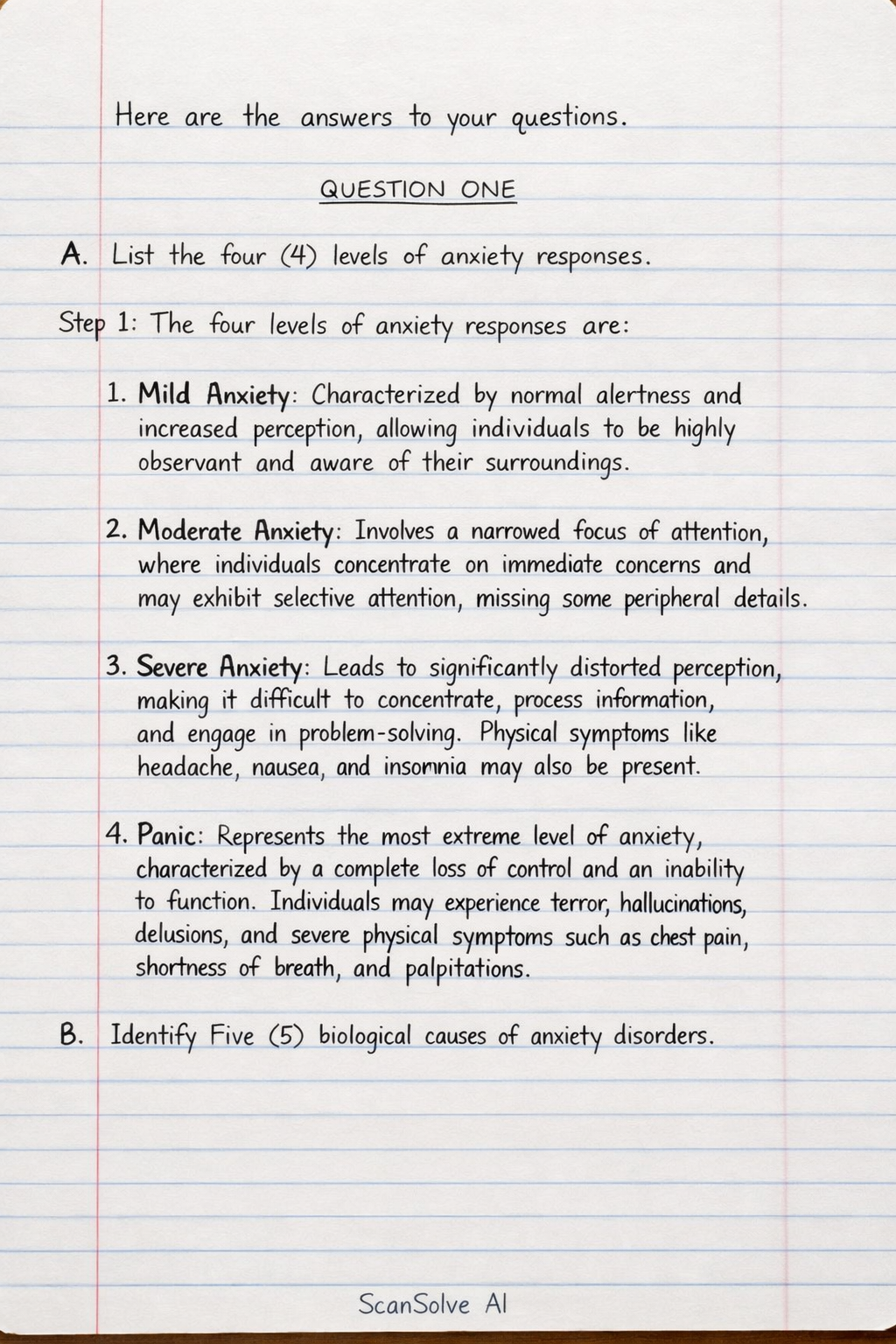
2 stepsHere are the answers to your questions.
QUESTION ONE
A. List the four (4) levels of anxiety responses.
The four levels of anxiety responses are
- Mild Anxiety: Characterized by normal alertness and increased perception, allowing individuals to be highly observant and aware of their surroundings.
- Moderate Anxiety: Involves a narrowed focus of attention, where individuals concentrate on immediate concerns and may exhibit selective attention, missing some peripheral details.
- Severe Anxiety: Leads to significantly distorted perception, making it difficult to concentrate, process information, and engage in problem-solving. Physical symptoms like headache, nausea, and insomnia may also be present.
- Panic: Represents the most extreme level of anxiety, characterized by a complete loss of control and an inability to function. Individuals may experience terror, hallucinations, delusions, and severe physical symptoms such as chest pain, shortness of breath, and palpitations.
B. Identify Five (5) biological causes of anxiety disorders.
Five biological causes of anxiety disorders include
- Genetic predisposition: A family history of anxiety disorders increases an individual's risk, suggesting a genetic component.
- Neurotransmitter imbalances: Dysregulation of neurotransmitters like serotonin (often low levels) and norepinephrine (often high levels) can contribute to anxiety symptoms.
- Brain structure abnormalities: Differences in brain structures, such as hyperactivity of the amygdala (involved in fear processing), are linked to anxiety disorders.
- Hormonal imbalances: Conditions involving excess cortisol (the stress hormone) or other hormonal dysregulations can trigger or exacerbate anxiety.
- Chronic medical conditions: Underlying physical health issues like heart disease, thyroid disorders (e.g., hyperthyroidism), and respiratory conditions can manifest with anxiety symptoms.
Was this helpful?
Still stuck on this one?
Ask a follow-up, and the answer starts from this question.
Got a different question?Ask your own question
More Psychology Questions
QMatch the following psychological disorders with their descriptions: 41 Panic attack, 42 Histrionic…QMention five causes of depressionQThe physiological changes associated with anxiety are brought about by which system A. Autonomic…QList down any four (4) basic processes of psychology.QMention five types of depression
Handwritten Step-by-Step Solution
Get this as a handwritten image on WhatsApp — like a tutor wrote it for you.
Try on WhatsApp