
We read your photo as:
Explain Self-identity, Self-image, and the disparities between them.
ScanSolve AI Answer
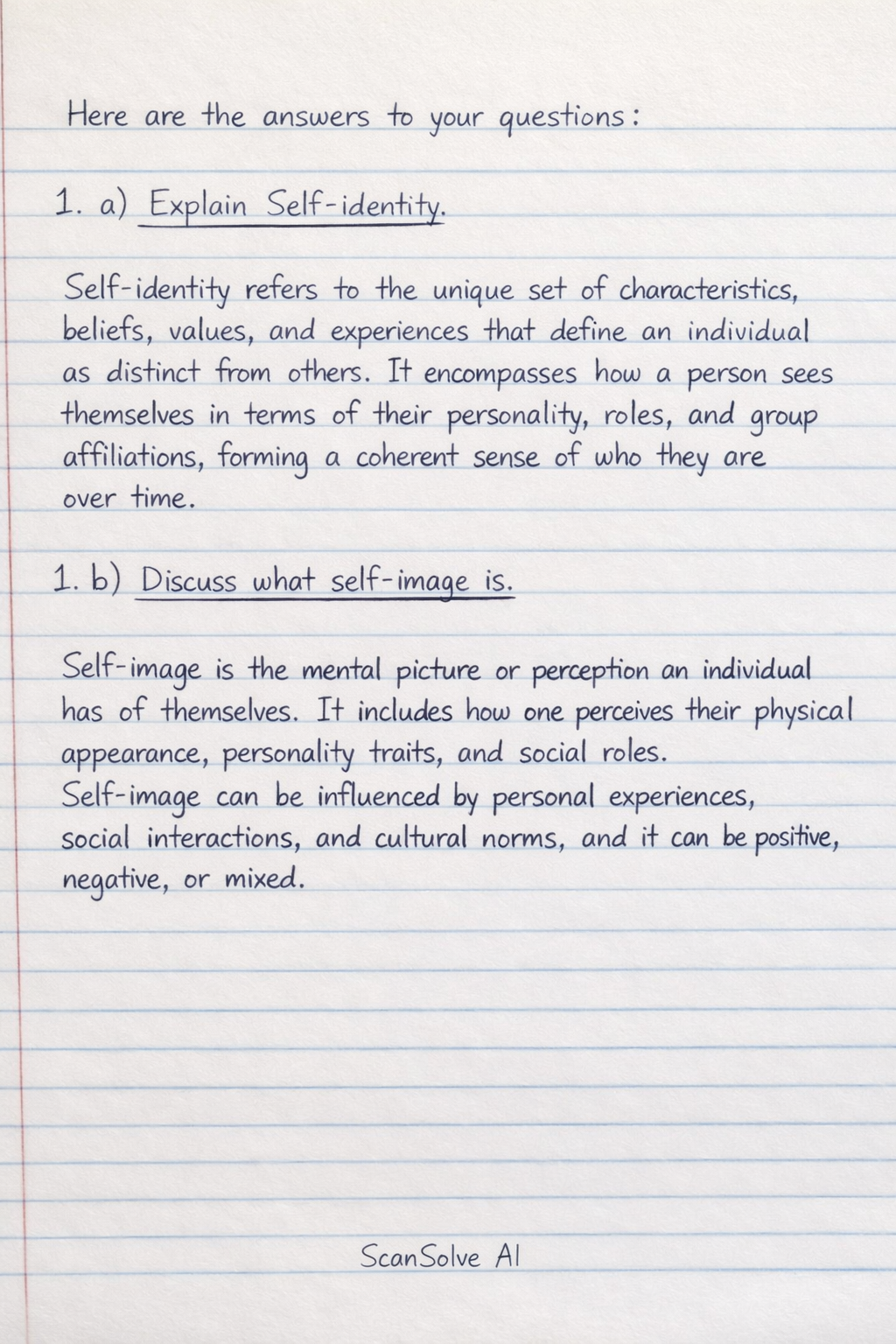
Here are the answers to your questions:
1. a) Explain Self-identity.
Self-identity refers to the unique set of characteristics, beliefs, values, and experiences that define an individual as distinct from others. It encompasses how a person sees themselves in terms of their personality, roles, and group affiliations, forming a coherent sense of who they are over time.
1. b) Discuss what self-image is.
Self-image is the mental picture or perception an individual has of themselves. It includes how one perceives their physical appearance, personality traits, and social roles. Self-image can be influenced by personal experiences, social interactions, and cultural norms, and it can be positive, negative, or mixed.
1. c) State and explain any two disparities between self-identity and self-image.
- Stability vs. Fluctuating Nature: Self-identity is generally more stable and enduring, representing a core sense of self that develops over time. Self-image, however, can be more fluid and subject to change based on immediate experiences, moods, or external feedback. For example, a person's core identity as a kind individual might be stable, but their self-image might temporarily dip if they make a mistake.
- Internal vs. External Focus: Self-identity is largely an internal construct, reflecting one's deeply held beliefs and values. Self-image often has a stronger external component, heavily influenced by how one believes others perceive them or by societal standards of appearance and success. For instance, someone might identify as an intellectual (internal), but their self-image might be affected by feeling physically unattractive (external).
2. a) State and explain any four ways improving self-image.
- Practice positive self-talk: Consciously challenge negative thoughts about oneself and replace them with positive, affirming statements. This helps to reframe perceptions and build confidence.
- Set realistic goals: Achieveable goals provide a sense of accomplishment and competence, boosting self-esteem. Focusing on small, consistent wins can gradually improve how one views their capabilities.
- Engage in self-care: Prioritizing physical and mental well-being through activities like exercise, healthy eating, adequate sleep, and relaxation techniques can significantly enhance one's overall feeling about themselves.
- Focus on strengths: Identify and leverage personal strengths and talents. Engaging in activities where one excels reinforces a positive self-perception and a sense of value.
2. b) Explain any four components of Self-concept.
- Self-esteem: This is the evaluative component of self-concept, referring to an individual's overall sense of self-worth or personal value. It reflects how much one likes or approves of themselves.
- Self-efficacy: This component relates to an individual's belief in their capacity to execute behaviors necessary to produce specific performance attainments. It's about confidence in one's ability to succeed in particular situations.
- Ideal self: This is the person one wishes to be, encompassing their aspirations, goals, and values. It represents the qualities and characteristics an individual strives to possess.
- Real self (or actual self): This component refers to how an individual perceives themselves currently, including their actual traits, abilities, and behaviors. It's the self one believes they truly are.
2. c) Outline any four (4) reasons for knowing oneself.
- Better decision-making: Understanding one's values, strengths, and weaknesses allows for choices that align with personal goals and well-being.
- Improved relationships: Self-awareness helps in understanding one's own needs and boundaries, leading to healthier and more authentic interactions with others.
- Enhanced personal growth: Knowing oneself identifies areas for development and facilitates intentional efforts towards self-improvement and achieving potential.
- Greater resilience: Understanding one's emotional responses and coping mechanisms enables better navigation of challenges and setbacks, fostering emotional stability.
Still stuck on this one?
Ask a follow-up, and the answer starts from this question.
More Psychology Questions
Handwritten Step-by-Step Solution
Get this as a handwritten image on WhatsApp — like a tutor wrote it for you.
Try on WhatsApp